
Category: Uncategorized

  • Klarna backs Google’s Universal Commerce Protocol

    Klarna backs Google’s Universal Commerce Protocol

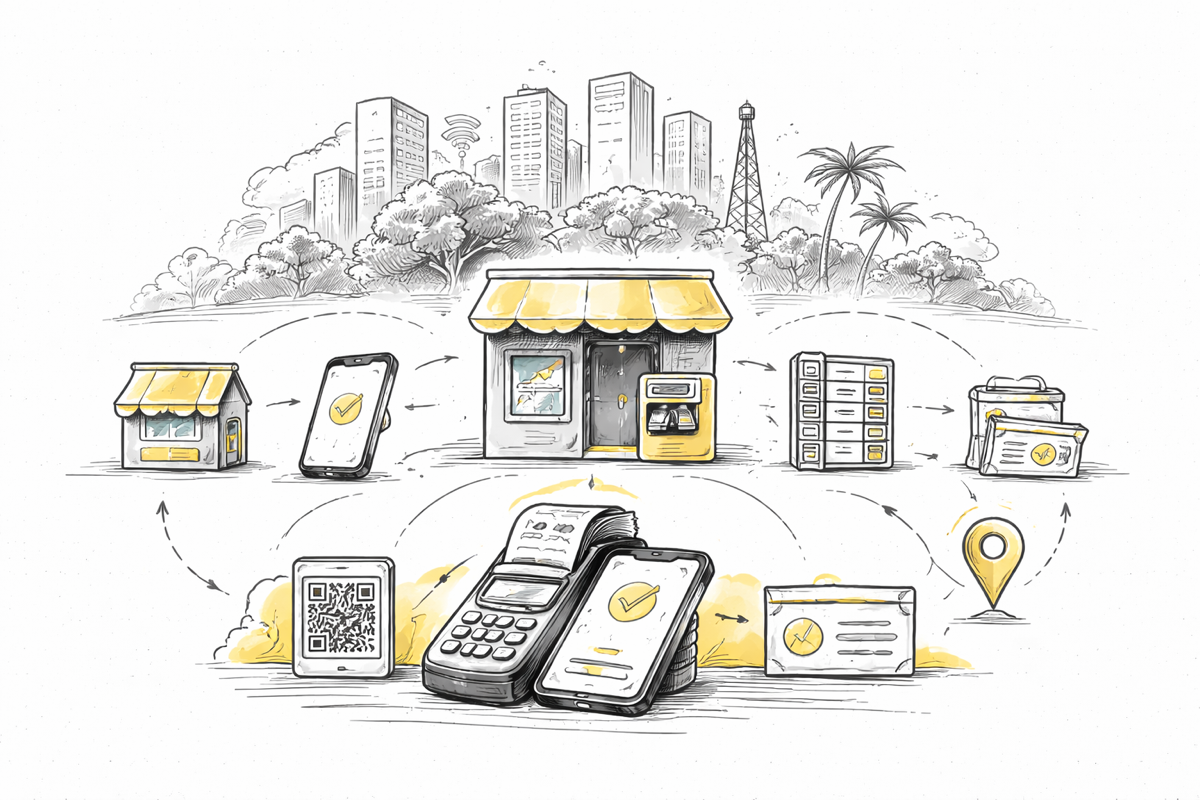
    Klarna announced it is backing Google’s Universal Commerce Protocol, known as UCP. The goal of UCP is to create a shared way for AI agents, merchants and payment systems to work together across discovery, checkout and post-purchase interactions inside AI-powered flows.

    Klarna has already supported Google’s Agent Payments Protocol and works with Google Pay, Google Store, Google Play and Google Cloud. Supporting UCP extends this cooperation into a broader standard for how commerce can function when AI agents are part of the transaction path.


    UCP aims to standardize how commerce systems communicate

    Universal Commerce Protocol is an open standard. It defines a common framework for commerce events and data exchange between agents, sellers and payment services.

    Instead of building custom integrations for every platform, merchants and payment systems can connect once and become compatible with any agent or interface that follows the protocol.

    In practice, this allows an AI agent to help a consumer find a product, complete checkout and handle follow-up interactions without the user moving across multiple apps or websites.

    For businesses and payment providers, a shared protocol can reduce integration effort and make it easier to support new environments where transactions take place.


    Why Klarna is interested in this direction

    Klarna stated that its payment and decisioning systems are already used by millions of consumers. Through UCP, the company wants these capabilities to be available inside AI-led commerce journeys.

    Klarna also highlighted interoperability, security and transparency as important requirements if AI-driven commerce is going to scale in a way that works for both merchants and consumers.

    This reflects a view that the interface where customers complete purchases may increasingly be an AI agent rather than a traditional website or app.


    Broader industry involvement

    Google developed UCP with contributions from companies including Shopify, Etsy, Wayfair, Target and Walmart. These companies are participating in shaping the protocol.

    Their involvement shows that large retailers and commerce platforms are preparing for a model where AI agents play a central role in how customers discover products and complete purchases.

    For payment providers, this means preparing for transactions that occur inside agent environments, not only inside standard checkout flows.


    Key takeaways for fintech startups

    Several practical signals emerge from Klarna’s support of UCP:

    • AI agents are being treated as future commerce channels

    • Open protocols may reduce the need for bespoke integrations

    • Payments will need to function inside agent-driven interactions

    • Interoperability, security and transparency are being emphasized

    • Major commerce platforms are aligning around this protocol

    If you are building in payments or commerce, this development is worth close attention.

    If you want help thinking through how changes like this affect your roadmap and product decisions, contact us.

  • Airwallex Begins Official Launch in Germany

    Airwallex Begins Official Launch in Germany

    Airwallex, the global financial platform originally founded in Melbourne in 2015 and now based in Singapore, has launched operations in Germany as of early February 2026. The company announced its entry on February 3 as part of its expanding presence across Europe. Germany is a large market for cross-border trade, and Airwallex sees opportunity because many local businesses still use older systems to move money internationally.

    The platform helps companies send and receive international transfers, hold accounts in multiple currencies, and manage online payments. Airwallex reports a customer base of around 200,000 businesses globally and states that about 68 percent of payments on its network are processed instantly.

    Airwallex enters a market where established competitors such as Wise, Adyen, and Stripe are already active. Tom Sellin, who is leading Airwallex’s growth efforts in Germany, described the competition as intense but noted that many cross-border flows remain insufficiently digitised.


    Why Germany Matters

    Sellin points to the export-oriented nature of many German companies. Payment speed across borders often does not match business needs. Airwallex believes its infrastructure can reduce friction for exporters, marketplaces, and digitally focused firms operating internationally.

    Airwallex operates in Europe under a Dutch e-money licence issued in 2021. This licence allows it to provide services across the European Union and forms the regulatory basis for its German launch.


    Early Adoption and Local Investment

    One of the first customers highlighted in Germany is the Berlin-based fintech Moss, which provides spend management and corporate payment solutions for small and medium-sized enterprises. This early relationship shows interest from within the local fintech ecosystem.

    Airwallex has committed to investing 31 million euros in Germany over the next five years. The investment will focus on building a local team and establishing a presence in Berlin.

    In 2025, Airwallex raised 280 million euros in funding, bringing its valuation to about 6.9 billion euros. The company has previously raised more than 1.2 billion dollars in total funding and reported recurring revenue of roughly 1 billion dollars last year.


    Challenges and Market Context

    Germany’s fintech and payments sector is crowded. Providers such as Wise, Adyen, and Stripe already offer international transfer and multi-currency solutions. For Airwallex, gaining local trust and standing out on product capabilities will be part of the initial task. The company aims to secure several thousand active customers in Germany over time.


    Key takeaways for fintech startups

    These points stand out for founders looking at similar expansion paths:

    • Germany is a large but highly competitive market for cross-border financial services.

    • EU regulatory coverage through an e-money licence enables rapid geographic expansion.

    • Local hiring and physical presence in Berlin are part of the credibility strategy.

    • Early adoption by fintech players such as Moss can accelerate trust.

    • Speed of international payments and multi-currency capabilities are central to the value proposition.

    If you are planning expansion into new markets or reviewing your payments and go-to-market approach, contact us. We can help you think through positioning, competition, and practical next steps.

  • Tapi’s $27 M Series B and What It Means for Payments in Latin America

    Tapi’s $27 M Series B and What It Means for Payments in Latin America

    Tapi, a Latin American paytech founded in 2022, announced a $27 million Series B round led by Kaszek, with participation from Endeavor Catalyst and Latitud. The new capital brings Tapi’s total funding to more than $60 million raised since 2022 and positions the company to deepen its focus on payments and collections infrastructure in Mexico and wider Latin America.

    Tapi builds one of the region’s largest payments networks, connecting both digital and physical payment channels through a single API. Its infrastructure lets banks, fintechs, billers and other businesses process recurring service payments, cash in and cash out, airtime top-ups and gift card transactions. Today the network processes more than 250 million transactions a year with over $6 billion in volume, and connects 20,000 service providers and roughly 70,000 physical points of service across Mexico, Argentina, Chile, Colombia and Peru.


    Growth and Momentum Behind the Round

    2025 was a defining year for the company. Tapi’s revenue grew significantly, it reached profitability, and it completed a strategic acquisition of the assets of Arcus in Mexico. That combination of growth and operational milestone helped attract new capital and reinforced confidence in the company’s strategy.

    A standout part of Tapi’s business is tapipay, a collection and billing platform designed for businesses with recurring payment needs. Organizations such as small and medium enterprises, financial services companies, insurers and utilities can automate their billing and collections through a single integration that connects all major payment methods. This simplifies reconciliation and reduces the operational burden of managing multiple payment channels.

    Mexico remains at the center of Tapi’s expansion plans, accounting for the majority of its business activity. The Series B funds are earmarked to strengthen technology, expand payment and collection capabilities, and grow the company’s technical team, which already represents more than 70 percent of its workforce. Tapi also intends to continue scaling its presence in countries where it already operates, supporting banks, fintechs and service providers with broader ecosystem integrations and growth.


    Key takeaways for fintech startups

    A few observations stand out for founders building in similar spaces:

    • Infrastructure remains critical in markets where digital and physical payments coexist at scale.

    • Profitability and operational execution strengthen the fundraising story.

    • Solutions that support recurring revenue and automated billing resonate with enterprise customers.

    If you are building or scaling a payments-focused fintech and want to clarify your positioning or fundraising narrative, feel free to contact us to discuss how Your Fintech Story can help.

  • Incard raises ÂŁ10M to build a financial operating system for digital businesses

    Incard raises ÂŁ10M to build a financial operating system for digital businesses

    London-based fintech Incard has raised ÂŁ10 million in a Series A round led by Smartfin, with participation from Founders Capital, MountFund, and angel investors. The funding will be used to expand the product, strengthen compliance and engineering, and support expansion into major European markets and the United States.

    Incard was founded in 2024 by Theo Cesarini, Soraya Tribouillois, Liam Seskis, and Matteo Martino. The idea came from the founders’ own experience running digital businesses and struggling with fragmented financial tools.


    The problem Incard is addressing

    Digital entrepreneurs often rely on separate platforms for banking, cards, payments, and spend tracking. This leads to constant context switching, manual reconciliation, and limited visibility over cash flow.

    Incard combines these elements into a single platform. Users can open multi-currency accounts, issue corporate cards with rewards, manage payments, and see spend data in one place. The platform includes real-time analytics and automation features designed to reduce manual financial work.

    The company also built an “App Store” that offers tools tailored to specific types of digital businesses. These modules allow teams to add functionality relevant to their operations without complicating the core system.


    Why this approach resonates

    Many fintech products solve one piece of the financial stack. Incard positions itself around the full workflow. The company describes its product as a financial operating system built around how digital businesses actually function.

    The target users include e-commerce founders, agencies, creators, and affiliate businesses that often operate across currencies and markets. For these companies, financial complexity grows quickly as they scale.


    What the funding enables

    The Series A capital will be used to deepen automation capabilities, expand internationally, and invest in compliance infrastructure. Incard plans to scale its engineering team and continue developing tools that reduce the operational burden on founders.

    The team also highlights its internal diversity, with significant representation of women in leadership and employees from many nationalities.


    Key takeaways for fintech startups

    This funding round shows where investor attention is focused.

    • Founders still struggle with fragmented financial tooling as their businesses grow

    • There is demand for platforms that unify banking, cards, payments, and analytics

    • Automation and workflow reduction are strong product differentiators in fintech infrastructure

    If you are building fintech products for founders and operators, these signals are worth paying attention to. If you want help translating market signals like this into a sharper product and strategy, contact us.

  • Talos Extends Series B to $150 Million with Strategic Investors

    Talos Extends Series B to $150 Million with Strategic Investors

    Talos, the New York based institutional digital asset infrastructure provider, announced a $45 million extension to its Series B round. This brings the total Series B funding to approximately $150 million and values the company at around $1.5 billion.

    The extension includes both new and existing investors. New participants are Robinhood Markets, Sony Innovation Fund, IMC, QCP and Karatage. They join earlier backers a16z crypto, BNY Mellon and Fidelity Investments. Talos noted that several of these investors are also clients or strategic partners.

    Part of this new investment was settled in stablecoins.


    What Talos Builds for Institutions

    Talos provides software that supports the full lifecycle of institutional digital asset activity. Its platform covers trading, portfolio management, execution, risk tools, treasury operations and settlement, along with data and analytics.

    The system connects clients to multiple trading venues, custodians and liquidity sources. This type of connectivity is a core requirement for institutions operating in digital assets at scale.


    How the Company Plans to Use the Funds

    Talos stated that the new capital will go toward expanding product development across portfolio construction, risk management, execution tooling, treasury operations and settlement capabilities.

    The company also plans to expand support for traditional asset classes as they become tokenized on blockchain infrastructure.


    A Small Detail That Says a Lot

    Talos highlighted that a portion of the funding was settled using stablecoins. For a transaction of this size, that choice reflects how blockchain based payment rails are being used in serious institutional financial activity.


    Key takeaways for fintech startups

    A few practical observations from this announcement:

    • Talos extended its Series B by $45 million, bringing the total to about $150 million at a roughly $1.5 billion valuation.

    • New strategic investors include Robinhood Markets, Sony Innovation Fund, IMC, QCP and Karatage, alongside existing backers a16z crypto, BNY Mellon and Fidelity Investments.

    • Some of the funding was settled in stablecoins.

    • The capital will be used to expand product capabilities across trading, risk, treasury, settlement and support for tokenized assets.

    If you are thinking about how infrastructure decisions shape your fintech product and strategy, contact us to talk it through.

  • Memcyco: $37M bet on stopping fraud before it happens

    Memcyco: $37M bet on stopping fraud before it happens

    Memcyco, an Israeli cybersecurity company founded in 2021, has raised $37 million in a Series A funding round to expand its pre-emptive fraud defence platform.

    The round was led by NAventures, the venture arm of National Bank of Canada, and included E. LeĂłn Jimenes, Pags Group, Capri Ventures and Venture Guides. The company says the round was oversubscribed. With this raise, Memcyco has secured about $47 million in total funding.

    The goal is clear. Scale adoption of a platform built to stop impersonation scams and account takeover attacks while they are happening, not after.


    Why this problem is getting harder

    According to figures cited by Memcyco, account takeover attacks increased by roughly 250 percent between 2024 and 2025.

    At the same time, online payment fraud losses are projected to reach more than $340 billion by 2027.

    These numbers explain why traditional fraud tools are struggling. Many solutions trigger alerts only after credentials are stolen or transactions are attempted. By then, the damage is often done.

    Memcyco’s positioning is earlier in the attack timeline.


    How the platform works

    Memcyco provides what it describes as an agentless solution. No software needs to be installed on customer devices.

    The platform continuously monitors for signs of impersonation scams, phishing attempts and takeover activity as users interact with digital services. When suspicious signals appear, it provides real-time alerts and context so organisations can intervene before financial harm occurs.

    Since its founding, Memcyco says it has already prevented millions of account takeover attempts and indexed hundreds of millions of device identities.

    Those usage figures are central to its pitch. Detect scams while customers are still in the journey, not after fraud has been completed.


    Expansion beyond existing markets

    Part of the new funding will support global expansion, with a particular focus on Latin America.

    Investors pointed to rising sophistication of cyber-fraud in the region and the difficulty traditional tools have in detecting impersonation-based attacks. Memcyco sees this as a strong entry point for its technology.

    The funding will also support broader enterprise adoption as financial institutions and digital businesses look for ways to strengthen customer protection.


    What this signals for fintechs

    Fraud is moving closer to the customer experience layer. It is no longer only a backend risk or a payments problem.

    Impersonation scams and takeover attempts happen while users browse, click, and interact with legitimate services. That is where Memcyco is positioning its defence.

    Investor interest in this category shows that pre-emptive digital risk protection is becoming a priority area for banks, fintechs and online platforms.


    Key takeaways for fintech startups

    Here are a few observations fintech founders should note from this raise:

    • Memcyco raised $37 million to scale a platform focused on real-time, pre-emptive fraud detection

    • Account takeover attacks have grown sharply, pushing companies to rethink when fraud detection should happen

    • The solution operates without requiring software on user devices, reducing friction

    • Expansion into Latin America reflects where impersonation fraud is rising quickly

    • Investors see early-stage intervention as an important direction for fraud defence

    If fraud prevention, customer protection, or security strategy is becoming a bigger topic in your roadmap, contact us to discuss how to think about this layer in your product and operations.

  • Rogo raises $75M to scale AI inside investment banking

    Rogo raises $75M to scale AI inside investment banking

    Rogo has raised a $75 million Series C round, bringing total funding to more than $165 million. Alongside the raise, the company announced the opening of a London office as its first step into Europe.

    This is positioned as a scaling moment, not a product experiment. Rogo frames its platform as infrastructure for investment banking teams, built to sit directly inside core workflows rather than alongside them.


    Building AI for real banking work

    Rogo focuses on supporting time-intensive tasks such as financial analysis, material preparation, and data synthesis. The company is careful in its language. The platform is described as a partner to experienced bankers, not a replacement for analysts or deal teams.

    That distinction matters in investment banking, where trust, accountability, and judgment remain central. Rogo’s message suggests an understanding that adoption depends less on novelty and more on reliability.


    Why Europe matters

    Opening an office in London signals intent. Selling AI into European financial institutions requires local presence, regulatory awareness, and operational credibility. This move suggests Rogo is preparing for long-term deployment rather than testing demand from afar.

    In highly regulated environments, proximity often determines whether a product is taken seriously or treated as an external tool.


    A sign of where fintech AI is heading

    Rogo’s Series C fits a broader shift in fintech. AI is moving beyond surface-level productivity features and into complex, high-stakes workflows. That path is slower and less visible, but it creates deeper value when done well.


    Key takeaways for fintech startups

    A few grounded lessons stand out:

    • Scaling AI often means embedding deeply, not adding features

    • Regulated markets reward patience and credibility

    • Geographic expansion signals long-term commitment, not just growth ambition

    If you are building fintech for complex or regulated users, these are the kinds of choices that shape durable growth.

    If you want a clear outside view on strategy, positioning, or expansion, Your Fintech Story helps founders think through exactly these trade-offs.

  • Mastercard Agent Suite: Turning Agentic AI Readiness Into Reality

    Mastercard Agent Suite: Turning Agentic AI Readiness Into Reality

    Earlier this week, Mastercard announced Mastercard Agent Suite, a new offering designed to help enterprises prepare for and deploy agentic artificial intelligence. The focus is pragmatic. Mastercard is not presenting a vision piece about the future. It is introducing a concrete way for large organizations to start working with AI agents inside real business processes.

    Agentic AI refers to systems that can act autonomously on behalf of a business or customer. Mastercard frames this as a structural shift in how software will work. According to the announcement, a large share of enterprise applications is expected to include agentic capabilities in the coming years, and by 2030 a significant portion of customer interactions and operational tasks may involve AI agents.

    The challenge, as Mastercard describes it, is not awareness. Most enterprises already understand that agentic AI is coming. The challenge is execution.


    What the Suite Actually Offers

    Mastercard Agent Suite combines customizable AI agents with technical and advisory support. It draws on Mastercard’s payments expertise, proprietary platforms, data capabilities, and a global advisory team of 4,000 professionals.

    The intent is to help customers move from concept to deployment. Enterprises will be able to build, test, and roll out agents that are tailored to specific use cases, rather than relying on generic tools that sit outside core systems.

    Mastercard positions this as an extension of its broader agentic AI ecosystem. The suite is expected to become available in the second quarter of 2026 and will complement existing Mastercard AI capabilities.


    Concrete Use Cases in Commerce

    The press release is unusually specific about how these agents might be used.

    For banks, an AI agent could recommend products such as travel cards or fee-saving accounts, explain why those options fit a customer’s needs, and support the analysis of campaign performance.

    For merchants, an agent could be configured with rules around inventory, promotions, margins, and brand voice. It could then guide shoppers through a personalized, conversational experience while respecting those constraints.

    These examples anchor the announcement in operational reality. The agents are not abstract assistants. They are embedded into existing commercial flows.


    Trust as Infrastructure

    Mastercard emphasizes that these agents will be built in line with its privacy, security, and responsible AI principles. The company also references tools that support trusted, agent-initiated transactions and developer toolkits designed to expand access for software creators.

    In payments and commerce, autonomy without trust is unusable. Mastercard is positioning itself as the layer that makes agentic behavior viable inside regulated, high-risk environments.


    Key takeaways for fintech startups

    Before you read the next AI headline, keep this in mind:

    • Mastercard Agent Suite is about deployment, not experimentation.

    • The offering combines AI agents with advisory and technical support.

    • Initial use cases focus on banking product recommendations and merchant commerce flows.

    • Privacy, security, and responsible AI are treated as core infrastructure.

    • The suite is scheduled for release in Q2 2026.

    If your fintech product sits anywhere near enterprise workflows, commerce, or payments, this shift matters. Your customers will soon ask how agentic systems fit into their stack.

    Your Fintech Story helps fintech teams make sense of these shifts, shape credible strategies, and communicate them clearly. If you are navigating AI decisions right now, we can help you turn uncertainty into a plan.

  • Revolut Opens Full Banking Operations in Mexico

    Revolut Opens Full Banking Operations in Mexico

    Revolut has launched full banking operations in Mexico, becoming the first market outside Europe where the company operates as a fully licensed bank. The new entity, Revolut Bank S.A. InstituciĂłn de Banca MĂșltiple, allows Mexican customers to open accounts and use regulated banking services directly in the Revolut app.

    This is a different kind of market entry for Revolut. In many countries, it operates under e-money or payments licences. In Mexico, it went through the full local banking authorisation process and built a bank from the ground up.


    What This Banking Licence Really Means

    Revolut received approval from Mexico’s National Banking and Securities Commission (CNBV), with the backing of the central bank. That puts it in the same regulatory category as domestic banks.

    It can now accept deposits, operate current accounts, and roll out a broader set of financial products over time. Customer funds are protected by Mexico’s deposit insurance scheme, which covers balances up to the local statutory limit.

    The Mexican bank has been capitalised with more than USD 100 million, well above the regulatory minimum. That level of investment signals long-term intent. This is not a lightweight experiment or a market test. It is infrastructure.

    For a global fintech, this matters. A banking licence changes the relationship with both regulators and customers. You are no longer “just an app.” You are part of the financial system.


    What Customers Can Do Now

    From day one, Mexican users can open local accounts in the app, hold and exchange multiple currencies, and send international transfers. These are familiar Revolut features, now delivered through a fully regulated local bank.

    Over time, additional products such as savings and other banking services can be layered on. The key shift is not a single feature. It is the foundation. Customers are served by a bank, not a fintech wrapper around other institutions.

    That distinction carries weight in markets where trust in financial providers is still uneven.


    A Strategic Step in Global Growth

    Mexico is a large market with a meaningful underbanked population and strong cross-border money flows. It is also a gateway to Latin America.

    For Revolut, this launch acts as a blueprint. Building a regulated bank in a high-growth market shows how the company plans to expand beyond Europe in a durable way. It is slower than a payments rollout, but structurally stronger.

    Revolut’s public ambition is to reach 100 million customers across 100 countries. That scale requires more than clever UX. It requires regulatory depth, capital, and patience.

    Mexico is where that strategy becomes concrete.


    Key takeaways for fintech startups

    Before you chase global scale, it helps to understand what this kind of move really involves:

    • A full banking licence changes your product scope, risk profile, and credibility.

    • Regulators look for long-term commitment, not just technical readiness.

    • Over-capitalising a new entity builds trust with both authorities and customers.

    • Large, partially underserved markets reward infrastructure, not shortcuts.

    • One well-executed expansion can become a repeatable playbook.

    If you are thinking about international growth, regulation, or structural scale, we help founders design strategies that survive contact with reality. Get in touch.

  • How Jelou Is Scaling Conversational AI for Transactions After a $10M Series A

    How Jelou Is Scaling Conversational AI for Transactions After a $10M Series A

    Jelou, a company building transactional AI inside messaging apps, announced a $10 million Series A round to accelerate product development and international expansion. The round was led by Wellington Access Ventures, with participation from Krealo and Collide Capital.

    The company’s premise is straightforward. People already communicate with businesses through chat. Instead of redirecting users to external apps or web forms to complete financial actions, Jelou enables those actions to happen directly inside a conversation on WhatsApp. Payments, identity checks, contract signatures, and credit applications remain within the same chat thread.

    That shift matters in regions where messaging apps are the primary digital interface. Jelou points out that a significant share of transactions are lost when users are pushed outside the chat environment. The product is designed to reduce that friction.


    A Platform Built for Real Operations

    Jelou positions its Brain OS as more than a chatbot layer. The platform connects AI agents directly to enterprise infrastructure: banking cores, payment processors, identity providers, ERP systems, and internal databases.

    The goal is to automate real workflows, not just answer questions. A user can apply for a financial product, complete verification, and finish the process without leaving the conversation. For regulated industries, this means conversational interfaces that still comply with operational and security requirements.

    At the time of the Series A, Jelou was active in more than a dozen countries and serving over 500 corporate clients. Its customers include major banks and large consumer brands across Latin America. The company reports having processed over $100 million in financial products through these in-chat flows.


    Why Investors Care

    Investor interest reflects confidence in this architecture. Jelou combines conversational AI, voice interfaces, payments, and identity into a single layer that companies can adopt without rebuilding their existing systems.

    For enterprises, that matters. Messaging is already where customers are. Jelou’s value proposition is not about replacing core systems, but about making them accessible through a familiar interface. The platform acts as connective tissue between complex back ends and simple conversations.

    This framing positions Jelou less as a chatbot vendor and more as infrastructure for “conversational operations.”


    Expansion After the Round

    The new capital is allocated to scale Brain OS and expand geographically. Jelou plans to open offices in Mexico and Colombia, deepen its presence in Peru, and begin entry into Brazil and the United States.

    The company was founded in Ecuador in 2017 by Luis Loaiza and Alberto Vera. It started with basic conversational tools and evolved toward secure, transaction-ready AI. The Series A reflects that transition: from experimentation with chat interfaces to building a platform capable of handling regulated financial flows at scale.


    Key takeaways for fintech startups

    Jelou’s trajectory shows what was in place before the $10M round:

    • A product that embeds financial operations directly inside messaging apps.

    • More than $100 million processed through conversational workflows.

    • A customer base of over 500 companies, including large banks and brands.

    • Deep integration with enterprise and financial infrastructure.

    For fintech teams exploring conversational interfaces, Jelou offers a concrete example of moving beyond chat as support and into chat as execution.

    If you’re thinking about how distribution, UX, and regulated workflows intersect in your product, Your Fintech Story can help you shape that strategy and avoid expensive detours.