
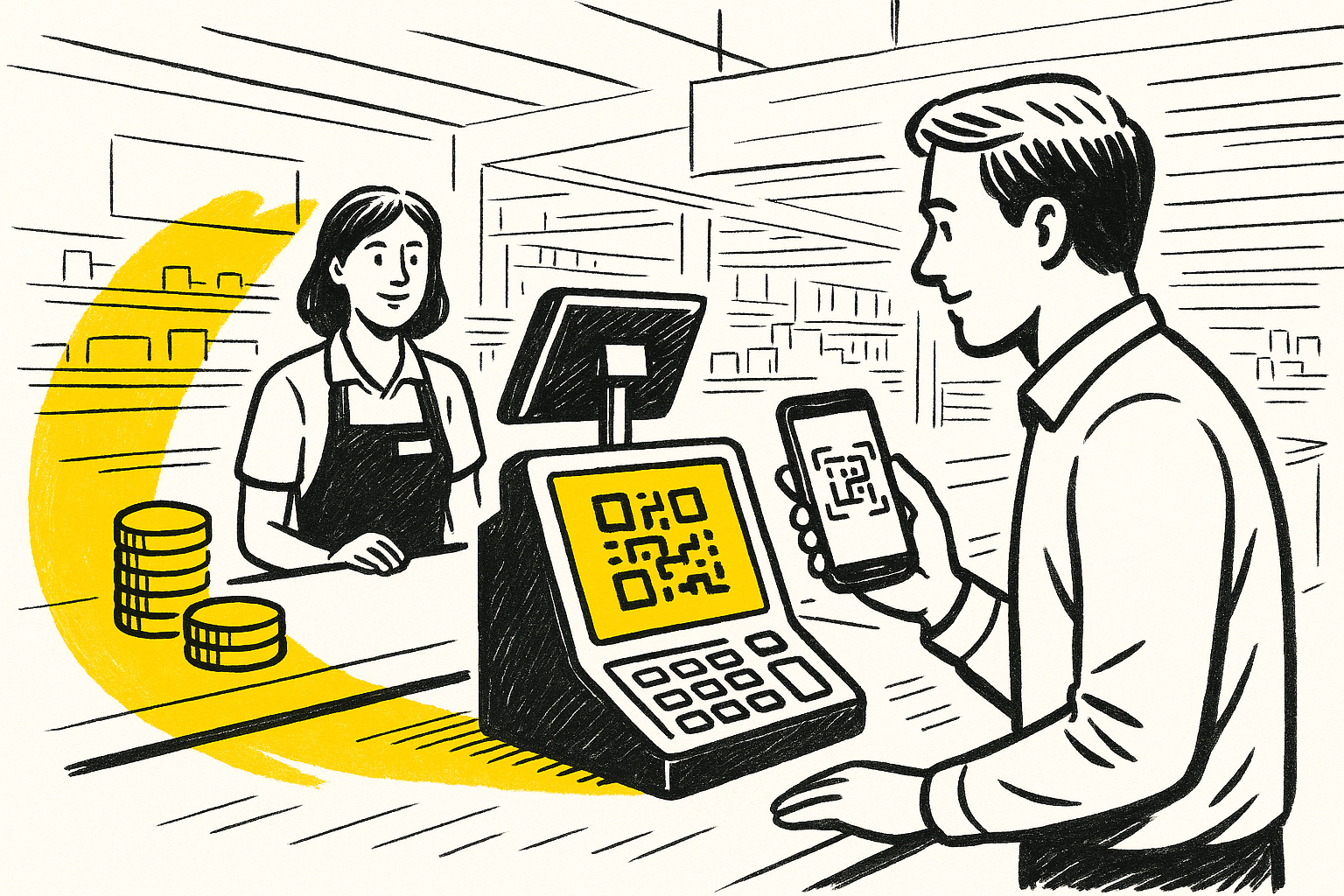

It’s official: Walmart Canada is now Klarna’s largest omnichannel retail partner in the country. With over 400 stores going live, customers can now use Buy Now, Pay Later (BNPL) for both online and in-store purchases; a first at this scale in Canada.
Klarna’s press release is, understandably, a bit celebratory. But underneath the big numbers and exec quotes is a very real, very strategic shift that fintech startups should take seriously.
Klarna isn’t chasing headlines. It’s chasing utility.
It’s easy to look at this and say “of course Klarna partners with Walmart.. who wouldn’t?” But it’s more nuanced than that.
Klarna didn’t just win a logo. It embedded itself into everyday consumer behaviour at the most fundamental level: checkout. Not just online, but physically; at 400+ points of sale, in the real world, on the ground.
A customer now stands at a Walmart cashier, sees Klarna’s QR code, and chooses how they want to pay. No friction. Just choice.
That’s not a brand placement but also a product-market fit.
Omnichannel is no longer a buzzword
The real story here isn’t just BNPL. It’s distribution.
Klarna has spent years building for omnichannel usage, and now it’s reaping the rewards. This rollout isn’t just about giving Walmart shoppers more flexibility, but about owning the payment layer across every context a customer might buy.
And they’ve made it dead simple:
- Online? Klarna.
- Mobile app? Klarna.
- In-store with a QR code? Klarna.
This is what omnichannel actually looks like when done right. For startups dreaming of partnerships: this is the bar now.
It’s not about credit
The BNPL model is often misunderstood as just an alternative to credit cards. But Klarna isn’t positioning itself that way here.
Instead, it’s offering control, flexibility, and transparency – the holy trinity of modern consumer finance. Klarna gives shoppers the ability to choose their flow (pay now or in 4), see what they owe, and feel in charge of their spending.
For fintechs, this is a subtle but critical lesson: the value is in how the product is framed, not just the feature.
Key takeaways for fintech startups
Here’s what fintech startups can take away:
- Be indispensable, not visible. Klarna’s QR at checkout isn’t just a marketing touch.. it’s functional, embedded, and useful.
- Omnichannel needs to mean something. If you say you’re omnichannel, show how your product works across online, mobile, and in-store without friction.
- The partner wants customer impact. Klarna gave Walmart a clear value-add: more payment choice for 1.5M daily customers.
- User experience > technology. The UX here is minimal: scan a code, pick a method, done. That’s what wins mass adoption.
- Position around empowerment. Klarna’s messaging isn’t about debt — it’s about “responsible spending.” That framing makes all the difference.
Want to land your own Klarna-Walmart moment?
Your Fintech Story helps fintech startups refine their strategy, grow faster, and land the right partnerships. Reach out if you’re ready to scale like you mean it.


