
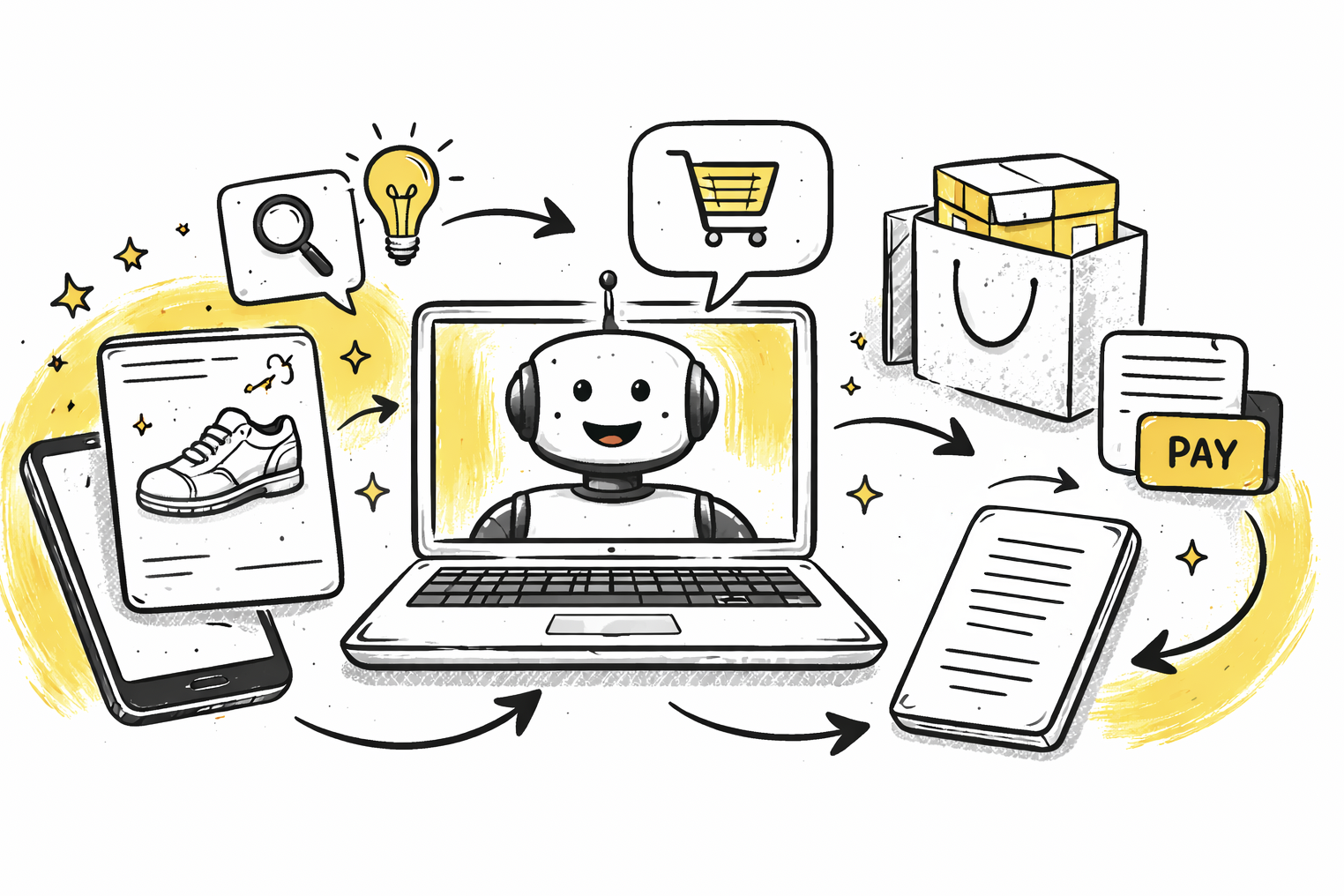

AI has been moving closer to commerce for a while, mostly through discovery and recommendations. With the launch of Copilot Checkout, another boundary shifts. In early January, PayPal announced it will power Microsoft’s new in-chat checkout experience inside Copilot. Users can now search, compare, and complete a purchase without leaving the AI interface.
For fintech founders, this is more than a feature launch. It signals a structural change in how intent becomes a transaction.
What Copilot Checkout Changes in Practice
Copilot Checkout allows users to move from product discovery to payment in a single conversational flow. Instead of clicking through search results, landing pages, and carts, the entire journey happens inside Copilot. The AI acts as a shopping assistant, while the checkout itself is handled by PayPal’s commerce and payment infrastructure.
PayPal brings familiar capabilities into this environment: card payments, guest checkout, branded merchant experiences, and buyer protections. Importantly, merchants still process the transaction and retain the customer relationship. The AI interface becomes the front door, not the merchant of record.
That distinction matters. Earlier platform-led commerce models often blurred who owned the customer and the transaction. Here, the roles are more clearly separated. Microsoft provides the AI layer, PayPal provides the rails, and the merchant remains central to the sale.
Why This Partnership Makes Strategic Sense
For Microsoft, commerce fits naturally into Copilot’s role. If users already ask the AI what to buy, enabling them to complete the purchase reduces friction and increases engagement. For PayPal, the value sits earlier in the funnel. Payments are no longer limited to the final checkout step. They become part of the decision moment.
This also aligns with PayPal’s broader push into agentic commerce, where AI systems can surface products and initiate transactions with minimal user effort. Copilot Checkout becomes a visible, consumer-facing expression of that strategy.
What This Signals for the Fintech Ecosystem
The bigger story is not Copilot itself, but the model behind it. Discovery, decision, and payment are converging into a single interface. Payment providers that integrate cleanly into AI environments gain relevance much earlier in the customer journey.
At the same time, merchants will continue to demand clarity around data ownership, brand visibility, and compliance. AI-driven checkout does not remove regulatory responsibility. If anything, it concentrates it.
For fintechs working on payments, onboarding, fraud, or merchant tooling, this is a directional signal. AI is becoming a primary interface for commerce, and infrastructure players are racing to embed themselves at that layer.
Key takeaways for fintech startups
A few lessons stand out from the Copilot Checkout launch:
- AI interfaces are evolving into full transaction environments
- Payment infrastructure is moving closer to the moment of intent
- Merchants still expect ownership of customers, data, and brand experience
- High-quality product and pricing data becomes critical in AI-driven commerce
- Trust, compliance, and reliability remain table stakes
If you are reassessing where your fintech product fits as AI reshapes commerce flows, now is a sensible moment to do it deliberately.
If you want help pressure-testing your positioning or translating market shifts into a clear strategy, Your Fintech Story works with fintech teams to turn change into focused, practical growth decisions.


