
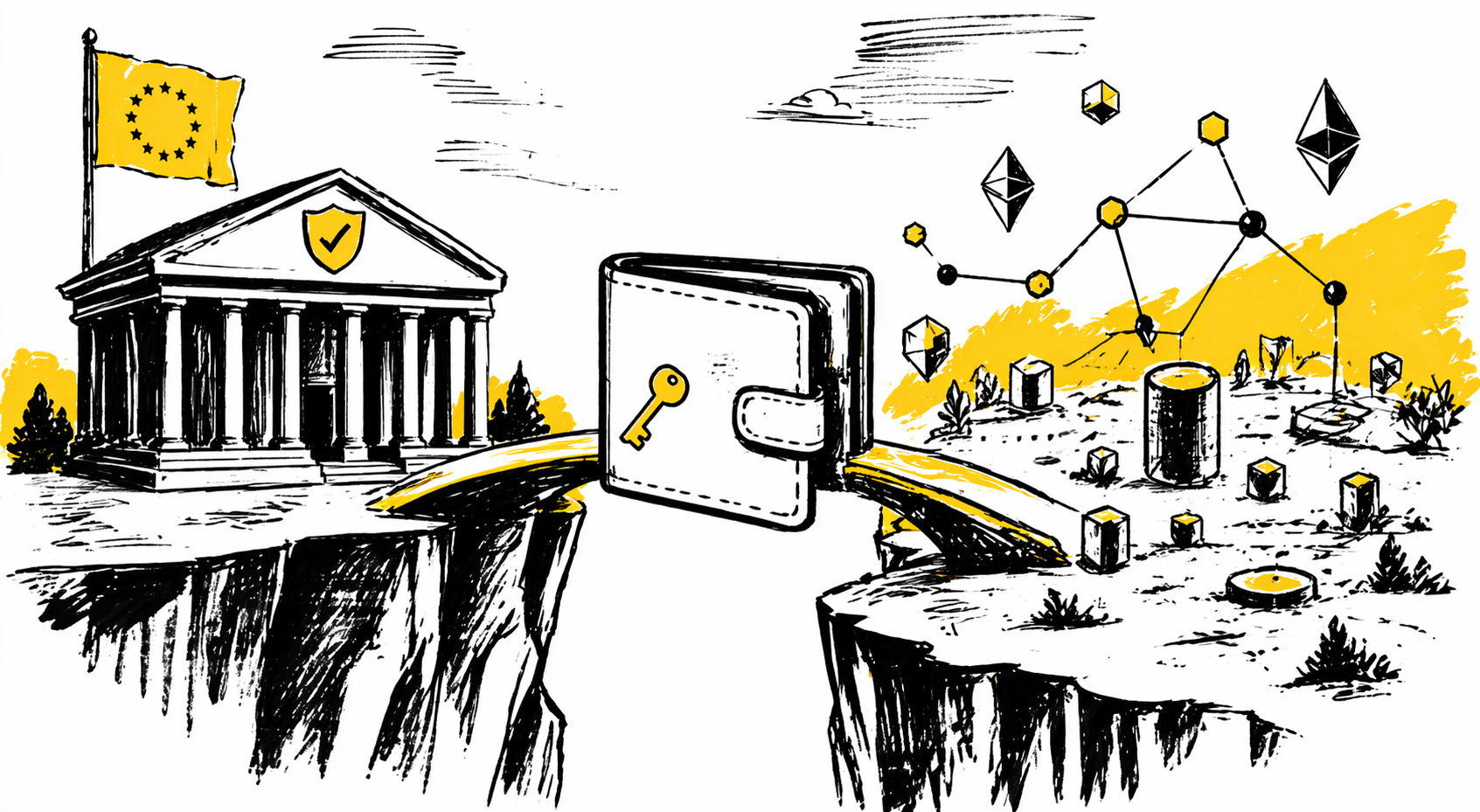

The acquisition of Zengo by eToro is more than a typical crypto deal. It signals a shift in how regulated platforms are approaching decentralised finance in Europe. The underlying theme is not expansion for the sake of growth, but careful positioning in response to regulation. With the EU’s Markets in Crypto-Assets regulation approaching full enforcement in July 2026, platforms are being forced to define what sits inside their regulated offering and what does not.
This is where self-custody enters the picture as a strategic tool rather than a niche feature.
Why self-custody is suddenly strategic
Self-custody allows users to hold and control their own crypto assets without relying on a central intermediary. For a regulated platform, this creates a clean separation. Core services such as brokerage and custody remain within the regulatory perimeter, while self-custody sits outside of it. In this setup, users interact directly with decentralised applications, staking mechanisms, or token swaps through their own wallet, without the platform acting as an intermediary.
This distinction is not just technical. It is deliberate. By structuring the product this way, platforms can expand user access to decentralised finance without extending their regulatory exposure.
MiCA’s blind spot creates opportunity
MiCA is designed to regulate centralised crypto-asset service providers. It does not fully address self-custody or decentralised finance interactions. This creates a gap that companies can use to their advantage. By offering a non-custodial wallet alongside regulated services, platforms can enable access to on-chain activity without triggering additional licensing requirements.
In practical terms, this opens the door to decentralised trading, token swaps, and other DeFi use cases, while keeping compliance obligations contained. The opportunity is not in avoiding regulation, but in designing around it with clear boundaries.
A bridge between CeFi and DeFi
The acquisition also reflects a broader shift in the market. Centralised platforms are no longer positioned in opposition to decentralised finance. Instead, they are building connections to it.
eToro contributes scale, distribution, and regulatory infrastructure. Zengo brings self-custody technology that simplifies how users manage their assets independently. Combined, they create a dual environment where users can choose between a regulated experience and direct interaction with decentralised protocols.
This model changes the role of the platform. It becomes both a gateway and a boundary, offering access while shifting responsibility to the user when they move outside the regulated environment.
What this means for fintech strategy
This deal highlights a pattern that is likely to accelerate across the industry. Fintech companies are not stepping away from regulation, but they are becoming more intentional in how they structure their products. Instead of forcing all innovation into regulated frameworks, they are separating certain capabilities and placing them outside, with clear legal and operational distinctions.
For fintech leaders, the strategic question is evolving. It is no longer whether to engage with decentralised finance, but how to do so without taking on disproportionate regulatory risk.
Before closing, it is worth summarising what this means in practice for fintech operators navigating similar decisions.
Key takeaways for fintech startups
- Self-custody is becoming a strategic layer rather than a standalone feature
- Product architecture is emerging as a key tool for managing regulatory exposure
- MiCA introduces both constraints and opportunities depending on how services are structured
- Clear separation between regulated and non-regulated components will shape future platforms
- User responsibility will increase as access to decentralised finance expands
If you are facing similar strategic choices, Your Fintech Story supports fintech startups with positioning, product strategy, and growth in regulated environments. Get in touch.


