Author: Tomas Hula

  • European banks move toward a euro stablecoin

    European banks move toward a euro stablecoin

    A group of ten European banks has created a new company in Amsterdam that intends to issue a euro stablecoin. The group includes ING and UniCredit, with BNP Paribas joining later in the process. The aim is to offer a digital euro token that sits within a fully regulated financial framework. The move reflects a broader effort from the banking sector to build European control over digital payments and reduce reliance on dollar based stablecoins.

    The company will operate under the name Qivalis. It is led by Jan Oliver Sell as chief executive. He previously worked in senior positions in the crypto industry. Floris Lugt from ING will serve as chief financial officer. Howard Davies, a well known figure in financial regulation and former chair of a major UK bank, will act as chair of the board. Qivalis plans to launch its euro stablecoin in the second half of 2026, subject to approval of an Electronic Money Institution licence from the Dutch central bank.


    Why this announcement matters

    Dollar stablecoins dominate global digital payments and crypto trading. The euro plays a much smaller role. A regulated, bank issued euro token could change the balance, at least within Europe. It gives banks a way to participate directly in digital asset infrastructure rather than watching that space develop around them.

    The project is positioned as a payments tool. The stablecoin is meant to support cross border transactions, settlement processes, and faster transfers. The first use cases may still come from the crypto trading environment, since market participants there already have established behaviour around stablecoins. The long term goal is broader adoption across financial services.


    The regulatory landscape

    The timing places Qivalis inside a complex regulatory moment. European rules for digital assets and stablecoins have tightened in recent years. Any bank backed stablecoin will face detailed expectations around liquidity, reserves, transparency, redemption, and operational resilience.

    There is also the backdrop of the digital euro project. The European Central Bank has been exploring a central bank digital currency. If both products reach the market, Europe could end up with a public sector digital euro alongside a private sector stablecoin. That would raise strategic questions about overlap, consumer adoption, and technical interoperability. Banks will need to explain clearly how Qivalis differs from a potential digital euro and how it fits into existing payment systems.


    What happens next

    The main milestone is the licence application. Without authorisation from the Dutch central bank, the stablecoin cannot launch. The banks will also need to build supporting infrastructure for issuance and redemption. How they design these rails will influence adoption. Trust will play a central role. Stablecoin users expect clarity on reserves, operational reliability, and the ability to redeem tokens at face value at any time.


    Key takeaways for fintech startups

    • A regulated euro stablecoin could create new payment and settlement options for European fintechs.

    • Any product built on top of such a stablecoin will need strong compliance alignment with European digital asset rules.

    • Startups should monitor how banks design access, interoperability, and redemption. These details affect product strategy.

    • If euro stablecoin demand grows, it may create room for new services around cross border transactions and treasury optimisation.

    If you want support analysing how a bank issued euro stablecoin might shape your fintech strategy or product roadmap, Your Fintech Story can help you plan your next steps.

  • How POM’s acquisition of FarPay signals a new phase for European invoicing fintech

    How POM’s acquisition of FarPay signals a new phase for European invoicing fintech

    The news comes from the portal EU-Startups, which reported that Dutch fintech POM has acquired Danish invoicing automation company FarPay. The story frames the deal as a strategic step toward building a stronger European position in invoice-to-cash automation.


    A closer look at the companies involved

    POM is active in digital payments, payment requests and receivables management. It built a reputation on simplifying customer payment flows and helping organisations streamline how they collect money.

    FarPay operates in the invoicing automation space. Its platform focuses on generating invoices, sending them at the right moment and connecting them directly to payment methods. It also manages follow-up actions and improves accuracy in the payment lifecycle.

    Together, these capabilities cover a large part of the invoice-to-cash chain. The acquisition effectively combines invoicing, payment processing and debtor follow-up in one group.


    What EU-Startups highlighted

    According to the reporting, FarPay will continue operating under its own brand. Its team and management remain in place, and the company keeps its base in Denmark. The arrangement allows FarPay to maintain its expertise while benefiting from the scale of the broader POM Group.

    EU-Startups also noted the role of Vortex Capital Partners. Their support helped POM structure and accelerate the acquisition, giving the Dutch company more confidence as it expands deeper into Northern Europe.


    What this means for POM

    POM strengthens its geographic footprint. Until now, the company had a solid position in Belgium, the Netherlands and Germany. Adding a Danish operation gives the group better coverage across the Nordics and more room to grow its product suite.

    POM also gains technical depth. FarPay’s focus on automated invoicing complements POM’s existing payments and receivables expertise. The combined stack aims to deliver a cleaner, more connected workflow from invoice creation to completed payment.


    What this means for the broader market

    The deal reflects a pattern that is becoming more visible in European fintech. As the market matures, companies look for scale, integration and cross-border presence. Smaller specialised solutions often feel pressure to join forces with players that can offer broader value.

    Businesses using these tools increasingly want fewer vendors and fewer integrations. They expect one place to manage invoicing, payment options, reminders and reconciliation. The POM and FarPay combination fits that direction.


    Key takeaways for fintech startups

    A short summary for founders and C-level teams:

    • Integrated platforms often win when customers want fewer steps and cleaner workflows.

    • Expanding into new regions can accelerate growth more than adding incremental features.

    • Combining complementary capabilities can strengthen product positioning overnight.

    • Consolidation in B2B financial automation is increasing, which influences how startups plan product and market strategy.

    If you want support in positioning your fintech for growth or navigating market shifts like this one, Your Fintech Story can help you shape a clear and competitive strategy. Contact us.

  • A 47% Crypto Tax Is Now on the Table in Spain

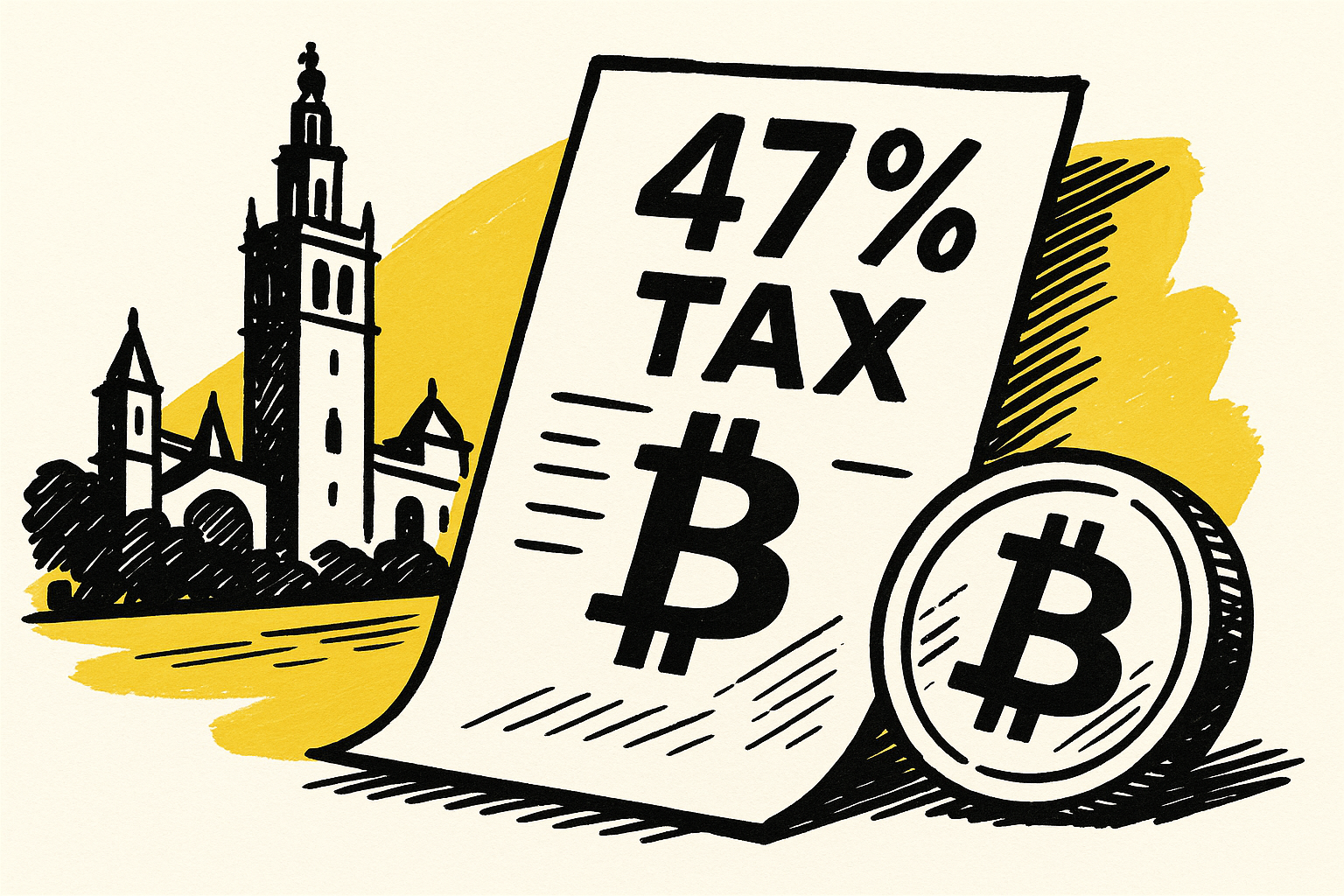
    A 47% Crypto Tax Is Now on the Table in Spain

    Spain is reviewing a proposal that would raise the tax rate on personal cryptocurrency gains to as high as 47 percent. The plan was introduced by Sumar, one of the parties in the governing coalition. It would move crypto profits from the savings income category into the general income bracket, where the top rate reaches 47 percent. Today, the highest tax on savings income sits around 30 percent, so this change would be a significant jump for frequent traders and high earners.


    Corporate Taxes Stay Where They Are

    For companies, the picture is more familiar. Corporate gains from crypto would continue to be taxed at 30 percent. That is consistent with Spain’s standard corporate tax rate. The personal income change is the part that is drawing attention from investors and industry professionals.


    Extra Investor Protection Measures

    Sumar’s amendment package includes more than tax changes. One proposal would require the CNMV to introduce a traffic light style risk label for crypto products offered on investment platforms. The goal is to make the risk level of each product clearer for retail investors before they buy or trade.

    The package also includes language that classifies all cryptocurrencies as assets that could be seized in enforcement actions. Specialists have raised concerns about how this would work in practice when assets sit in self-custody and cannot be accessed like traditional financial instruments.


    Expert Pushback and Public Reaction

    Spanish tax professionals and crypto industry voices have been critical of the proposed top rate. Many warn that a 47 percent ceiling could reduce local activity or drive investors toward jurisdictions with more predictable or lower tax treatment. Several experts also questioned the feasibility of enforcing seizure rules for self-custodied assets.


    The Legislative Status Today

    The Spanish government has not formally endorsed the 47 percent rate. The proposal currently sits within parliamentary discussions and would need wider political support before advancing. For now, it remains a trigger for debate rather than a confirmed change to the tax code.


    Key takeaways for fintech startups

    A short note before the bullets to highlight what matters for founders.

    • Spain may shift personal crypto gains into a tax bracket that reaches 47 percent.

    • Corporate gains remain taxed at 30 percent.

    • The proposal includes a required risk labeling system for platforms.

    • Experts have questioned enforcement feasibility for self-custodied assets.

    • Nothing is final. The proposal is still at the parliamentary stage.

    Your Fintech Story can help you prepare, adjust and communicate effectively as the situation evolves. Get in touch.

  • Visa and Aquanow Bring Stablecoin Settlement Into the Mainstream

    Visa and Aquanow Bring Stablecoin Settlement Into the Mainstream

    Visa expanded its stablecoin settlement program by partnering with Aquanow, a Canadian digital asset infrastructure provider. The announcement confirms that Visa is now enabling select issuers and acquirers to settle transactions using approved stablecoins such as USDC. The focus is on the Central and Eastern Europe, Middle East and Africa region, where cross-border payments often move slowly and depend on fragmented banking networks.

    Visa has been experimenting with stablecoin settlement for several years. The company originally piloted USDC settlement in 2023 and later expanded the program as transaction volumes grew. By late 2025, Visa reported a monthly stablecoin settlement volume that annualizes into the billions. That signals growing institutional comfort with regulated stablecoins and blockchain based financial infrastructure.

    The Aquanow collaboration connects Visa’s traditional settlement network with Aquanow’s digital asset rails. Aquanow provides the infrastructure for converting between fiat and stablecoins and manages the movement of funds across blockchain networks. This supports faster clearing cycles and simplifies the backend steps normally required in cross-border settlement.


    How this changes the payment workflow

    Most card payments involve several intermediaries. There is the issuer, the acquirer, the card network and the banking partners that handle the actual movement of funds. When payments cross borders, additional correspondent banks often join the chain. Each participant adds time, cost and operational workload.

    Stablecoin settlement shortens this chain. Instead of waiting for traditional banking rails to clear, Visa can settle eligible transactions using USDC on supported blockchains. The stablecoin flows directly between participating institutions through Aquanow’s infrastructure. That reduces settlement time and creates a 24/7 model that does not depend on banking hours or regional holidays.

    The appeal is practical rather than ideological. Stablecoins like USDC are designed to maintain a one-to-one peg with the US dollar and are backed by audited reserves. Institutions view them as more predictable than most cryptocurrencies, which makes them suitable for settlement workflows.


    Why CEMEA gets priority

    CEMEA markets often struggle with slow correspondent banking chains and long settlement cycles. Payment providers face higher operational overhead when sending or receiving funds across multiple jurisdictions. Visa’s expansion into this region reflects clear demand for faster movement of money, especially for cross-border commerce, remittances and marketplace payouts.

    Faster settlement improves liquidity for merchants and payment companies. Reduced waiting time between a transaction and the moment funds arrive can help companies manage cash flow with fewer buffers. It also supports a more resilient payment environment because settlement can happen continuously, even when local banking systems are offline.


    Practical considerations for institutions

    The benefits come with responsibilities. Institutions must ensure regulatory compliance in each jurisdiction where they operate. That includes clear rules around digital asset holding, anti-money laundering obligations and reporting requirements. Each participating issuer or acquirer also needs technical readiness to integrate with Aquanow’s infrastructure.

    There is also the adoption curve. The value of stablecoin settlement increases as more institutions join the ecosystem. Early adopters gain speed advantages, but the long term impact depends on broad participation across issuers, acquirers and processors.


    Key takeaways for fintech startups

    Here is a short overview of what matters most.

    • Stablecoin settlement offers faster, round-the-clock clearing for cross-border transactions.

    • USDC provides dollar-denominated stability that is practical for institutional use.

    • CEMEA markets may see the strongest impact due to existing settlement bottlenecks.

    • Startups must consider regulatory and compliance obligations before using digital asset rails.

    • The model is relevant for companies in remittances, global payouts, marketplaces or commerce platforms with international customers.

    If your fintech team wants help mapping how stablecoin settlement could support your product or reduce operational friction, Your Fintech Story can guide you through that evaluation and help you choose the right approach.

  • Klarna Introduces KlarnaUSD And Signals A New Phase For Stablecoins

    Klarna Introduces KlarnaUSD And Signals A New Phase For Stablecoins

    Klarna has always experimented with payment convenience, so its move into stablecoins was not exactly shocking. Still, the announcement of KlarnaUSD and the headline number of 27 trillion dollars in annual stablecoin transactions raises eyebrows. It is a sign that stablecoins are becoming part of the mainstream payments conversation instead of something sitting on the edge of fintech.


    Why KlarnaUSD Matters

    KlarnaUSD is designed as a digital dollar tied to the US currency. The intention is to make online payments faster and cheaper by reducing the number of intermediaries that touch each transaction. This is the typical promise of digital settlement. What is different here is the scale of the company stepping into it. Klarna is a global brand with millions of active users, so even a modest adoption curve can push stablecoins further into the everyday consumer space.

    Klarna is also framing this in practical terms. Lower fees, faster settlement, and fewer cross border frictions. These are familiar pain points in retail payments, and the company is essentially arguing that stablecoins can help trim operational overhead in ways card schemes and traditional rails struggle to match.


    The Rise Of Stablecoin Payments

    The larger backdrop is the growth of stablecoin usage worldwide. The 27 trillion dollar figure refers to the total volume processed across stablecoin networks over the last year. That number puts stablecoins in the territory of major card networks. It does not mean stablecoins have replaced cards. It simply shows that digital settlement on blockchain rails has reached a scale that serious players can no longer ignore.

    A retail brand adopting stablecoin payments signals a shift. Until recently, most stablecoin activity was dominated by crypto exchanges, institutional traders, and treasury operations. Klarna’s announcement suggests that the conversation is moving toward practical consumer payments. This does not rewrite the rules overnight. It does, however, create a new benchmark for what a large fintech considers viable.


    The Practical Reality For Merchants And Users

    Merchants want lower fees and predictable settlement. Consumers want speed and clarity. Stablecoins can deliver both, but only if the infrastructure around them is easy to use and compliant with global regulatory norms. Klarna is approaching this by keeping the focus on user experience instead of the underlying technology. The customer does not need to understand how stablecoin rails work. They only need to feel that the checkout process is smooth.

    The main hurdle remains regulation. Stablecoins are under scrutiny in the US and EU, and any large scale consumer rollout must navigate licensing, custody rules, and oversight. Klarna’s announcement does not remove these hurdles. It simply shows that fintechs are willing to engage with them.


    Key takeaways for fintech startups

    Before looking at the lessons, it helps to remember that Klarna is highlighting efficiency rather than novelty. That framing is a useful guide for smaller players.

    • Stablecoin rails are becoming credible for realistic payment use cases.

    • Efficiency arguments resonate more than technology arguments.

    • Mainstream adoption will depend on simple user experience, not technical complexity.

    • Regulation remains the biggest gating factor for consumer facing stablecoin products.

    • Large fintechs entering the space create momentum that smaller players can piggyback on.

    If you want to explore how developments like these might influence your own fintech roadmap, Your Fintech Story can help you navigate strategy and positioning.

  • Kraken raises USD 800 million to advance its strategic roadmap

    Kraken raises USD 800 million to advance its strategic roadmap

    Kraken, a major digital asset exchange, announced that it has raised USD 800 million across two tranches to accelerate its push into regulated, multi-asset financial infrastructure. The round includes a diverse group of institutional investors and a strategic investment from Citadel Securities. The company positions this raise as a way to scale its global presence and expand well beyond its origins as a crypto exchange.


    A closer look at the funding round

    The first tranche features participation from Jane Street, DRW Venture Capital, HSG, Oppenheimer Alternative Investment Management and Tribe Capital. Kraken also highlights a meaningful contribution from co CEO Arjun Sethi’s family office. The second tranche adds a USD 200 million investment from Citadel Securities at a USD 20 billion valuation.

    Kraken reports USD 1.5 billion in revenue for 2024 and says it surpassed that figure within the first three quarters of 2025. Until now the company had raised only around USD 27 million in primary capital. The scale of the new round marks a significant shift toward long term expansion rather than incremental growth.


    What Kraken plans to build next

    Kraken describes its technology stack as vertically integrated across matching, custody, clearing, settlement, market data and wallet services. The company intends to use the new capital to deepen its regulated footprint and bring its services to more regions, with Latin America, Asia Pacific and EMEA referenced as priorities.

    The roadmap also points toward a broader product suite. Kraken intends to expand services across tokenised assets, equities, staking, payments and more advanced institutional tools. The partnership with Citadel Securities is positioned as a source of liquidity provision, risk management expertise and traditional market structure insights.


    Why this matters for digital finance

    This raise signals continued movement toward institutional grade digital asset infrastructure. Investors appear to be backing models that integrate regulatory readiness, infrastructure ownership and global scalability. The size of the round also shows that Kraken expects future growth to depend on regulated access to more asset classes, not only crypto assets.

    For fintech builders, this development emphasises the importance of credible infrastructure, strong regulatory foundations and partnerships that bridge the gap between new digital markets and long standing financial practices.


    Key takeaways for fintech startups

    • Capital efficient execution still matters. Kraken scaled revenue with very little external funding prior to this round.

    • Owning critical infrastructure makes it easier to introduce new asset classes and maintain service reliability.

    • Collaborating with established financial players can accelerate liquidity access and institutional trust.

    • Global expansion requires significant capital and a strong regulatory strategy.

    • Investor interest continues to shift toward regulated digital asset infrastructure rather than purely speculative products.

    If your fintech wants to navigate strategy, regulation or investor readiness in the digital asset space, Your Fintech Story can help shape a plan that supports long term growth. Get in touch.

  • Saudi Arabia Sets a Confident Direction for Fintech

    Saudi Arabia Sets a Confident Direction for Fintech

    Saudi Arabia is shaping a fintech landscape that grows quickly yet still feels coordinated. SAMA Governor Ayman Al Sayari recently outlined how the Kingdom plans to keep that momentum going, and the picture is clear. Policy, infrastructure and regulation are all being tightened in ways that support long term scale.


    Fast growth with real depth

    The fintech sector has expanded from 82 active firms in 2022 to 281 by August 2025. Investment has passed the equivalent of about 2.4 billion US dollars. These numbers reflect more than enthusiasm. They show that the framework built under Vision 2030 is doing what it was designed to do. Startups can enter the market, test ideas through formal channels and then graduate into fully licensed operations.

    Daily behaviour also confirms how far things have moved. In 2024, 79 percent of all retail payments in Saudi Arabia were electronic. Total digital payment volumes rose from 10.8 billion transactions in 2023 to 12.6 billion in 2024. It is rare to see a national shift toward cashless payments happen this quickly and with this level of adoption.


    A stronger foundation for digital finance

    SAMA is modernising core financial infrastructure so it can handle higher volumes and more complex services. This includes improvements to national payment rails, faster clearing for checks and upgrades that support real time transactions. Licensing processes have become more structured through dedicated digital portals. The goal is to lower friction for new entrants while maintaining strong oversight.

    International cooperation is another priority. The Kingdom positions itself as a link between Middle East, Africa and Asia. Regulators are engaging with global peers so that cross border fintech services can scale without adding unnecessary risk. It is a practical approach that blends openness with stability.


    Opportunities for fintech founders

    Saudi Arabia offers clear strengths. The population is young and comfortable with digital services. The government continues to align national programs with fintech objectives. Infrastructure is improving and the market shows real appetite for new financial products. Startups that understand local expectations and the regulatory landscape stand a better chance of success.


    A note on emerging founder talent

    The ecosystem is also attracting young entrepreneurs. One example often mentioned in local media is Abdullah Najashi, a healthcare focused fintech founder. His work highlights how fintech in Saudi Arabia is broadening beyond payments and lending. Public information on specific age related records is limited, so the safest statement is that he is part of a younger wave of founders building specialised financial services.


    Key takeaways for fintech startups

    Here is what matters most for companies considering Saudi Arabia:

    • The market is growing quickly and supported by strong policy guidance.

    • Digital payments already dominate, which makes the environment easier for product adoption.

    • Regulatory engagement is structured and transparent, so early conversations help.

    • The country is building a regional role that can open paths into neighbouring markets.

    • Sectors like healthcare and insurance show room for specialised fintech plays.

    If you want to explore opportunities or design a focused market entry plan, Your Fintech Story can help you navigate strategy, partnerships and positioning. Reach out.

  • 7 Banking and Fintech Trends in 2026, According to Bernard Marr

    7 Banking and Fintech Trends in 2026, According to Bernard Marr

    Bernard Marr, a well known futurist and bestselling author with over twenty books, recently published his take on the seven biggest banking and fintech trends shaping 2026. His work is widely followed in the industry, and his predictions usually land close to reality. The list sets a clear direction for where financial services are heading next year.


    1. AI Agents in Banking and Finance

    Marr highlights AI agents as the biggest force shaping 2026. These systems perform multi step tasks with minimal human involvement, taking over everything from reconciliation to fraud detection. They also handle customer facing work, acting as personal finance helpers that compare products and optimize portfolios on demand.


    2. The Customer Experience Revolution

    Customer experience is now the main battleground for loyalty. Marr notes that switching providers is easier than ever, so banks are personalizing every interaction using AI and predictive analytics. The goal is to remove friction and solve issues before customers notice them.


    3. Bridging the Fintech Skills Gap

    Marr stresses that the talent shortage is slowing progress. Financial institutions cannot scale AI or blockchain without enough skilled people. Data science, cybersecurity and engineering roles remain difficult to fill, so many organizations will invest heavily in training and upskilling.


    4. Tokenized Assets

    Tokenization continues to accelerate. Real estate, commodities, art and other assets are increasingly traded as blockchain based tokens. Marr points out that tokenized markets grew rapidly in recent years, and 2026 will see more investors using these instruments for diversification and faster settlement.


    5. Quantum Finance Moves Forward

    Quantum computing is moving from experiments into real financial workflows. Marr describes how major banks already use quantum systems for tasks like risk modeling and optimization. The next phase is hybrid setups where classic computing handles routine work while quantum engines tackle the most complex calculations.


    6. Stablecoins Enter the Mainstream

    Stablecoins, which are tied to fiat currencies, gained significant momentum after new regulation in the United States. Marr highlights that large institutions, including Bank of America and Citibank, have begun exploring stablecoin projects. The trend points toward smoother cross border payments and more institutional adoption.


    7. Building Resilience in Uncertain Times

    The final trend focuses on resilience. Marr explains that global uncertainty and regulatory shifts will push banks to strengthen systems and simplify processes. Cross border payment innovation and risk management improvements will be central themes as institutions prepare for fast changing market conditions.

    The seven trends outline a financial sector shaped by automation, stronger infrastructure and new digital asset classes. Marr’s message is clear. The winners in 2026 will be the institutions that stay agile, invest in technology and keep the customer at the center of their strategy.

    Contact us if you need help with growing your fintech.

  • Why ING Bank Śląski’s €93M Takeover of Goldman Sachs TFI Matters for Fintech Startups

    Why ING Bank Śląski’s €93M Takeover of Goldman Sachs TFI Matters for Fintech Startups

    ING Bank Śląski has agreed to acquire the remaining 55% of Goldman Sachs TFI for about €93 million, taking full control of one of Poland’s largest asset-management platforms. For fintech founders in the EU, UK and US, this isn’t just a local banking move. It’s another sign that incumbents are tightening their grip on digital wealth, retirement products and the broader investment ecosystem.

    The acquisition gives ING full ownership of a business that already manages dozens of funds and retirement products, serving more than 700,000 clients. ING isn’t planning to change leadership or branding. It simply wants the engine behind the products. And that’s the part fintech operators should pay attention to.


    What ING Is Really Doing

    ING has been gradually expanding its investment and private-banking capabilities, helped by rising household affluence and shifting savings habits in Poland. Full control of Goldman Sachs TFI strengthens its position in retirement accounts and investment funds while adding a massive customer base to its digital platform.

    This move also fits ING’s broader preference for buying proven capabilities instead of building them from scratch. Years ago the group made early moves into cloud-native banking. Now it is consolidating its wealth stack the same way: quietly and methodically.

    For Goldman Sachs, this is simply an exit. It inherited the TFI business through a previous acquisition and is now pruning non-core units in Europe.


    Why Founders Should Care

    Wealthtech and digital investments are no longer ā€œstartup-onlyā€ categories. Banks with millions of customers and robust balance sheets are aggressively expanding into these spaces. When a leading European bank spends close to €100 million to secure an investment-management arm, it’s a clear indicator of where competitive pressure is rising.

    This creates a mixed environment for founders:

    • More acquisition opportunities for strong wealth and investment platforms.

    • More competition from incumbents rolling fintech capabilities into their ecosystems.

    • More consolidation that reduces the number of standalone growth paths for new entrants.

    • More demand for specialist products that banks can’t (or don’t want to) build.

    If you’re building in digital wealth, core banking infrastructure, automated portfolio tools, retirement solutions or even compliance tech, this is a moment to pay attention. Banks are shopping. And their shopping lists are getting more ambitious.


    Key takeaways for fintech startups

    • Large banks are actively buying fintech-style capabilities instead of building their own, which creates both exit potential and tougher competition.

    • Wealthtech, retirement products and digital investment tools are high-priority areas for incumbents, so startups in these verticals need sharp differentiation.

    • Consolidation continues across Europe, reducing the number of independent growth paths for new fintechs while increasing the value of strong partnerships.

    • Startups should prepare for a market where banks use scale and distribution to expand quickly into traditionally ā€œfintechā€ spaces.

    If you want help positioning your fintech for growth, partnerships or market clarity, Your Fintech Story can guide you with strategy, storytelling and practical next steps. Contact us.

  • Pipe’s reported 50% staff cut: a fintech ā€œgrow fastā€ case study in reverse

    Pipe’s reported 50% staff cut: a fintech ā€œgrow fastā€ case study in reverse

    When a once-$2 billion fintech trims roughly half its team, founders pay attention.

    US-based Pipe, an embedded capital and financial tools provider for SMBs, has reportedly laid off about 50% of its roughly 150+ employees in a major restructuring announced on 18 November 2025. The figure comes from multiple industry sources. A company spokesperson confirmed that a significant reduction took place, but the company has not published an exact number.


    From ā€œNasdaq for revenueā€ to a leaner organisation

    Pipe became one of the highest-profile revenue-based financing players after raising $250 million in 2021 at a $2 billion valuation. That round – widely covered at the time – positioned Pipe as a breakout fintech offering companies a way to trade recurring revenue for upfront capital.

    The recent layoffs come under CEO Luke Voiles, who took over after the three co-founders stepped down from executive roles in late 2022. Since then, Voiles has rebuilt the leadership bench with senior hires across product, risk, operations and marketing. Some of those hires have already moved on, which shows how turbulent the post-hypergrowth phase can be.


    The official line: profitability and focus

    In its public statement, Pipe described the workforce reduction as a ā€œdifficult decision to shift to a leaner org structure.ā€ The company says its business is ā€œstrong and growing rapidly,ā€ but highlighted the need to prioritise profitability, operating efficiency and its core product set.

    This sits within a broader wave of fintech job cuts that continued into 2025 as investors demanded clearer paths to profit. Tech and fintech companies across the US have been reducing headcount throughout the year as capital availability tightened and the cost of growth increased.

    For Pipe, the cuts follow a period of expansion. In 2024 the company secured a $100 million credit facility to support its Capital-as-a-Service offering, expanded its card product and continued repositioning itself as a broader financial infrastructure provider for SMBs.


    Confirmed vs. reported

    For founders reading this story, it helps to be precise about what is confirmed and what remains reported:

    Confirmed:

    • Pipe has carried out a major workforce reduction.

    • The company is shifting toward a leaner structure with a stated profitability focus.

    • Leadership changes since 2022 have reshaped the organisation.

    Reported but not disclosed by Pipe:

    • Multiple well-sourced reports estimate layoffs at around 50% of staff.

    • Base headcount before the cuts was widely cited as roughly 150–155 people.

    • No official number or breakdown has been shared by the company.


    Key takeaways for fintech startups

    Here is how founders can read this story as a checklist, rather than just news:

    • Building a ā€œdream teamā€ is expensive Executive hiring sprees look great on paper, but they add fixed costs and complexity. Tie every senior hire to a measurable business outcome.

    • Profitability needs to enter the picture earlier Revenue-based financing and embedded capital models are sensitive to macro shifts. If your unit economics only work in perfect conditions, you’re exposed.

    • Communicate the difference between confirmed facts and estimates The market will run with the headline number. Your clarity is essential for maintaining trust with staff, investors and partners.

    • Product expansion carries hidden operational load Adding new product lines increases demands in risk, compliance, marketing and support. Fintechs should be selective and intentional.

    • Your ā€œsecond actā€ will require different structures Post-hype phases often mean fewer people, tighter controls and a leadership style built around discipline. Planning for that shift beats reacting to it.


    How Your Fintech Story can help

    If the Pipe story makes you rethink your own roadmap, team structure or product focus, you’re in good company. Your Fintech Story works with founders and leadership teams to pressure-test decisions, sharpen strategy and plan sustainable growth. Get in touch.