Author: Tomas Hula

  • Klarna x Walmart Canada: What Fintechs Can Learn from This Massive BNPL Rollout

    Klarna x Walmart Canada: What Fintechs Can Learn from This Massive BNPL Rollout

    It’s official: Walmart Canada is now Klarna’s largest omnichannel retail partner in the country. With over 400 stores going live, customers can now use Buy Now, Pay Later (BNPL) for both online and in-store purchases; a first at this scale in Canada.

    Klarna’s press release is, understandably, a bit celebratory. But underneath the big numbers and exec quotes is a very real, very strategic shift that fintech startups should take seriously.


    Klarna isn’t chasing headlines. It’s chasing utility.

    It’s easy to look at this and say “of course Klarna partners with Walmart.. who wouldn’t?” But it’s more nuanced than that.

    Klarna didn’t just win a logo. It embedded itself into everyday consumer behaviour at the most fundamental level: checkout. Not just online, but physically; at 400+ points of sale, in the real world, on the ground.

    A customer now stands at a Walmart cashier, sees Klarna’s QR code, and chooses how they want to pay. No friction. Just choice.

    That’s not a brand placement but also a product-market fit.


    Omnichannel is no longer a buzzword

    The real story here isn’t just BNPL. It’s distribution.

    Klarna has spent years building for omnichannel usage, and now it’s reaping the rewards. This rollout isn’t just about giving Walmart shoppers more flexibility, but about owning the payment layer across every context a customer might buy.

    And they’ve made it dead simple:

    • Online? Klarna.
    • Mobile app? Klarna.
    • In-store with a QR code? Klarna.

    This is what omnichannel actually looks like when done right. For startups dreaming of partnerships: this is the bar now.


    It’s not about credit

    The BNPL model is often misunderstood as just an alternative to credit cards. But Klarna isn’t positioning itself that way here.

    Instead, it’s offering control, flexibility, and transparency – the holy trinity of modern consumer finance. Klarna gives shoppers the ability to choose their flow (pay now or in 4), see what they owe, and feel in charge of their spending.

    For fintechs, this is a subtle but critical lesson: the value is in how the product is framed, not just the feature.


    Key takeaways for fintech startups

    Here’s what fintech startups can take away:

    • Be indispensable, not visible. Klarna’s QR at checkout isn’t just a marketing touch.. it’s functional, embedded, and useful.

    • Omnichannel needs to mean something. If you say you’re omnichannel, show how your product works across online, mobile, and in-store without friction.

    • The partner wants customer impact. Klarna gave Walmart a clear value-add: more payment choice for 1.5M daily customers.

    • User experience > technology. The UX here is minimal: scan a code, pick a method, done. That’s what wins mass adoption.

    • Position around empowerment. Klarna’s messaging isn’t about debt — it’s about “responsible spending.” That framing makes all the difference.

    Want to land your own Klarna-Walmart moment?

    Your Fintech Story helps fintech startups refine their strategy, grow faster, and land the right partnerships. Reach out if you’re ready to scale like you mean it.


  • Chift: Building Europe’s Financial Connectivity Layer

    Chift: Building Europe’s Financial Connectivity Layer

    Europe’s financial software stack is highly fragmented. In the U.S., a startup might integrate with QuickBooks and Xero and be ready for launch. In Europe, expansion means navigating dozens of local accounting tools, payment platforms, and invoicing systems. Each country has its own champions, compliance rules, and standards. For SaaS teams, this makes integrations a strategic challenge, not just a technical task.

    “Integration is no longer just a feature, it’s a key differentiator.”

    – Chift, State of European Accounting Tech 2025

    Chift stepped into this gap. By offering a single integration layer across accounting, invoicing, payments, POS, e-commerce, and more, the company positioned itself as the connective tissue of Europe’s fintech ecosystem.


    What They Did Right

    Several decisions made Chift stand out.

    • One API to connect them all. Instead of building connectors one by one, Chift created unified APIs that link to almost 100 financial systems. One integration unlocks coverage across categories like accounting, payments, e-commerce, and POS.
    • Local-first mindset. European markets are diverse. Chift invested in connectors tailored to local leaders as well as international players, ensuring relevance in each country. This gave SaaS teams a shortcut to European coverage without reinventing the wheel every time.
    • Making speed a feature. In-house integrations can drag on for months. Chift reduced that timeline dramatically.

    “For a single accounting integration, it takes us 12 to 16 weeks in-house. With Chift’s unified API, we delivered four integrations in about 4 to 6 weeks.”

    – Ashleigh Auld, Strategic Partner Marketing Manager at Pleo

    Where Chift Stands Today

    Chift is now recognized as the infrastructure layer for financial connectivity in Europe. Its platform spans accounting, invoicing, payments, POS, e-commerce, and PMS.

    The client roster includes Qonto, Mollie, Sage, and Pennylane. These companies could have invested heavily in their own integrations but chose to rely on Chift instead.

    By helping SaaS teams connect faster and more reliably, Chift directly supports adoption, retention, and product scalability.

    202215K+100+
    company foundedbusinesses connectedintegrations live


    Why It Worked

    Several factors explain Chift’s rise.

    Regulation has been a huge catalyst for momentum. Across the EU, mandatory e-invoicing rules are forcing millions of B2B SMEs to adopt certified digital tools. These changes make connectivity a necessity: accounting and invoicing systems must now communicate in real time to stay accurate and compliant.

    As one investor put it, “Accounting is the core ledger for everything in finance… That’s why every finance tool eventually needs to connect to the accounting system.”

    At the same time, Europe’s finance stacks have grown more modular. Many companies now rely on a mosaic of specialized apps rather than one monolithic suite. This trend brings flexibility but also leaves data trapped in silos. Chift turns that patchwork into an advantage by linking every major tool in an SME’s arsenal through a single unified API. With one integration, a fragmented stack starts to function like a cohesive platform. The benefits reach beyond engineering. Sales teams can shorten cycles, marketing can enter new markets, and product teams can launch new features faster.

    The company also solved the build-versus-buy dilemma. Maintaining dozens of integrations internally is expensive and drains focus from core features.

    By outsourcing that complexity, SaaS teams can concentrate on what truly sets them apart.


    Key takeaways for fintech startups

    Here’s what fintech founders can take from Chift’s journey:

    • Spot fragmentation and turn it into opportunity.

    • Treat integrations as part of your product strategy.

    • Focus on what makes you unique and partner for the rest.

    • Use regulatory changes as catalysts for adoption.

    • Speed and reliability are features customers value.

    Chift shows that solving infrastructure pain points can unlock growth across the entire fintech ecosystem. By quietly powering connectivity, they enable others to move faster.

  • Monzo’s MVNO Move: What Fintechs Can Learn About Diversification

    Monzo’s MVNO Move: What Fintechs Can Learn About Diversification

    Monzo is stepping outside of banking and into mobile. The UK challenger bank announced plans to launch an MVNO (mobile virtual network operator), offering customers digital SIMs and mobile plans.

    At first glance, a bank selling phone contracts might sound like a stretch. But for Monzo, it’s part of a bigger theme: service diversification. Fintechs are looking for new ways to grow, reduce reliance on thin-margin banking products, and deepen customer relationships.

    The move raises an important question for every fintech founder: when does diversification work, and when does it backfire?


    Why fintechs branch into telecom

    Diversification is not new. Revolut offers eSIMs with global data. Klarna launched a U.S. mobile plan. N26 partnered with 1GLOBAL to sell travel-friendly eSIMs. Nubank has “NuCel” in Brazil. Even Google and Amazon have experimented with mobile bundles.

    So why is telecom attractive for fintechs?

    • Customer stickiness. People interact with their mobile plan daily. If it’s tied to your app, customers open it more often — boosting engagement.

    • Cross-selling. If you already have millions of users (Monzo has 12m+), you can market a new service cheaply to your base.

    • Subscription revenue. Mobile plans bring predictable monthly income, compared to interchange fees or lending.

    • Differentiation. In a crowded neobank space, “we also run your phone service” makes you stand out.

    In other words, it’s not really about telecom — it’s about becoming a one-stop digital hub for your customers’ daily life.


    When diversification works

    Diversification isn’t about chasing shiny objects. It works when:

    • You solve a real pain point. Monzo didn’t pick mobile randomly; customers told them contracts were confusing and overpriced. That’s the same logic that drove fintechs into banking in the first place.

    • You have a large, loyal base. Without scale, margins in telecom are brutal. Monzo, Revolut, and Klarna can play because they already have millions of engaged users.

    • You partner smartly. Modern MVNO enablers (like Gigs, 1GLOBAL) handle the heavy telecom infrastructure. Fintechs can focus on UX and integration.

    • You stay aligned with your brand promise. If your brand stands for simplicity, transparency, or travel-friendliness, your diversification should reinforce it.


    When it doesn’t

    Plenty of non-telcos have tried launching mobile services — and failed. Disney Mobile, ESPN Mobile, even Amazon’s Fire Phone all flopped. Why?

    • They didn’t solve a clear user problem.

    • Margins were too thin without scale.

    • The move distracted from their core business.

    • Customers didn’t see enough reason to switch.

    For fintechs, the risk is the same. Diversification can dilute focus, drain resources, and hurt brand trust if the new service underdelivers.


    Key takeaways for fintech startups

    Monzo’s MVNO launch offers a few clear lessons for founders thinking about diversification:

    • Start with pain points. Diversify only if you’re solving something your users already struggle with.

    • Leverage your base. Cross-sell to existing customers first; don’t assume strangers will switch just for a bundle.

    • Pick the right partners. Use platforms to enter new verticals quickly instead of reinventing infrastructure.

    • Time it right. Diversification is easier once your core product is stable and scaled.

    • Be ready for telecom-style economics. Thin margins, high support costs, and brutal competition are part of the deal.


    The founder’s lesson

    Diversification is tempting, especially when investors push for new revenue streams. But it works only if it strengthens your ecosystem rather than distracting from it.

    Monzo is betting that mobile will make its app more central to users’ lives. If it works, it could be a playbook for others. If not, it will be another reminder that chasing too many verticals too soon can stretch even the best fintechs thin.

    Your Fintech Story helps founders navigate these choices — when to diversify, how to build a scalable strategy, and how to keep growth on track. If you’re thinking about your own “Monzo moment,” get in touch and let’s explore it together.

  • What Revolut’s Auditor Switch Teaches Fintech Founders About Scaling Into Regulated Markets

    What Revolut’s Auditor Switch Teaches Fintech Founders About Scaling Into Regulated Markets

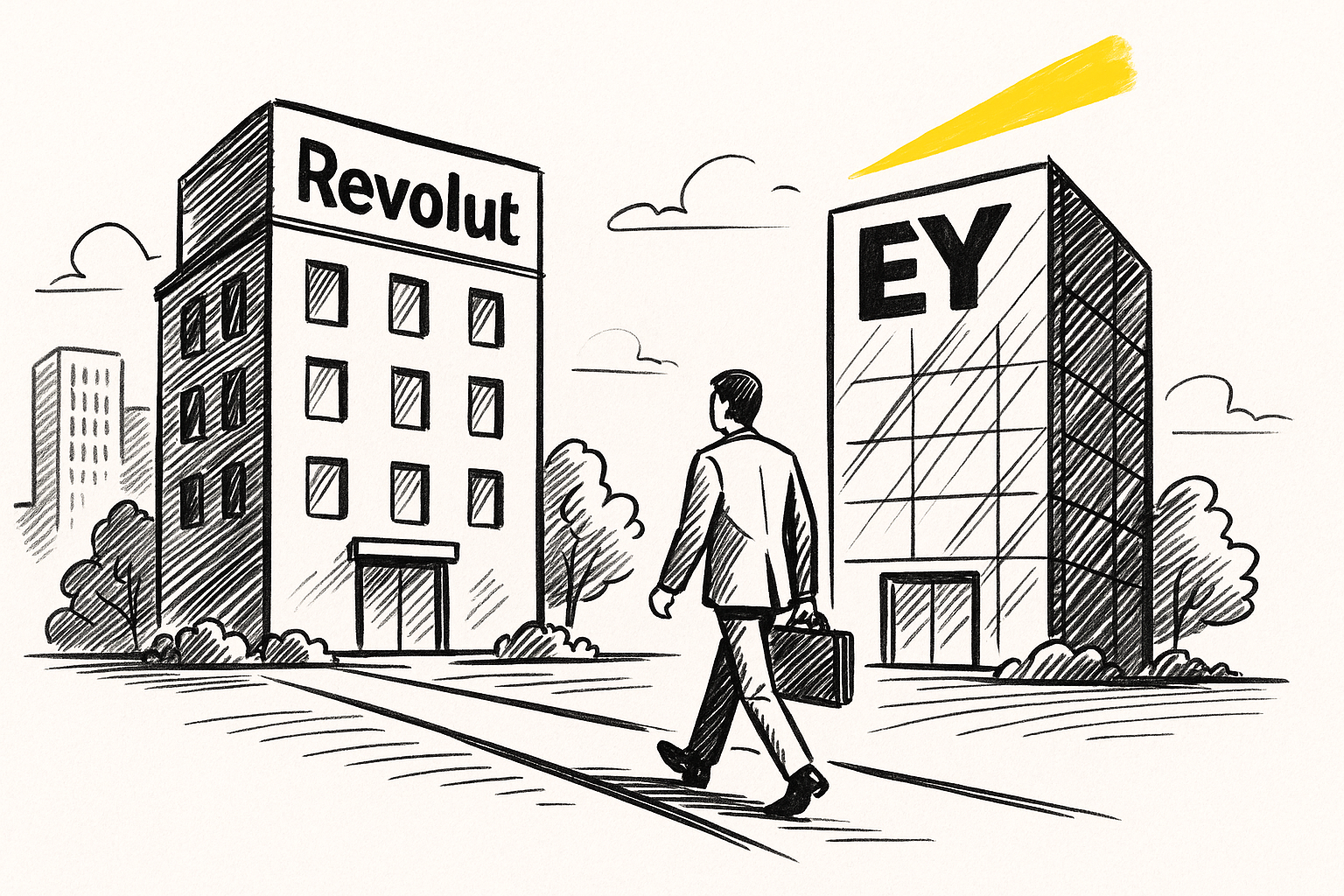
    Revolut – widely recognized as the UK’s top fintech unicorn – has appointed Ernst & Young (EY) as its new global auditor, replacing its long-term auditor BDO.

    The move isn’t just about changing names on letterhead. It’s part of a deliberate shift toward governance structures fit for an IPO and for expansion into fully regulated banking. For founders, it’s a live example of how audit readiness and financial governance can shape (and sometimes slow down) the biggest growth plans.


    From BDO to EY: The Big Four Step-Up

    The change followed a formal tender process run by Revolut’s Audit Committee, which evaluated candidates on global coverage, deep financial services expertise, and digital audit capabilities. EY came out on top and is set to take over for the financial year ending December 2026, pending shareholder approval.

    BDO will remain in place through the 2025 audit, closing a seven-year run that covered some of Revolut’s most intense growth phases. CFO Victor Stinga thanked BDO for its support and welcomed EY as a partner for the company’s next stage.


    The Shadow of Internal Control Issues

    This wasn’t a change from a position of total comfort. In 2023, BDO publicly flagged concerns over Revolut’s internal controls and IT systems, stating it could not fully verify 2021 revenues. The warning was unusual for a fintech of Revolut’s size and prompted questions from regulators.

    One major consequence: Revolut’s UK banking license – a crucial milestone – was delayed for nearly three years. Only in mid-2024 did regulators approve it, after the company had demonstrated that its financial control issues were resolved.


    Governance as IPO Prep

    The shift to EY is also a move to prepare for public markets. Big Four auditors carry weight with institutional investors and regulators alike. For a company reportedly targeting an IPO at around $65 billion, having a heavyweight audit partner is a signal that Revolut intends to meet the highest reporting standards.

    It’s also about future-proofing: as Revolut grows into new markets and regulated products, its audit and governance standards need to match the complexity of its business.


    Key takeaways for fintech startups

    Revolut’s journey is a reminder that financial governance is not a “later” problem. It’s something that needs to grow alongside the business.

    • Invest in internal controls early. Weak systems can cause costly delays, especially if you’re heading toward a regulated license.

    • Choose your auditor strategically. Your audit partner’s credibility becomes your credibility – especially when investors and regulators are watching.

    • Don’t wait for a crisis to upgrade governance. Proactive changes can help you avoid the kind of scrutiny that stalls growth.

    • Understand regulatory timelines. Approval processes are slow enough without governance gaps holding you back.

    • Think like a public company before you are one. If IPO or international expansion is on your roadmap, align your processes with that standard early.

    Revolut’s experience shows that growth isn’t only about more customers or bigger funding rounds. It’s about building a business sturdy enough to pass the toughest audits and withstand the closest regulatory inspections.

    Your Fintech Story helps startups grow with the right strategy, governance, and market positioning. If you’re preparing for your next big leap, we can help you get there with fewer roadblocks.

  • Why Fintechs Can’t Ignore Osborne’s Call on Crypto and Stablecoins

    Why Fintechs Can’t Ignore Osborne’s Call on Crypto and Stablecoins

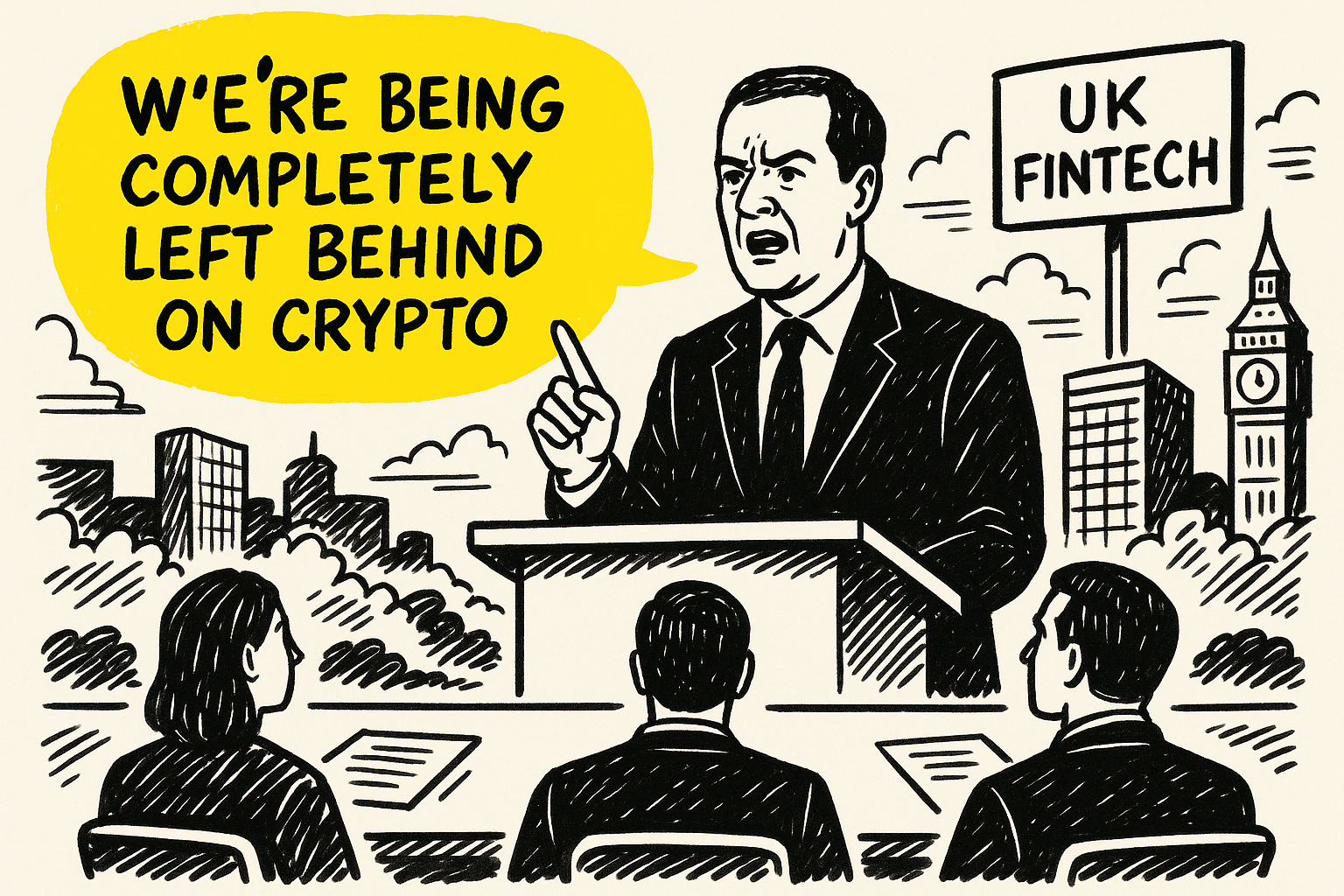
    Former UK Chancellor George Osborne, now an advisor to Coinbase, recently said for the Financial Times that the UK has already missed its first chance at crypto leadership; and now risks missing the second wave centred on stablecoins.


    The Alarm Bell

    Here’s what he actually said:

    • “Far from being an early adopter, we have allowed ourselves to be left behind.” Osborne argued that Westminster let the crypto boom slip by while the US became an unexpected first mover.

    • He warned, “we’re about to miss the second wave … stablecoins,” noting that regulators elsewhere (US, EU, Singapore, Hong Kong, Abu Dhabi) are already rolling out frameworks while the UK still deliberates.

    • Osborne highlighted that around 99 percent of all stablecoins are pegged to the dollar—and under current UK rules, sterling-backed tokens don’t stand a chance.

    • He didn’t mince words: “On crypto and stablecoins… we’re being completely left behind. It’s time to catch up.”

    He also contrasted the UK’s restrictions—no Bitcoin ETFs, limited retail access, fiat transfer blocks from some banks—with the much more open environments in other jurisdictions. Regulation is now a competitive tool, and the UK is failing to use it.


    Why This Matters to Fintech Founders


    Strategic Blindspot

    If the UK cedes stablecoin infrastructure to other regions, British fintechs will lose relevance and reach. Innovation will increasingly happen elsewhere—taking talent, capital, and customers with it.


    Regulation Enables Innovation

    The US recently passed the GENIUS Act, offering regulatory clarity around stablecoins. Meanwhile, Singapore, Abu Dhabi, and the EU already have frameworks in place. Where rules are clear, products launch faster.


    Financial Influence Undermined

    Without a strong framework for sterling-backed tokens, the UK’s financial system will lack credible digital alternatives. US dollar stablecoins already dominate. Unless something changes, the UK won’t just be a step behind—it’ll be structurally locked out.


    Policy Inertia vs Startup Agility

    The Bank of England continues to warn about risks to the “singleness of money,” and the FCA remains cautious. That caution is now becoming a drag. Founders who wait might wait too long.


    What Fintech Founders Should Learn and Do

    1. Engage Now

    Don’t wait for regulation to be handed down. Get involved. Join forums, trade associations, or direct consultations. Founders who show up early shape the rules others have to follow.

    2. Build for Flexibility

    Launch your product in regions that already have working stablecoin rules, and design your stack so it can adapt later when UK regulation catches up.

    3. Prep Retail Channels

    Retail access is still restricted in the UK—but that won’t last forever. Build onboarding flows, education tools, and sterling-backed infrastructure now so you’re ready when the gate opens.


    Key Takeaways for Fintech Startups

    • The UK is falling behind—not due to failure, but due to inaction.

    • Other jurisdictions have already moved. The window for leadership is closing.

    • Founders can influence policy by engaging, not waiting.

    • Products need to be agile, compliant across borders, and future-proofed for the UK’s eventual catch-up.

    Your Fintech Story can help you develop cross-border product strategies, regulatory engagement plans, and investor-ready narratives. Let’s talk.

  • What Fintech Startups Can Learn from Airwallex UK’s 109% Growth

    What Fintech Startups Can Learn from Airwallex UK’s 109% Growth

    Another fintech darling just smashed triple-digit growth, but what’s actually under the hood?

    Airwallex UK reported a 109% YoY revenue increase for the first half of 2025. That’s not just impressive; it outpaced more mature markets like Australia and Singapore, where the company originally made its mark. In other words: the satellite just outgrew the mothership.

    Yes, there’s a new office. Yes, there’s a Lando Norris sculpture. But forget the headlines for a moment, there’s a deeper lesson here for fintech startups trying to scale in a world that’s becoming pickier about traction, margin, and value.

    Let’s break it down.


    The Growth Formula: Speed, Value, and Focus

    Airwallex UK’s growth isn’t just about signing more clients. It’s about signing the right clients — high-growth SMBs in global-facing verticals like travel, SaaS, and e-commerce. These businesses need multi-currency solutions, seamless cross-border infrastructure, and instant deployment.

    Airwallex is giving them all of that — in one platform — and doing it faster than their banking incumbents.

    But here’s the nuance: it’s not just the volume of deals. It’s the value of each deal, and the speed at which products are going live.

    This tells us that:

    • Their onboarding process is efficient.
    • Their GTM strategy is resonating.
    • Their product is mature enough to be deployed quickly and scaled by demanding customers.

    That’s a combination many early-stage fintechs underestimate.


    Headcount Follows Product-Market Fit

    We’ve all seen the startups that scale headcount too early, mistaking internal growth for market pull. Airwallex UK is scaling team size in reaction to demand — not ahead of it. A 35% YoY increase brought their London team to over 100 people.

    And the office move? It’s not just symbolic. Their Fitzrovia space will be double the size of the previous one, clearly planned around future hiring and product launches. This is what scaling looks like after validating your product.

    It’s also a flex. London is still the fintech capital of Europe. Putting down roots in Fitzrovia signals seriousness — not just from a hiring perspective, but also from a regulatory and commercial standpoint.


    Product Expansion: Only When the Core Works

    New products like Yield are coming — but not because Airwallex wants to “diversify.” They’re doing it because they have a captive user base with proven needs.

    Startups often fall into the trap of building new features to chase growth. Airwallex is doing the opposite: capturing growth with core products, then layering on more value after PMF is secure.

    The product roadmap becomes a multiplier, not a lifeline.


    Partnerships Are More Than PR

    Airwallex isn’t just sponsoring McLaren Racing and Arsenal Football Club because it’s fun (though, let’s be honest — it is). These partnerships are a smart signal: they’re positioning themselves as a premium global brand, aligned with high-performance and ambition.

    In a B2B fintech world often obsessed with spreadsheets and APIs, it’s a reminder that perception matters — and that a well-timed partnership can reinforce trust at enterprise scale.


    Key takeaways for fintech startups

    Here’s what founders can learn from Airwallex UK’s recent growth run:

    • Find customers with urgent, complex needs. Airwallex focused on fast-growing SMBs operating globall, where legacy systems break down.

    • Make onboarding smooth and fast. High-value deals don’t mean slow sales cycles if your platform is sharp and your messaging is clear.

    • Only scale headcount after product-market fit. Hiring is a multiplier, not the strategy.

    • Add products only after your core works. Don’t build a suite if your flagship tool isn’t winning.

    • Brand perception matters, especially in B2B. Partnerships like McLaren and Arsenal elevate credibility and stand out in a crowded space.

    • Invest in your local presence. Their new Fitzrovia office isn’t just a space upgrade; it’s a statement of long-term commitment to the UK market.

    Looking to unlock this kind of growth?

    Your Fintech Story helps early-stage fintechs build focused strategy, validate products, and scale with confidence. Let’s talk.

  • Inside Ramp’s $500M Raise: Strategic Lessons from a $22.5B Fintech Valuation

    Inside Ramp’s $500M Raise: Strategic Lessons from a $22.5B Fintech Valuation

    Ramp, the NYC-based spend management fintech, has pulled off a rare feat in a sluggish funding market: two major raises in 45 days. After raising $200M in June 2025, it secured another $500M in July at a $22.5B valuation; a 41% valuation jump in under two months. While many peers saw slashed valuations during the 2022 downturn, Ramp is bucking the trend.

    How did it happen? Ramp’s playbook offers valuable lessons in resilience and growth. Let’s break it down.


    Key takeaways for fintech founders

    • Solve a real problem: Ramp helps businesses cut costs and save time; its core value prop. This clear ROI (over $10B saved to date) drove fast adoption and customer loyalty.

    • Go beyond point solutions: Ramp grew from a card provider to a full finance operations platform (bill pay, travel, procurement, treasury). Cross-selling made customers stickier and expanded its market.

    • Use tech with purpose: Ramp’s AI agents automate expense audits and rebook travel. Internally, AI boosts efficiency and keeps burn under $2M/month. Tech adoption must drive real results.

    • Raise capital at the right moment: Ramp extended its Series E within weeks, seizing momentum and launching AI tools in between. Timing helped boost valuation and preserve equity.

    • Pick the right backers: Ramp’s $500M round was led by Iconiq, with participation from GV, T. Rowe Price, and others. Strategic and long-term investors add credibility and open doors.


    How Ramp scaled while others stalled

    Ramp launched in 2019 with a contrarian pitch: a corporate card that helps companies spend less. Its “save money” ethos quickly caught on. By 2023, it was serving tens of thousands of companies, expanding beyond cards into a finance suite with bill pay, travel, procurement, and treasury.

    It didn’t stop there. Ramp shipped 270 features between mid-2024 and mid-2025; including multi-entity accounting, Slack/Teams integrations, and automated budget tools. Its acquisitions (like Buyer and Venue) added vendor negotiation and procurement muscle.

    Most importantly, every feature supports Ramp’s mission: eliminate financial waste and busywork. That consistency kept the platform cohesive and helped users quantify savings; $10B and 27.5M hours saved so far.


    The $22.5B valuation, explained

    Ramp’s valuation is underpinned by:

    • Strong financials: $700M revenue run-rate, $80B+ in annual spend volume, and 40,000+ customers; including large enterprises like CBRE and Shopify.

    • Diversified revenue: Interchange fees, SaaS subscriptions, FX, bill pay, travel commissions.

    • Operational discipline: Low burn, lean team, efficient sales. Ramp stayed near cash-flow positive while scaling fast.

    • Huge market: Ramp estimates it’s penetrated just 1.5% of the U.S. finance operations market. The potential is enormous.

    • AI-led narrative: Its “autonomous finance” pitch caught investor interest; and Ramp backed it with real traction (e.g. 15× more policy violations caught with AI agents).

    • Safe business model: B2B spend infra is less risky than lending or consumer fintech. Ramp avoided regulation-heavy areas, giving it room to grow without distraction.


    Smart funding strategy

    Ramp split its Series E into two rounds; $200M at $16B, then $500M at $22.5B. This allowed it to capture upside by showcasing more traction (AI agent launch, new logos) between raises. Calling the second round “E-2” suggested continuity and strength, not desperation.

    Ramp also expanded its investor base. In addition to returning investors like Founders Fund and Thrive, the E-2 round brought in Sutter Hill, Lightspeed, Emerson Collective, GV, and T. Rowe Price. That’s a mix of elite VCs, strategic thinkers, and IPO-oriented firms.


    Why Ramp stood out

    Ramp succeeded where others stalled by:

    • Prioritizing R&D: Over half its team works on product, not sales—enabling rapid innovation with lean ops.

    • Targeting both SMBs and enterprises: It started with startups, then scaled into the Fortune 500.

    • Avoiding regulatory traps: As a software-led, non-lender fintech, Ramp sidestepped compliance burdens.

    • Building real trust: Ramp aligned its incentives with customers—saving them money, not just pushing spend. That builds loyalty and makes growth more organic and cost-effective.


    Market signals for fintech founders

    Ramp’s raise sends a clear message: fintech is back; if you pair strong economics with AI-led innovation. VCs are once again chasing “CFO tech stack” tools, especially ones offering automation, intelligence, and real usage.

    Expect more attention on B2B finance automation. Investors and incumbents alike are watching Ramp’s rise closely. The bar is higher now; but so is the opportunity.


    Final thoughts

    Ramp’s rise to a $22.5B valuation in under six years shows that fintech success is still possible; even in a tough market. Stay focused, innovate meaningfully, and raise smart.

    Need help writing your next fintech success story?

    Your Fintech Story helps startups craft strategies that drive growth. Let’s talk.

  • Revolut’s Rumored U.S. Bank Buy: Shortcut to Expansion or Risky Bet?

    Revolut’s Rumored U.S. Bank Buy: Shortcut to Expansion or Risky Bet?

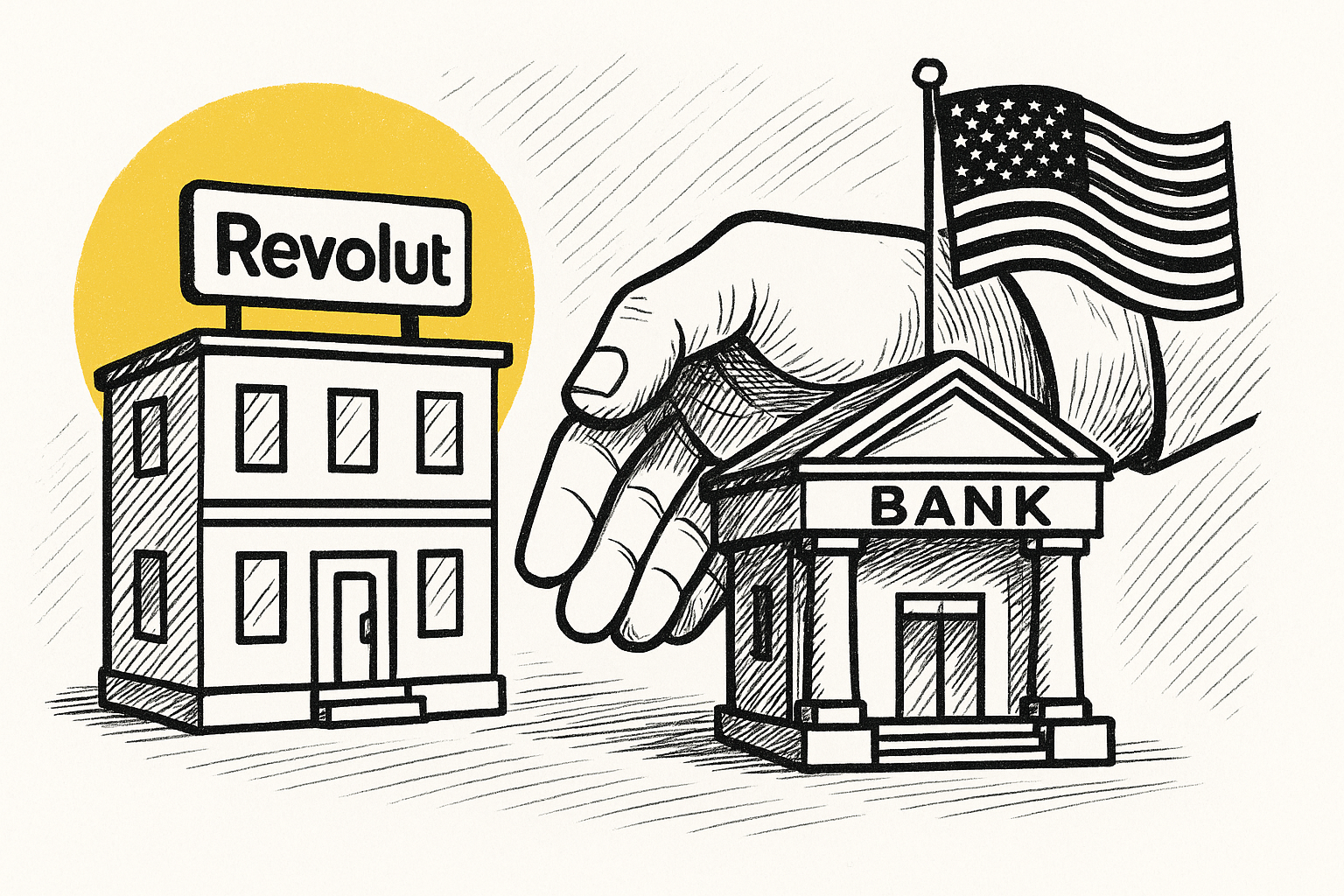
    British fintech powerhouse Revolut is reportedly considering a shortcut to crack the American market; buying a U.S. bank outright. The idea? Acquire a small, federally chartered bank and fast-track access to a national banking licence. That would let Revolut skip the long, painful process of applying for one from scratch, and start offering lending and deposit services far sooner.

    The company hasn’t confirmed the plan publicly, but insiders suggest it’s under serious consideration. And whether or not it happens, the rumor alone sheds light on a bigger issue: how ambitious fintechs try to break into the U.S. financial system, and what trade-offs they face along the way.


    Why buy instead of apply?

    Revolut’s interest in an acquisition follows a well-trodden path. Applying for a new U.S. bank charter can take years, with no guarantee of approval. Buying a small national bank with the right licence could shortcut that process, allowing Revolut to enter the market with full deposit-taking and lending authority in place.

    It’s not the first time Revolut has taken this kind of approach. It previously acquired an Argentine bank to gain a foothold in Latin America and reportedly considered buying in the Middle East too. The logic is simple: licensing by acquisition can be faster, more predictable, and more scalable than going through regulators from scratch.

    Of course, nothing is confirmed. The company is said to be weighing all options — including applying for its own licence — and hasn’t committed to any single path. But even considering the move shows how strategic these choices have become for scaling fintechs.


    The upside: speed and control

    Buying a bank offers immediate benefits. First, it shortens the go-to-market timeline by potentially years. Second, it gives Revolut full control over its U.S. operations, ending reliance on partner banks. That means owning the customer relationship, setting its own lending terms, and building its tech stack on its own systems.

    It also unlocks national reach. A U.S. national bank charter covers all 50 states, avoiding the licensing maze that haunts most non-bank fintechs. And by inheriting an operating bank, Revolut could sidestep the steepest part of the regulatory learning curve — at least on paper.

    Some fintechs have already taken this path successfully. SoFi, for instance, became a bank through acquisition, giving it access to cheaper funding and new revenue streams. For Revolut, the attraction is obvious: faster expansion and less regulatory red tape.


    The catch: regulators and reality

    Acquiring a bank doesn’t mean regulators will roll over. U.S. authorities would still need to approve the deal — and they’ll likely scrutinize Revolut’s governance, risk controls, and compliance culture before doing so. The fact that Revolut has had regulatory speed bumps in the UK might complicate the picture.

    Even if the deal is approved, ownership comes with strings attached. A regulated bank must meet strict oversight standards: capital buffers, compliance exams, and conservative risk management. That’s a far cry from the move-fast culture most fintechs are used to.

    Revolut has acknowledged this trade-off publicly. Internally, it’s been trying to build a more mature compliance framework and operational backbone. It’s also been hiring senior banking talent in key markets — a smart step, and one that shows it knows what it’s signing up for.

    Still, the question remains: can a tech company act like a bank without losing its edge?


    What fintech founders should take away

    For fintech startups eyeing global growth, Revolut’s case is a useful lens. It highlights that market entry is not just about product—it’s about licensing, regulation, and execution.

    Acquisition can be a fast, bold move. But it comes with a heavier burden, and it’s not a silver bullet. Founders need to think beyond access and ask: are we ready to own the infrastructure, the scrutiny, and the compliance culture that come with being a real bank?


    Key takeaways for fintech startups

    Here’s what Revolut’s U.S. strategy can teach growing fintechs:

    • Licensing is strategic, not just procedural. Decide early how you’ll get regulated — by applying, partnering, or acquiring.

    • Buying a bank can be faster — but costly. If you have capital and clarity, an acquisition can cut years off your roadmap.

    • Compliance maturity is non-negotiable. If you want to run a bank, build like a bank: with controls, oversight, and experienced leadership.

    • Don’t lose your tech DNA. Becoming a bank doesn’t mean abandoning speed. It means finding a way to scale responsibly.

    • Align your licence with your model. A charter is a tool. Make sure it supports your product roadmap and revenue strategy — not just your press release.

    Your Fintech Story helps ambitious fintechs grow, scale, and navigate complex markets. Reach out if you’re ready to take the next step.

  • Mastercard Just Scaled a B2B Painkiller – Here’s Why Fintech Should Care

    Mastercard Just Scaled a B2B Painkiller – Here’s Why Fintech Should Care

    If you’ve ever worked on the supplier side of B2B payments, you know the pain: virtual cards promise fast payments, but processing them is tedious. Someone has to manually enter card numbers, match them to invoices, and reconcile the mess afterward.

    That’s exactly the friction Mastercard Receivables Manager set out to remove. And it’s now live in the US, UK, EU — and rolling out globally.


    What It Does (And Why It Matters)

    Launched in 2023, Receivables Manager automates how suppliers accept and reconcile virtual card payments. Instead of manually dealing with one-off card numbers and partial remittance data, the platform pulls in payments from all issuers, matches them to open invoices, and sends clean data straight into the supplier’s ERP or accounting system.

    The result? Faster processing, fewer errors, better cash flow visibility — and fewer AR team headaches.

    Mastercard built it with scalability in mind: minimal setup for banks and fintech partners, and a plug-and-play model for global expansion. It’s already being used by acquiring banks and fintech platforms in the US, Europe, and the Middle East.


    What About the Competition?

    Visa and Amex are rolling out their own AR automation tools. And startups like Billtrust, Boost, and TreviPay are also circling the space. Everyone’s trying to solve the same problem: make virtual card acceptance easier for suppliers.

    That level of activity confirms one thing — this isn’t just a niche problem. Automating receivables is becoming table stakes for B2B fintech infrastructure.


    Why Fintech Startups Should Pay Attention

    Receivables Manager isn’t just a product; it’s a signal. It shows where B2B payments are headed — toward automation, data standardization, and platform integrations. That opens doors for fintechs building on top of ERP systems, payment rails, or supplier-side tools.

    Whether you’re working in payables, invoicing, or embedded finance, the space around B2B reconciliation is heating up.


    Key takeaways for fintech startups

    A few quick lessons from Mastercard’s move:

    • Manual reconciliation is a big pain point — and solving it creates real value.

    • Digital card payments are growing, especially in B2B. This is a good time to build around them.

    • Partnerships drive scale — Mastercard worked with fintechs and banks to roll this out globally.

    • The AR side of payments is under-innovated, especially outside the US. There’s room for niche plays.

    • Cash flow visibility still sells — if your product improves it, highlight that.

    If you’re building in B2B payments or curious about where this space is headed, let’s chat. Your Fintech Story helps early-stage fintechs refine strategy, positioning, and go-to-market — especially when the market’s moving fast.

  • Going Global Without Giving Up Control: Playbook from Wise

    Going Global Without Giving Up Control: Playbook from Wise

    Wise just made a bold move. The UK fintech announced it’s shifting its primary listing to the U.S., while also extending its dual-class share structure — meaning founders and early execs keep extra voting rights until at least 2036.

    That may sound like a dry investor headline. But underneath it is a very real question for fintech founders:

    Who’s in charge as your startup grows? And what markets are actually built to support you?

    Wise isn’t a scrappy upstart anymore. It’s publicly listed, profitable, and handles billions in cross-border payments. But it still wants more growth — and, clearly, more control over how that growth is governed.

    And that’s the bigger story here:

    • Europe’s fintech champions are increasingly eyeing U.S. capital markets.

    • Founders are negotiating not just valuations, but power structures.

    • And governance is being used — strategically — as a growth tool, not just a legal requirement.

    So this move from Wise isn’t random. It’s a data point in a larger shift. And if you’re building a fintech, you should be taking notes.


    What fintech startups can learn from this?


    The U.S. still wins on scale and appetite

    Wise wants deeper markets, more volume, and investor attention that London hasn’t quite delivered. That’s not a diss to the UK — it’s just reality. The U.S. exchanges still lead when it comes to liquidity, tech-friendly investors, and growth-stage capital. Founders aiming for public markets should factor this in early — especially if you’re building something global from day one.


    Control matters, especially when growth gets noisy

    By extending its dual-class share structure, Wise’s leadership made it clear: they want to keep long-term vision intact, even under public scrutiny. Whether you agree or not, the principle is simple — growth often brings pressure. If you want to retain direction, plan your cap table and voting structure before you need to.


    Governance isn’t just paperwork, it’s a message

    Some investors didn’t love that Wise bundled the U.S. listing and the voting rights extension into a single decision. That’s a good reminder: how you structure governance decisions sends signals. Transparency, separation of powers, clarity — these matter to serious investors, even at early stages. It’s not just about what you decide; it’s how you bring people along.


    Global ambition means acting global early

    Wise isn’t “leaving” the UK — it’s scaling beyond it. That’s a mindset shift for many startups. If your vision includes multiple markets, start operating that way before the Series B. Build in flexibility, compliance readiness, and investor relations strategy that can travel across borders. The earlier you think globally, the easier it is to move when the time comes.


    Going public doesn’t mean giving up control

    There’s still a myth that IPOs mean “selling out.” Not true. What Wise shows is that with the right structure and story, you can be public and founder-led. You just have to be intentional — not reactive — about it. It’s not about hoarding power; it’s about protecting the mission through the messy middle of scale.

    If you’re building a fintech and wondering how to scale without losing control, get in touch with Your Fintech Story. We help startups grow on their own terms.