
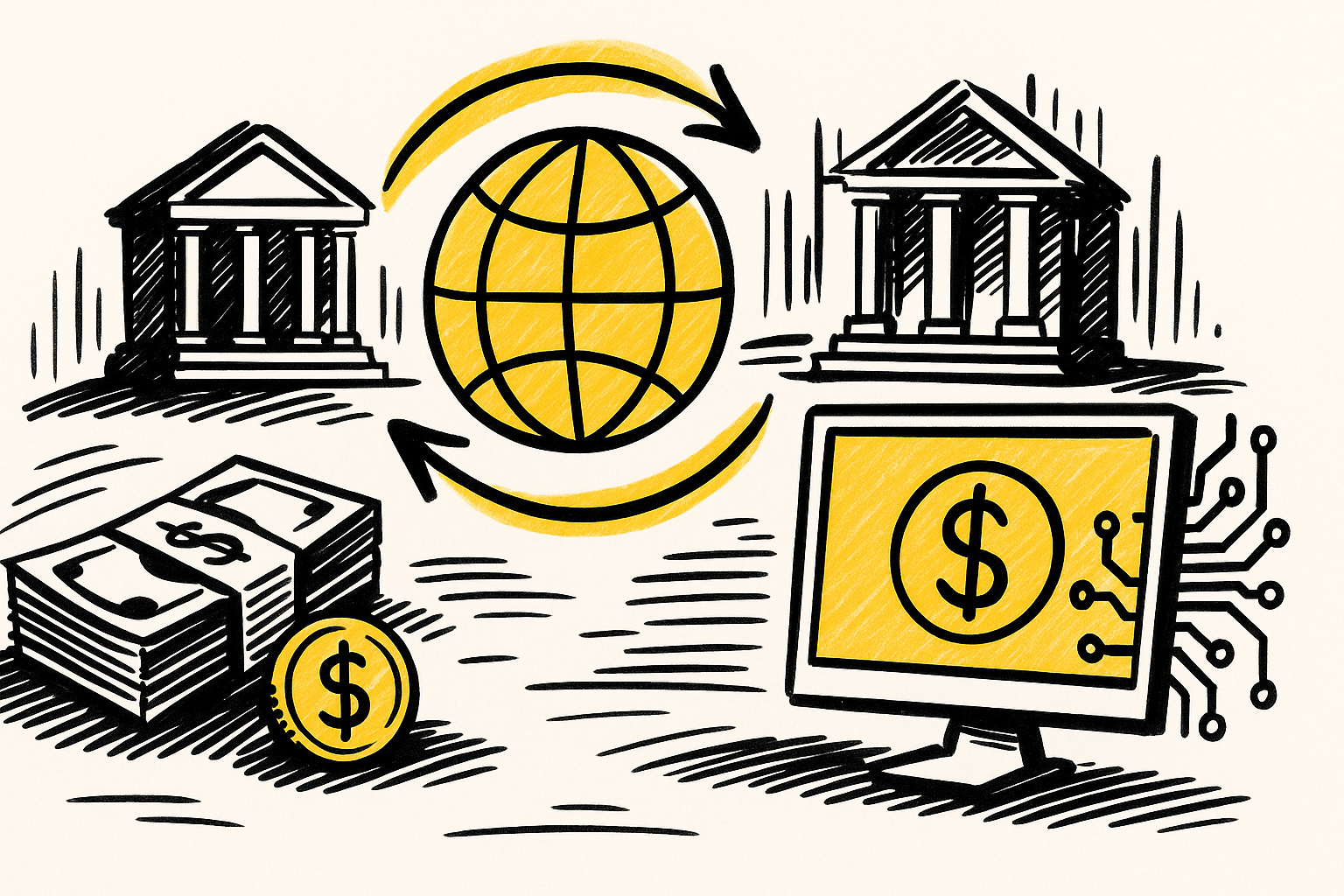

The Bank of England (BoE), Monetary Authority of Singapore (MAS) and Bank of Thailand (BoT) have announced a joint initiative to explore synchronised cross-border foreign-exchange (FX) settlement.
What the initiative covers
The collaboration will run experiments that use simulated versions of each central bank’s real-time gross settlement (RTGS) systems alongside distributed-ledger-technology (DLT)-based settlement environments.
They will test interoperability between different settlement platforms, and explore more complex multilateral use-cases involving differing infrastructures, time zones and regulatory frameworks.
The aim is to enable atomic settlement of FX trades across jurisdictions — meaning both currency-legs settle simultaneously, reducing one-leg-settles-while-the-other-does-not risk.
Why this matters for fintech and payments firms
For fintechs involved in cross-border FX, payments or tokenised asset flows this initiative is a signal of where underlying infrastructure is headed.
Because settlement risk (when one side of a trade fails after the other has passed) remains a persistent challenge in cross-border FX, synchronised settlement could reduce that risk and shorten settlement cycles.
If RTGS systems and DLT-based rails become interoperable, fintechs may gain access to more efficient settlement mechanisms — or face increased competition as legacy players upgrade.
From a strategy perspective fintechs should view this as part of infrastructure evolution rather than immediate commercial rollout; you’ll need to track how protocols, access models and regulatory frameworks evolve.
Challenges and caveats
Although the collaboration is promising, it remains exploratory. Many real-world barriers persist: legacy infrastructure may resist integration with new settlement models; regulatory regimes across jurisdictions differ; technical interoperability is hard to achieve; and commercial models (pricing, access, governance) are not yet defined.
Additionally tokenised-asset settlement and DLT based rails still have limited maturity and adoption. So while the initiative points to a future frontier, practical impact may take time to filter into mainstream fintech operations.
What to watch next
Keep an eye on the published results of the experiments: how latency, failure modes, interoperability and settlement risk perform across systems. Also monitor whether regulators publish new guidance related to synchronised settlement, tokenised rails or cross-border FX settlement systems.
Watch which market participants begin pilot programmes or partnerships aligned to the new infrastructure, and how fintechs position themselves—whether as enablers, integrators or niche innovators.
Finally observe how access models play out: will new settlement rails favour large banks or open up to smaller firms and fintechs? That will shape competitive dynamics.
Key takeaways for fintech startups
- Synchronised settlement may significantly reduce structural settlement risk in cross-border FX.
- Interoperability between legacy RTGS systems and tokenised/DLT rails is becoming a key infrastructure trend.
- Fintechs in cross-border payments or FX should track infrastructure shifts and assess potential strategic moves.
- Central-bank-led experiments do not equate to immediate commercial availablity; timing and access will matter.
- Early understanding and positioning around evolving settlement rails or tokenised-asset workflows may yield competitive advantage.
If you’d like to map how your fintech startup can align with this evolving FX-settlement infrastructure, feel free to contact Your Fintech Story.


