
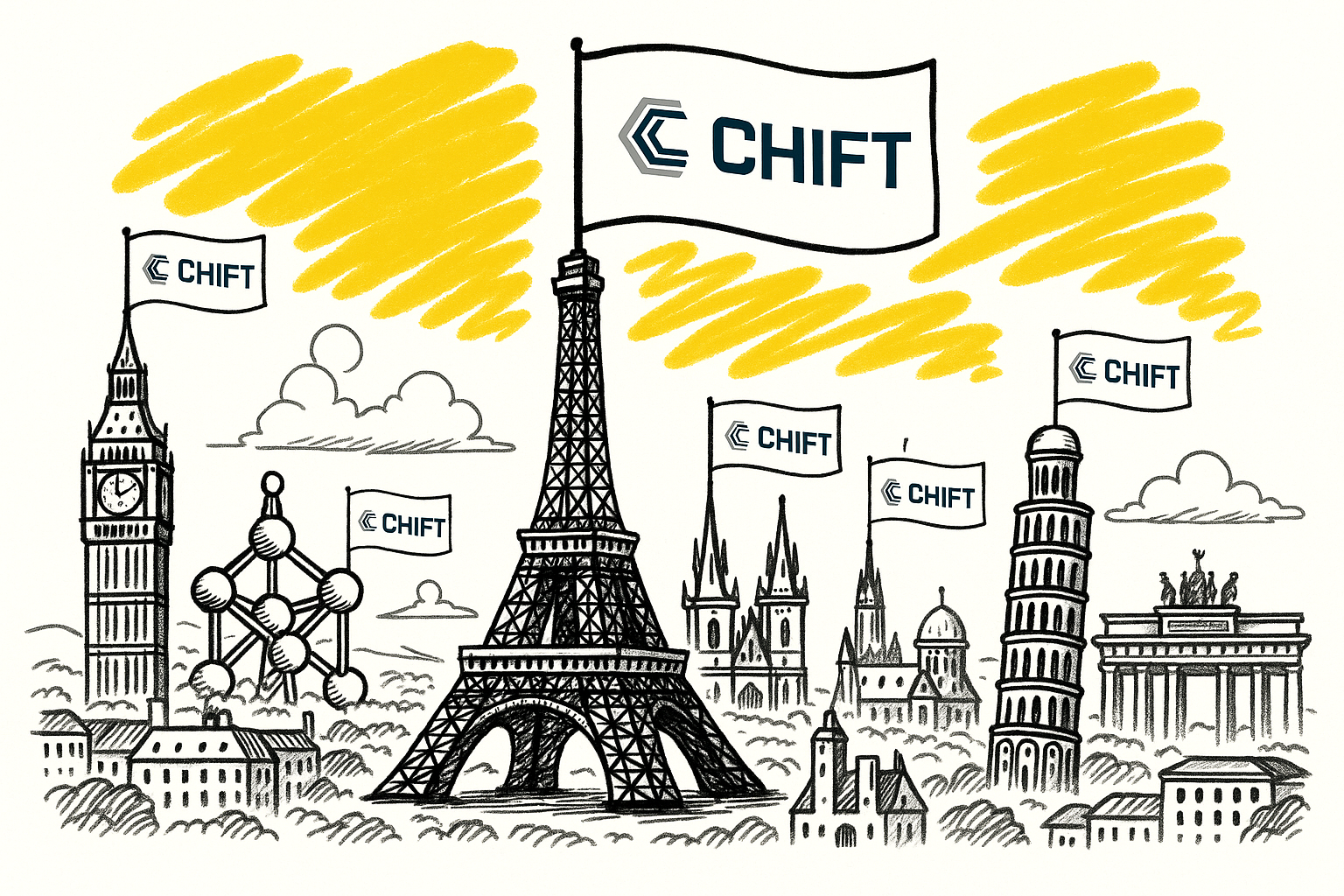

Europe’s financial software stack is highly fragmented. In the U.S., a startup might integrate with QuickBooks and Xero and be ready for launch. In Europe, expansion means navigating dozens of local accounting tools, payment platforms, and invoicing systems. Each country has its own champions, compliance rules, and standards. For SaaS teams, this makes integrations a strategic challenge, not just a technical task.
“Integration is no longer just a feature, it’s a key differentiator.”
– Chift, State of European Accounting Tech 2025
Chift stepped into this gap. By offering a single integration layer across accounting, invoicing, payments, POS, e-commerce, and more, the company positioned itself as the connective tissue of Europe’s fintech ecosystem.
What They Did Right
Several decisions made Chift stand out.
- One API to connect them all. Instead of building connectors one by one, Chift created unified APIs that link to almost 100 financial systems. One integration unlocks coverage across categories like accounting, payments, e-commerce, and POS.
- Local-first mindset. European markets are diverse. Chift invested in connectors tailored to local leaders as well as international players, ensuring relevance in each country. This gave SaaS teams a shortcut to European coverage without reinventing the wheel every time.
- Making speed a feature. In-house integrations can drag on for months. Chift reduced that timeline dramatically.
“For a single accounting integration, it takes us 12 to 16 weeks in-house. With Chift’s unified API, we delivered four integrations in about 4 to 6 weeks.”
– Ashleigh Auld, Strategic Partner Marketing Manager at Pleo
Where Chift Stands Today
Chift is now recognized as the infrastructure layer for financial connectivity in Europe. Its platform spans accounting, invoicing, payments, POS, e-commerce, and PMS.
The client roster includes Qonto, Mollie, Sage, and Pennylane. These companies could have invested heavily in their own integrations but chose to rely on Chift instead.
By helping SaaS teams connect faster and more reliably, Chift directly supports adoption, retention, and product scalability.
| 2022 | 15K+ | 100+ |
| company founded | businesses connected | integrations live |
Why It Worked
Several factors explain Chift’s rise.
Regulation has been a huge catalyst for momentum. Across the EU, mandatory e-invoicing rules are forcing millions of B2B SMEs to adopt certified digital tools. These changes make connectivity a necessity: accounting and invoicing systems must now communicate in real time to stay accurate and compliant.
As one investor put it, “Accounting is the core ledger for everything in finance… That’s why every finance tool eventually needs to connect to the accounting system.”
At the same time, Europe’s finance stacks have grown more modular. Many companies now rely on a mosaic of specialized apps rather than one monolithic suite. This trend brings flexibility but also leaves data trapped in silos. Chift turns that patchwork into an advantage by linking every major tool in an SME’s arsenal through a single unified API. With one integration, a fragmented stack starts to function like a cohesive platform. The benefits reach beyond engineering. Sales teams can shorten cycles, marketing can enter new markets, and product teams can launch new features faster.
The company also solved the build-versus-buy dilemma. Maintaining dozens of integrations internally is expensive and drains focus from core features.
By outsourcing that complexity, SaaS teams can concentrate on what truly sets them apart.
Key takeaways for fintech startups
Here’s what fintech founders can take from Chift’s journey:
- Spot fragmentation and turn it into opportunity.
- Treat integrations as part of your product strategy.
- Focus on what makes you unique and partner for the rest.
- Use regulatory changes as catalysts for adoption.
- Speed and reliability are features customers value.
Chift shows that solving infrastructure pain points can unlock growth across the entire fintech ecosystem. By quietly powering connectivity, they enable others to move faster.


