
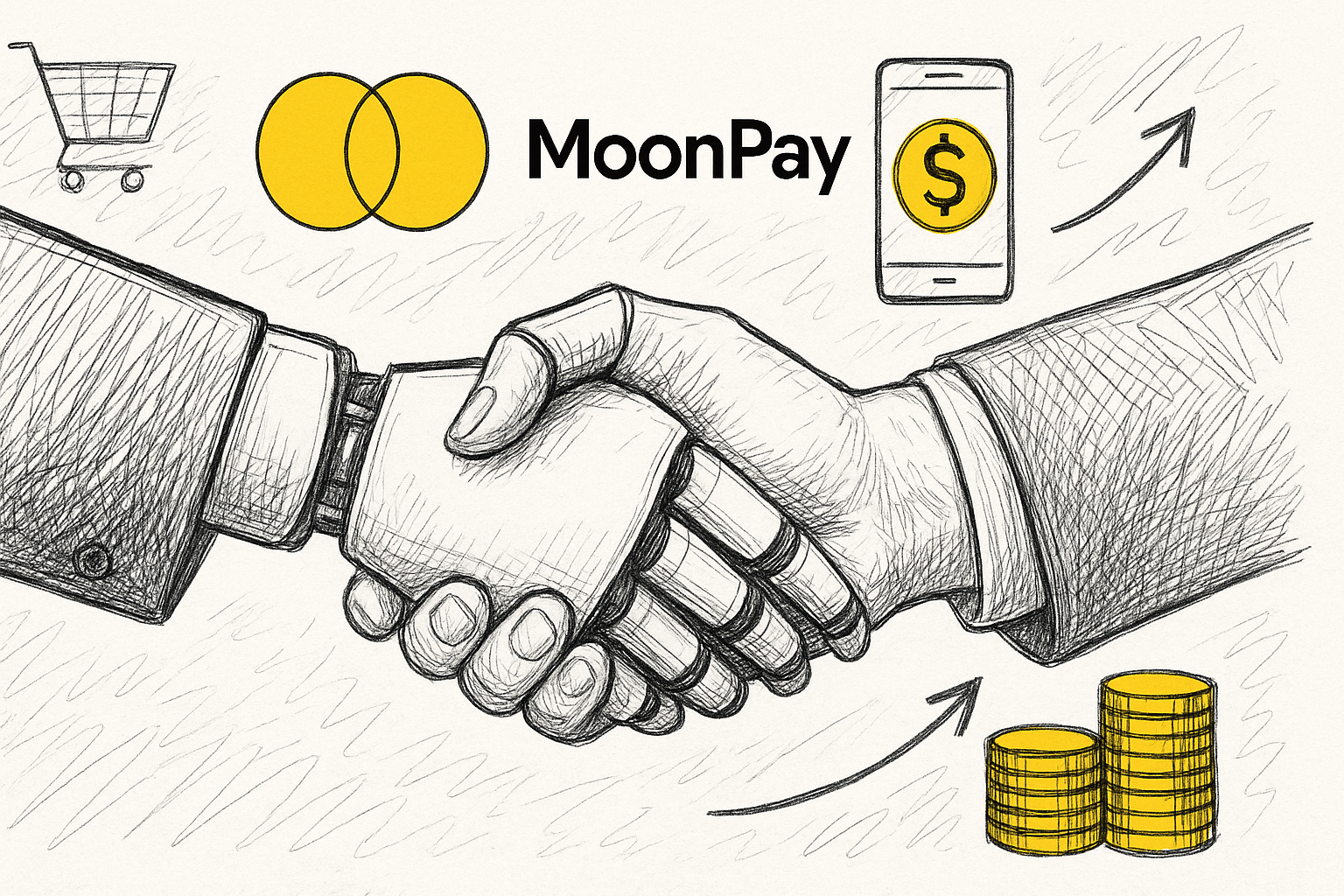

Mastercard and crypto-fintech MoonPay have announced a global partnership to make stablecoin spending as easy as using cash or cards. Under the deal, fintech companies and businesses can issue Mastercard-branded cards tied to users’ stablecoin wallets. Cardholders will be able to spend their stablecoins at the point of sale, with transactions immediately converted into the local currency behind the scenes. This means a user paying with a stablecoin could shop at any of the 150 million+ merchants worldwide that accept Mastercard, even if those merchants never touch crypto directly. The new service is built on MoonPay’s recent acquisition of Iron, an API-driven stablecoin infrastructure platform. Iron’s technology lets crypto wallets behave like digital bank accounts – enabling fast, efficient cross-border transfers and on-chain payments that settle into fiat during checkout .
Who’s Who: MoonPay and Mastercard
Mastercard likely needs no introduction. It operates one of the most established global payments networks, now actively expanding into digital assets and blockchain-powered transactions.
MoonPay, on the other hand, is a fast-growing crypto payments company that helps users buy, sell, and use digital assets. It serves as an on/off ramp for exchanges, wallets, and apps, with integrations across over 500 platforms and a user base spanning more than 180 countries. This partnership builds on their existing collaboration and combines Mastercard’s payments scale with MoonPay’s infrastructure and reach in the crypto space.
How the Partnership Works
The core of the partnership is a new stablecoin-linked card for end users. Fintechs and other issuers can now create Mastercard cards that connect directly to a customer’s stablecoin balance. When a cardholder taps or swipes, their stablecoins (for example USDC, Tether or other fiat-pegged tokens) are automatically converted into the merchant’s local currency . The merchant simply receives a normal Mastercard payment, but the underlying funds came from the user’s cryptocurrency wallet. In practice, this bridges the crypto world and traditional commerce: any crypto wallet becomes a kind of digital bank account that can fund everyday purchases.
“Our acquisition of Iron and long-standing relationship with Mastercard allow us to power a new era of payments made with stablecoins at more than 150 million merchant locations worldwide.”
— Ivan Soto-Wright, CEO & Co-founder, MoonPay
The technology enabling this is MoonPay’s Iron platform. MoonPay bought Iron (a Swiss startup) in March 2025 and is using its API-driven stablecoin infrastructure to power the new cards . As one report notes, Iron’s system “enables crypto wallets to act like digital bank accounts” and supports “fast and efficient stablecoin transfers” for global payments and disbursements . In other words, Iron handles the stablecoin rails and compliance behind the scenes, while Mastercard processes the payment in fiat. This allows businesses and fintechs to issue stablecoin-backed cards without needing to build blockchain infrastructure themselves .
The partnership is truly global. While we often talk about digital euro or USDC adoption, the Mastercard-MoonPay deal aims to work “across global markets” . It even cites examples like shopping at a local market in Asia or a Latin American merchant paying a European supplier, showing how stablecoin transfers can flow between regions . In short, wherever Mastercard is accepted, a user’s stablecoins can be spent there.
Implications for Payments and Fintech
For merchants, nothing changes—they’re paid in local currency and don’t handle crypto. But for consumers and businesses, stablecoins unlock new potential. A user in Europe can pay in the US or Japan instantly with on-chain digital dollars or euros. In high-fee remittance regions, companies can pay freelancers or contractors in stablecoins, which recipients can spend immediately—skipping banking delays and high costs. As one fintech analyst notes, stablecoins combine the reliability of traditional money with blockchain speed, making them ideal for cross-border payments.
Fintechs and neobanks benefit in several ways. Offering a stablecoin card attracts crypto-savvy users—MoonPay’s network alone connects to 500+ crypto platforms and over 100 million users. It also streamlines payouts, letting fintechs send funds globally as stablecoins, which convert to fiat at payment. This is faster and cheaper than traditional methods.
With Europe’s MiCA regulation setting clear rules, and consumer openness to digital payments, stablecoin adoption is rising. Kraken and Mastercard now let EU users spend crypto via debit cards. Backed by firms like Mastercard and MoonPay, European neobanks could soon offer crypto-backed spending accounts to a broader audience.
Stablecoins are digital assets that track the value of traditional currencies like the US dollar or euro. They’re built on blockchain, which means they move fast and work globally, without the volatility of typical cryptocurrencies. With the new Mastercard–MoonPay cards, users can spend these digital “dollars” or “euros” almost anywhere Mastercard is accepted. Behind the scenes, the stablecoins are instantly converted into local currency at checkout, so merchants just see a normal payment.
Key Takeaways for Fintech Startups
If you’re building in fintech, here are a few things this news should put on your radar:
- Consider issuing stablecoin-linked cards. Tapping this partnership lets your customers spend crypto at 150M+ Mastercard merchants worldwide . It’s a way to attract crypto-savvy users and make their wallets more useful.
- Use Iron’s APIs to integrate quickly. MoonPay’s Iron platform handles the blockchain side. Fintechs can plug into it (via MoonPay’s APIs) to settle payments without building complex crypto infrastructure .
- Leverage crypto for payouts. Think beyond consumer cards. With stablecoin rails, you can send international payouts or payroll faster and cheaper. For example, pay a freelancer abroad in USDC and let them spend it locally through the card.
- Bridge crypto and fiat smoothly. Customers like to spend crypto, but merchants expect fiat. These cards automatically convert tokens to currency at the POS , easing merchant acceptance. Fintechs can highlight this seamless experience.
- Stay on top of regulations. Stablecoin rules (like Europe’s MiCA) are still emerging. Keep watch on compliance for digital assets to ensure your offering aligns with rules as they evolve.
At Your Fintech Story, we help founders turn emerging trends into practical strategy. Whether you’re exploring crypto-linked products, international payout flows, or new revenue streams, we can guide you from idea to execution. Let’s talk about how this shift fits into your story.


