
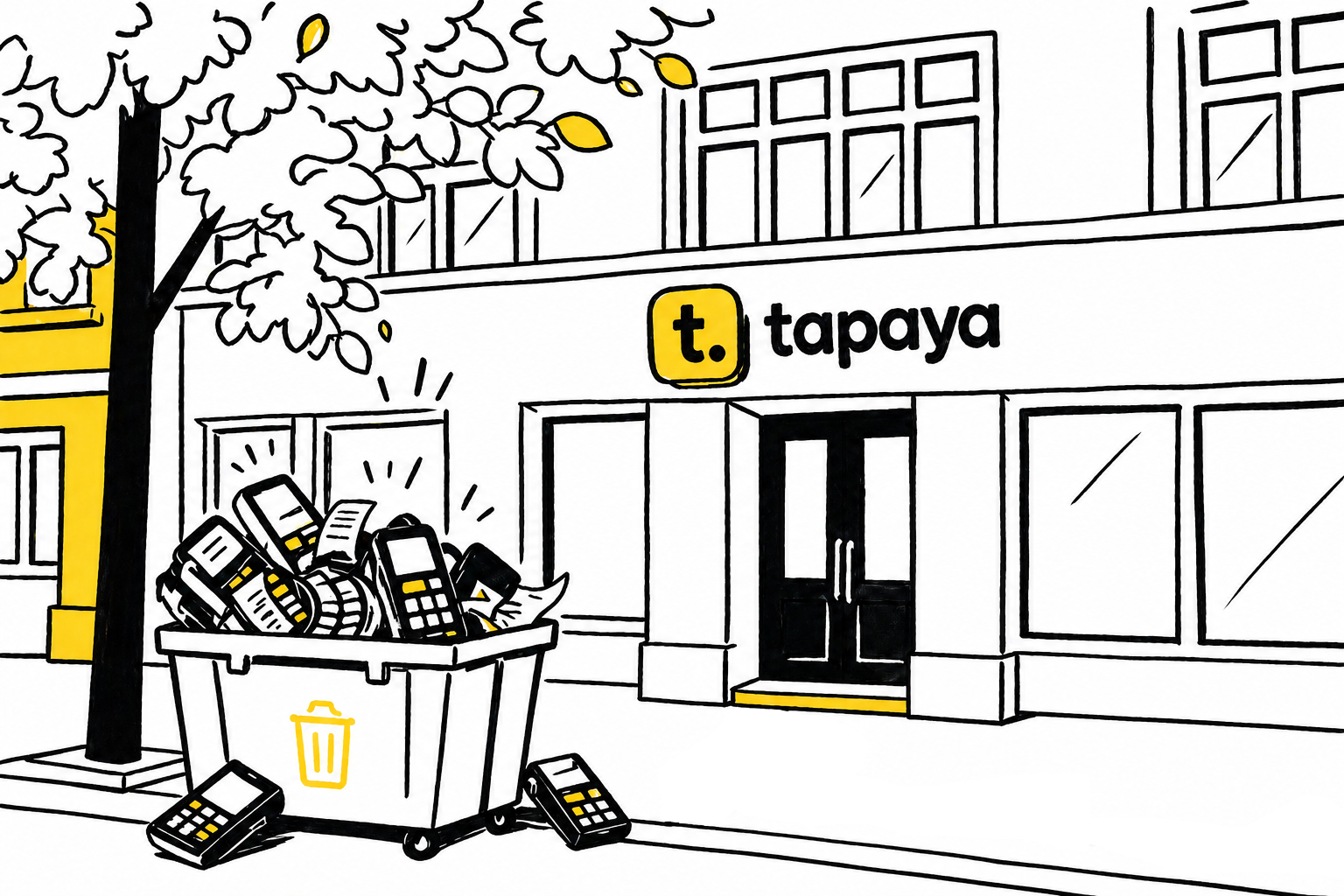

Tapaya has raised €1 million in a pre-seed round to rethink one of the most persistent pieces of fintech infrastructure: the payment terminal. The round, led by Passion Capital with participation from Depo Ventures and BADideas.fund, backs a simple but ambitious idea: any device should be able to accept payments.
At first glance, this sounds like another SoftPOS story. But the problem Tapaya is targeting runs deeper than hardware replacement. It is about who owns the payment experience, and how difficult it still is to build it into software products.
The company removing the terminal layer
Founded in 2025 and based in Prague, Tapaya is building a software layer that allows banks, fintechs, and platforms to embed in-person payments directly into their own applications. Today, accepting payments in-store still largely depends on dedicated terminals that need to be purchased, certified, and maintained separately from the rest of the business stack.
“We want accepting payments to be as simple as turning on a light.“
– Laura Ďorďová, co-founder and CEO of Tapaya
For software platforms, the friction is even higher. Certification alone can take years and comes with significant cost, which makes offering embedded in-person payments unrealistic for most players. As a result, many are forced to rely on external providers, losing control over the user experience.
Tapaya’s approach is to abstract this complexity into a single SDK. Instead of dealing with processors, compliance, and certification individually, companies can integrate one layer and turn any Android or iOS device into a payment terminal.
Why this problem still exists
In-person payments still account for a larger share of transaction volume than online, yet the infrastructure behind them has not evolved at the same pace. While contactless payments and digital wallets have changed how consumers pay, the acceptance layer remains fragmented and heavily tied to hardware.
This creates a structural gap. Software companies increasingly want to own payments within their products, but the cost and complexity of doing so pushes them back toward legacy systems. The result is a market where innovation happens on the surface, while the underlying infrastructure stays largely the same.
The real bet: infrastructure, not features
Tapaya is not trying to build a better terminal. It is trying to remove the concept of a terminal entirely by turning payment acceptance into a native software capability.
By consolidating compliance, certification, and processor connections into one layer, the company aims to reduce integration timelines from months or years to days. This shift matters most for platforms like POS systems, ERP providers, and fintech apps, which can now offer in-person payments without building the infrastructure themselves.
The strategy is clear. Tapaya is positioning itself as embedded infrastructure rather than a merchant-facing product, betting that control over the payment layer will continue to move upstream into software platforms.
Early stage, familiar challenge
The company is still early, with initial integrations underway in the Czech Republic and plans to expand across Central and Eastern Europe and the Baltics. The challenge ahead is not whether the technology works, but whether Tapaya can earn trust and distribution in a space where reliability and compliance are non-negotiable.
Payments infrastructure changes slowly because it carries risk. Abstracting complexity makes adoption easier, but it also means taking ownership of that complexity. That is where many similar attempts have struggled.
Tapaya’s €1 million round is small in absolute terms, but the ambition behind it is larger. If they succeed, the payment terminal does not evolve. It becomes irrelevant.
Key takeaways
- The real bottleneck in in-person payments is not hardware, but certification and integration complexity
- Tapaya is shifting payment acceptance from devices to software layers
- The biggest opportunity sits with platforms, not individual merchants
- Distribution and trust will matter more than technology in the next phase
If you are building a fintech or a platform, the question is no longer whether you should embed payments, but how much of the stack you want to own. Get in touch if you need our help with that.


