
Day: April 29, 2026

  • Rogo raises $160M Series D as AI moves deeper into finance operations

    Rogo raises $160M Series D as AI moves deeper into finance operations

    Rogo has raised $160 million in a Series D round led by Kleiner Perkins, with participation from major venture and growth investors including Sequoia, Thrive Capital, Khosla Ventures and others. The round pushes the company’s total funding above $300 million and signals continued investor appetite for AI infrastructure built specifically for financial services.

    The timing is not random. Financial institutions are under pressure to cut manual workload in research, deal execution and internal reporting. A lot of this work still sits in spreadsheets, slide decks and fragmented data systems. That combination has become a natural entry point for AI products that can handle structured, repeatable tasks at scale.


    What Rogo actually does inside finance teams

    Rogo is building an AI platform designed specifically for financial workflows. Instead of focusing on general-purpose assistants, the company targets core investment banking and advisory work. Its system is built to support multi-step processes like deal screening, financial analysis, document drafting and research synthesis.

    The platform is used by tens of thousands of finance professionals across investment banks, advisory firms and asset managers. Firms such as Lazard, Jefferies, Moelis, Rothschild & Co and Nomura are part of its customer base. The product is not positioned as a side tool. It is embedded directly into workflows where decisions and outputs are produced daily.

    The idea behind the product is straightforward. A large portion of junior finance work is repetitive. Analysts spend significant time assembling information, updating models and preparing presentations. Rogo’s approach is to shift that workload into AI systems that can process inputs, generate outputs and keep context across steps, while humans focus more on judgment and client interaction.


    Why this round matters beyond the headline number

    This Series D is less about funding and more about where AI in finance is heading. The sector is moving past early pilots and into production use cases. That shift changes what investors look for. Model quality alone is no longer enough. Integration into real workflows becomes the deciding factor.

    Rogo’s positioning reflects that shift. It is not trying to replace entire teams. It is inserting itself into specific operational layers where time is still heavily consumed by manual synthesis of information. That makes adoption easier, especially in environments where risk, compliance and accuracy matter.


    What happens next for Rogo

    With fresh capital, the company is expected to expand its engineering and deployment teams and deepen integrations with financial data systems. Expansion into new markets is also part of the next phase, particularly across Europe and Asia where large financial institutions operate complex legacy infrastructures.

    The broader signal is clear. Vertical AI companies in regulated industries are starting to scale faster when they solve narrow but expensive problems inside real workflows. Finance is one of the first sectors where this model is becoming visible at scale.


    Key takeaways for fintech startups

    • AI adoption in finance is shifting from experimentation to embedded operational use

    • Products that reduce manual, repetitive work inside workflows are gaining traction faster than general AI tools

    • Distribution inside enterprise systems is becoming a core competitive factor

    • Vertical AI companies win when they integrate deeply into existing financial infrastructure, not when they sit on top of it

    If you are building in fintech and trying to position your product inside real financial workflows, reach out to us.
  • Tapaya raises €1M to make payment terminals obsolete

    Tapaya raises €1M to make payment terminals obsolete

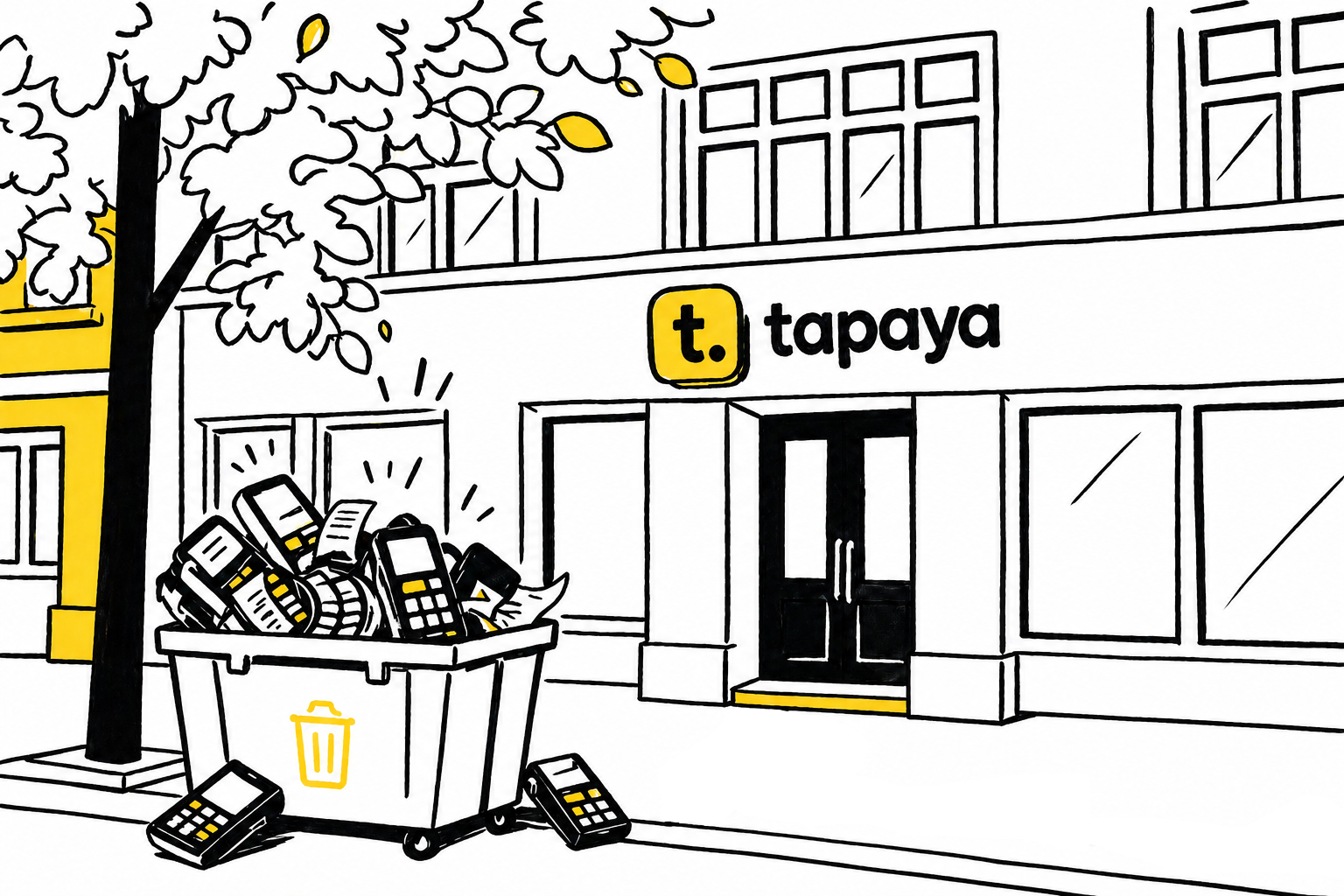
    Tapaya has raised €1 million in a pre-seed round to rethink one of the most persistent pieces of fintech infrastructure: the payment terminal. The round, led by Passion Capital with participation from Depo Ventures and BADideas.fund, backs a simple but ambitious idea: any device should be able to accept payments.

    At first glance, this sounds like another SoftPOS story. But the problem Tapaya is targeting runs deeper than hardware replacement. It is about who owns the payment experience, and how difficult it still is to build it into software products.


    The company removing the terminal layer

    Founded in 2025 and based in Prague, Tapaya is building a software layer that allows banks, fintechs, and platforms to embed in-person payments directly into their own applications. Today, accepting payments in-store still largely depends on dedicated terminals that need to be purchased, certified, and maintained separately from the rest of the business stack.


    We want accepting payments to be as simple as turning on a light.

    – Laura Ďorďová, co-founder and CEO of Tapaya

    For software platforms, the friction is even higher. Certification alone can take years and comes with significant cost, which makes offering embedded in-person payments unrealistic for most players. As a result, many are forced to rely on external providers, losing control over the user experience.

    Tapaya’s approach is to abstract this complexity into a single SDK. Instead of dealing with processors, compliance, and certification individually, companies can integrate one layer and turn any Android or iOS device into a payment terminal.


    Why this problem still exists

    In-person payments still account for a larger share of transaction volume than online, yet the infrastructure behind them has not evolved at the same pace. While contactless payments and digital wallets have changed how consumers pay, the acceptance layer remains fragmented and heavily tied to hardware.

    This creates a structural gap. Software companies increasingly want to own payments within their products, but the cost and complexity of doing so pushes them back toward legacy systems. The result is a market where innovation happens on the surface, while the underlying infrastructure stays largely the same.


    The real bet: infrastructure, not features

    Tapaya is not trying to build a better terminal. It is trying to remove the concept of a terminal entirely by turning payment acceptance into a native software capability.

    By consolidating compliance, certification, and processor connections into one layer, the company aims to reduce integration timelines from months or years to days. This shift matters most for platforms like POS systems, ERP providers, and fintech apps, which can now offer in-person payments without building the infrastructure themselves.

    The strategy is clear. Tapaya is positioning itself as embedded infrastructure rather than a merchant-facing product, betting that control over the payment layer will continue to move upstream into software platforms.


    Early stage, familiar challenge

    The company is still early, with initial integrations underway in the Czech Republic and plans to expand across Central and Eastern Europe and the Baltics. The challenge ahead is not whether the technology works, but whether Tapaya can earn trust and distribution in a space where reliability and compliance are non-negotiable.

    Payments infrastructure changes slowly because it carries risk. Abstracting complexity makes adoption easier, but it also means taking ownership of that complexity. That is where many similar attempts have struggled.

    Tapaya’s €1 million round is small in absolute terms, but the ambition behind it is larger. If they succeed, the payment terminal does not evolve. It becomes irrelevant.


    Key takeaways

    • The real bottleneck in in-person payments is not hardware, but certification and integration complexity

    • Tapaya is shifting payment acceptance from devices to software layers

    • The biggest opportunity sits with platforms, not individual merchants

    • Distribution and trust will matter more than technology in the next phase

    If you are building a fintech or a platform, the question is no longer whether you should embed payments, but how much of the stack you want to own. Get in touch if you need our help with that.