
Day: May 20, 2026

  • Mercury raises $200M Series D at $5.2B valuation as it builds the future of AI-native banking

    Mercury raises $200M Series D at $5.2B valuation as it builds the future of AI-native banking

    Banking has stayed oddly consistent while everything around it has moved on. You still deposit money, move it around, and rely on external tools to understand what it all means. For founders running modern companies, that gap shows up in the small moments that slow everything down: reconciling transactions, exporting spreadsheets, and trying to connect financial data that never quite sits in one place.

    It’s not that banks don’t work. It’s that they don’t really help you think.


    Why Mercury started in 2017

    Mercury was founded in 2017 with a simple frustration at its core. If money sits at the center of every business decision, why does banking stop at storage and transfers? The goal was to build something that understands context, not just balances. Something that behaves less like infrastructure you occasionally visit and more like a system that actively helps you run a company.

    That idea has become more relevant as companies themselves have changed shape, especially with AI lowering the barrier to starting something new.


    The $200M Series D and what it signals

    Mercury is now announcing a $200 million Series D at a $5.2 billion valuation, led by TCV, alongside returning investors including Andreessen Horowitz, Coatue, CRV, Sapphire Ventures, Sequoia Capital, and Spark Capital.

    The timing matters. Company formation is accelerating again, driven by AI tools that make it easier to go from idea to product. Mercury reports a significant increase in applications, alongside a broader shift in who is starting companies and how quickly they move from concept to incorporation.


    A customer base that no longer fits one category

    Mercury now serves more than 300,000 customers, including roughly one in three U.S. startups. But the more interesting shift is outside the startup world.

    A majority of new customers now come from outside traditional tech. Ecommerce businesses, service firms, solo operators, and hybrid income profiles are all using the same infrastructure. Banking, in that sense, is no longer a “startup tool.” It’s becoming general-purpose financial operating infrastructure.


    From account to operating layer

    Over the past year, Mercury has started to evolve beyond being a place where money sits.

    Mercury Insights brings real-time financial visibility directly into the product, removing the need for external reporting tools. Developer-focused capabilities like MCP and CLI extend banking into environments where technical teams already work. Payroll is being integrated through the acquisition of Central, and Mercury Personal expands the same experience into individual finances for qualifying users.

    The direction is subtle but important. The product is shifting from passive visibility to active participation.


    AI changes the interface, not just the tooling

    The next step is Mercury Command, an AI-native interface designed to reduce the friction between intent and execution. Instead of navigating dashboards or stitching together financial workflows manually, users will be able to describe what they want in natural language and have it executed inside their account.

    Check cash position. Move funds. Categorize transactions. Send invoices. The key difference is that everything remains grounded in real account data, and every action still requires explicit user approval. AI becomes an interface layer, not an autonomous operator.


    Moving closer to becoming a full bank

    Alongside product expansion, Mercury is progressing on a more structural shift. The company has received conditional approval from the OCC to establish Mercury Bank, N.A., moving it closer to becoming a fully regulated national bank.

    Further approvals from the FDIC and Federal Reserve are still required, but the direction is clear: deeper ownership of the financial infrastructure behind the product. That unlocks capabilities like expanded lending, payments, and integrations that are harder to build on top of legacy banking systems.


    Key takeaways

    • Mercury raises $200M Series D at a $5.2B valuation led by TCV

    • AI is accelerating company formation and expanding the pool of founders

    • Banking is shifting from passive storage to active financial operating infrastructure

    • Mercury is broadening beyond startups into a general business banking platform

    • The company is moving toward full bank status with OCC conditional approval

    If you are building in payments or scaling a financial product, this shift is worth paying attention to. Reach out if you want to explore how infrastructure choices shape growth.
  • ChatGPT Just Became a Financial Dashboard

    ChatGPT Just Became a Financial Dashboard

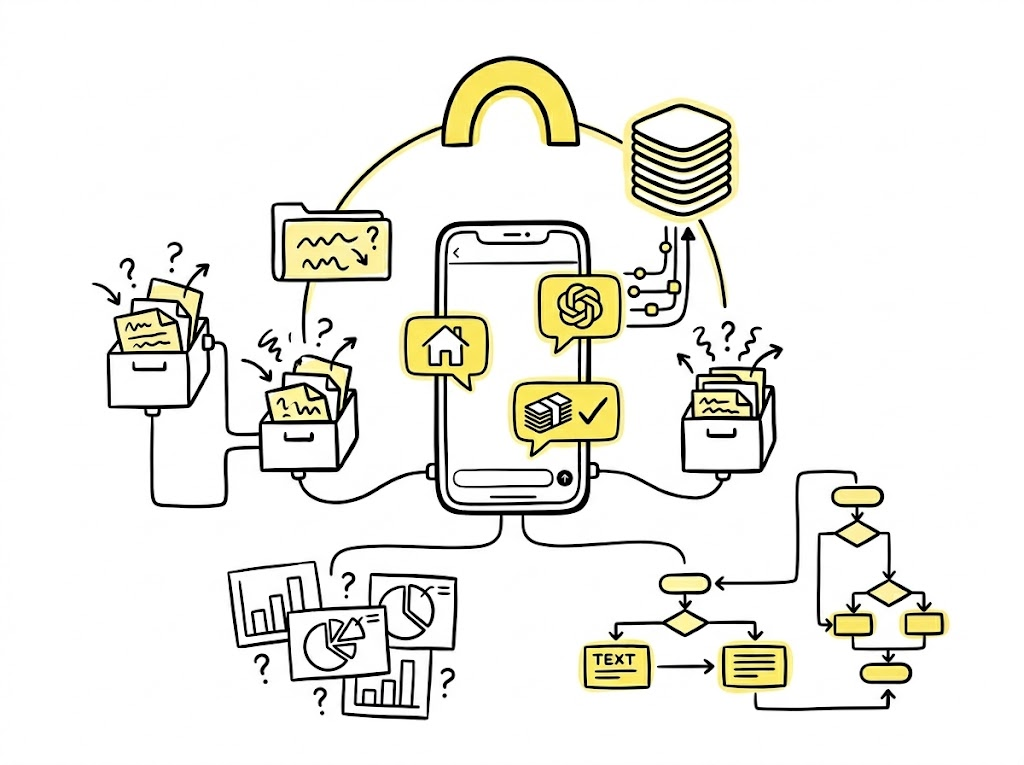
    A few days ago, OpenAI announced a new personal finance experience inside ChatGPT powered by Plaid. U.S. Pro users can now connect their financial accounts and ask questions based on their actual financial situation. Not generic budgeting advice. Not “5 tips to save money.” Real-time answers grounded in someone’s own accounts, spending habits, debt, cash flow, and financial goals.

    That changes the conversation quite a bit.

    For years, AI in personal finance mostly lived in the “assistant” category. Budget reminders. Spending alerts. Predictive charts nobody looked at after week two. This feels closer to AI becoming the interface itself.

    Instead of opening five banking apps and manually piecing together what is happening financially, users can simply ask: “Can I realistically afford a house next year?” or “What is the fastest way for me to pay off debt without killing my savings?” That sounds small on paper, but in reality it changes user expectations completely.


    The Most Important Part Is Not The Chatbot

    The real story here is infrastructure.

    Financial data is messy. Extremely messy. Transaction descriptions are inconsistent, categories are often wrong, and most raw banking data is borderline unreadable unless heavily processed. One transaction says Starbucks. Another says SQ*TST12345. Another looks like someone smashed their keyboard.

    Plaid is trying to position itself as the layer that translates all of that chaos into something AI can actually understand. And honestly, this is where the announcement becomes strategically interesting.

    A lot of companies can build AI interfaces now. Far fewer companies have trusted access to financial data, institution connectivity, transaction intelligence, and consumer permission systems all working together. That combination is much harder to replicate than a chatbot UI.


    Banking UX Suddenly Looks Old

    Traditional banking apps already felt clunky before this. Now they risk feeling prehistoric.

    Most banks still rely on dashboards designed around navigation. Tabs. Menus. Filters. Static charts pretending to be insights. But consumers are quickly getting used to conversational software that gives direct answers instead of forcing them to hunt for information.

    Nobody wants to spend twenty minutes analyzing spending trends manually if they can ask one question and get a contextual explanation instantly. The last decade of fintech focused heavily on convenience. The next phase probably focuses on interpretation. Helping users understand what is actually happening with their money and what actions make sense next.

    That is a much harder problem.


    The Pressure On Fintech Just Increased

    This also quietly raises the bar for every fintech product in the market. Once users experience financial tools that understand context deeply, generic experiences start feeling shallow very quickly.

    Consumers will increasingly expect products to understand their full financial picture, personalize recommendations in real time, explain tradeoffs clearly, proactively surface useful actions, and adapt to changing financial behavior automatically.

    And importantly, they will expect this everywhere. Inside neobanks. Inside lenders. Inside investment apps. Inside accounting platforms. Inside payroll tools.

    The companies that win from this shift probably will not be the loudest AI brands. They will be the ones that make financial complexity feel simpler, calmer, and genuinely useful without crossing the line into creepy automation.


    Key Takeaways

    • AI in fintech is moving from generic guidance to context-aware financial intelligence

    • Plaid is evolving from connectivity provider into AI infrastructure layer

    • Conversational finance may replace traditional dashboard-heavy banking UX

    • Consumer expectations around personalization are about to rise fast

    • Fintechs now face pressure to make products smarter, not just prettier

    If you’re building a fintech startup and want help refining positioning, messaging, or growth strategy, reach out.