Category: Uncategorized

  • Revolut’s Rise: How a Fintech Startup Redefined Global Banking in Just 10 Years

    Revolut’s Rise: How a Fintech Startup Redefined Global Banking in Just 10 Years

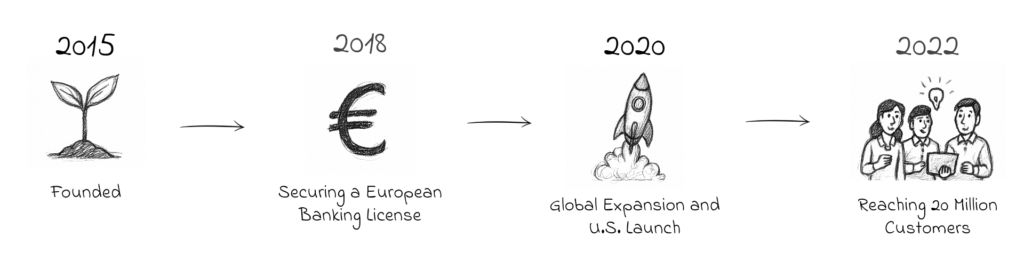
    In less than a decade, Revolut has grown from a modest London-based fintech startup into one of the world’s largest and most innovative digital financial platforms. Founded in 2015 by Nikolay Storonsky and Vlad Yatsenko, Revolut set out to make financial services simpler, faster, and more transparent. As of 2025, it serves over 52 million customers in 38 markets and continues to redefine what a digital bank can be.


    Early Growth: Filling a Market Gap (2015–2018)

    Revolut’s initial offering—a prepaid debit card paired with a mobile app—targeted a clear need: low-cost currency exchange and international transfers. This resonated with expats and frequent travelers. Within a year, Revolut had acquired over 100,000 customers.



    By 2018, Revolut had secured a European banking license via the Bank of Lithuania and expanded into cryptocurrency trading, premium subscriptions, and business banking. These moves laid the groundwork for scalable, cross-border financial services.

    • 2015–2018: Valuation grew to $1.7B


    Scaling Smart: Global Expansion and Diversification (2019–2021)

    Between 2019 and 2021, Revolut aggressively entered new markets including the U.S., Australia, Japan, and Singapore. It also diversified its products—adding commission-free stock trading, “Metal” plans, and a growing suite of business financial tools.

    Rather than rely on traditional banking income, Revolut implemented a hybrid revenue model based on subscriptions, transactions, and premium services. By 2021, it had over 15 million users and a valuation north of $30 billion.

    • 2019–2021: Valuation grew to $33B


    Building Infrastructure for the Future (2022–2023)

    Anticipating the limits of legacy banking systems, Revolut built a proprietary core banking platform. Its single app adapts dynamically to local regulatory requirements, allowing for faster market entry and a consistent user experience worldwide.
    A centralized but locally responsive compliance framework helped Revolut scale securely and efficiently—an advantage over both traditional banks and less disciplined fintechs.


    Record-Breaking Results and Expansion (2024–2025)

    In 2024, Revolut secured a long-awaited UK banking licence, enabling it to offer deposit and credit products in its home market. In 2024, Revolut’s revenue surged 72% to $4.0 billion, while profit before tax rose 149% to $1.4 billion and net profit more than doubled to $1.0 billion, reflecting a significant leap in operational efficiency and profitability.
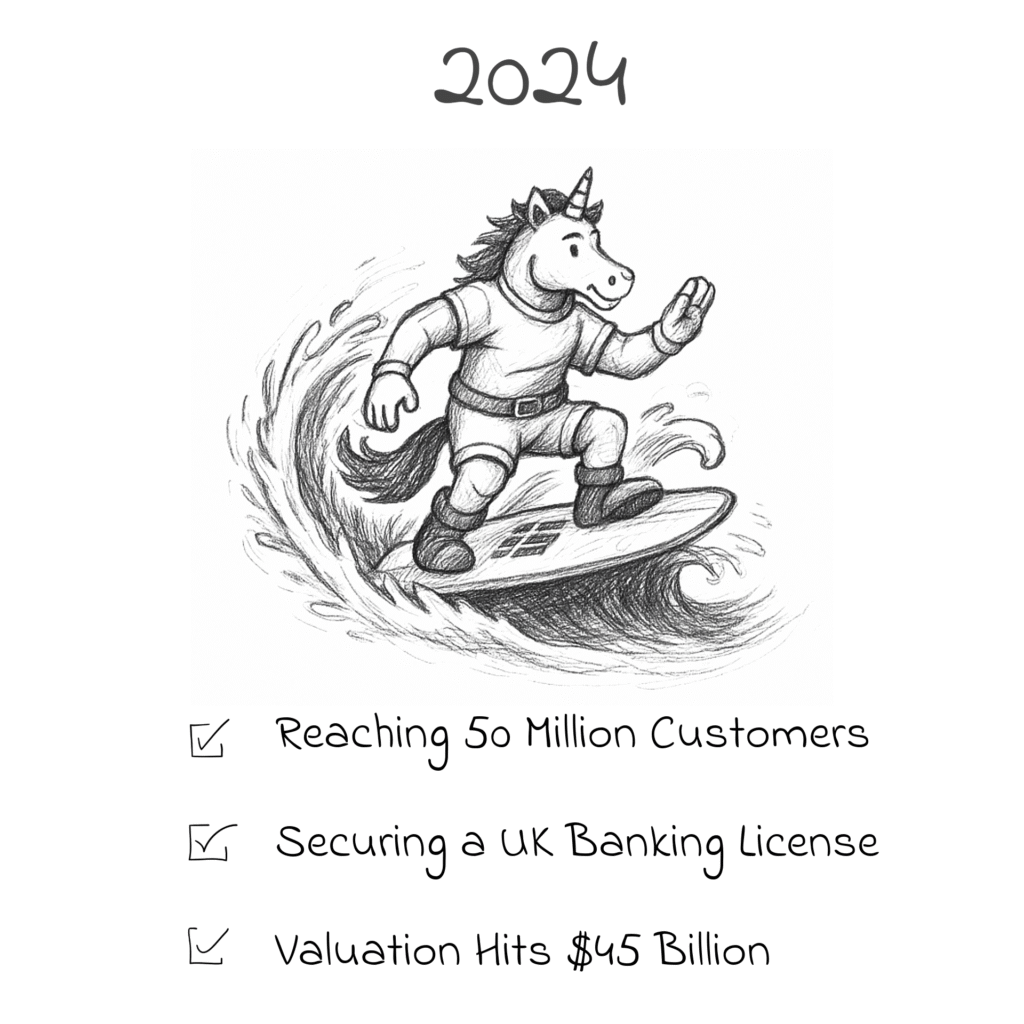
    With a user base exceeding 40 million, Revolut continues to focus on growth over short-term profitability. The company plans to enter mortgage lending in several European countries and expand operations into Latin America, India, and other high-growth regions. With over ten active revenue streams — from payments to trading to credit — Revolut has established itself as a leader among global fintechs.

    • 2025: Valuation grew to $48B


    How Revolut Turned Strategy into Scalable Success

    What really sets Revolut apart is how it turned strategy into action across four key areas—building not just a fast-growing company, but one that’s built to last. These weren’t just big bets—they were smart, interconnected moves that fueled sustainable growth:

    Diversified revenue mix
    Revolut didn’t rely on a single product or market. By spreading its earnings across subscriptions, card payments, FX, crypto, and wealth services, it built a more stable, resilient business from the ground up.

    Global expansion done right
    Revolut didn’t just enter new markets—it did so with intention. A lean, tech-first model allowed it to launch in countries like Brazil and New Zealand without the drag of legacy infrastructure.

    Innovation with purpose
    Every product launch—from eSIMs and RevPoints to Revolut X and Money Market Funds—was tied to a clear customer need or business opportunity. This approach kept users engaged while opening new revenue streams.

    Compliance that scales
    With tools like the internal “Karma” system, Revolut made compliance everyone’s responsibility. By tying bonuses to risk metrics, it embedded accountability into the culture—and gave regulators one more reason to trust its growth.
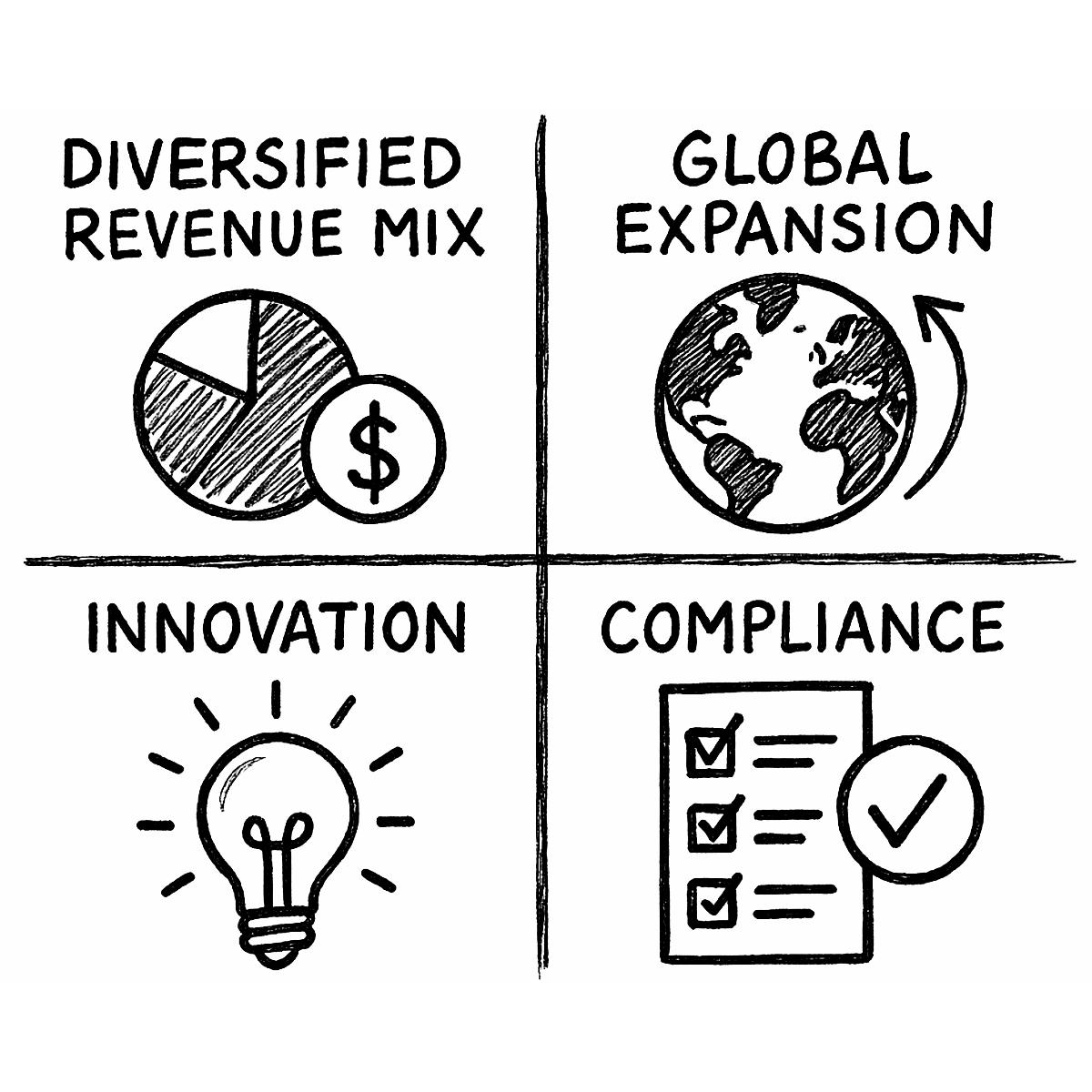

    These four pillars didn’t just support Revolut’s rise—they shaped a fintech model that others are now racing to follow.


    Lessons from Revolut’s Success: Key Factors Behind Its Growth

    Revolut’s journey holds valuable insights for fintech startups aiming to scale internationally:

    • Clear Product-Market Fit: Targeted specific customer pain points such as expensive currency exchange fees and lack of borderless banking.

    • Customer-Driven Innovation: Prioritized product development based on measurable customer impact, rather than internal assumptions.

    • Unified Technology Platform: Built one global core banking platform and one app serving all jurisdictions, simplifying operations and speeding market entry.

    • Strong Compliance Focus: Embedded regulatory compliance into the business model early, enabling faster and smoother international expansion.

    • Revenue Diversification: Moved beyond card transactions to generate income from subscriptions, trading, lending, and other services.

    • Efficient Scaling: Maintained a lean cost structure while investing heavily in technology, allowing for sustainable hypergrowth.

    • Relentless Global Ambition: Focused on rapid customer acquisition and market expansion rather than early-stage profitability.

    For fintech startups, Revolut’s story demonstrates that success depends not only on product innovation but also on regulatory discipline, operational efficiency, and relentless customer focus.

    “This performance earned us the status of Europe’s most valuable private technology company, reflecting the confidence of existing and new investors in our trajectory. But we’re just getting started.”

    Nik Storonsky, co-founder and CEO of Revolut

  • 6 AI Agents That Are Transforming How Fintech Does Investment Research

    6 AI Agents That Are Transforming How Fintech Does Investment Research

    A new wave of AI-powered tools is starting to reshape investment research in fintech. As Forbes recently reported in an article by Jeff Kauflin, companies ranging from trading app Robinhood to lean startups in New York are now using AI agents—software that can understand context, make decisions, and carry out tasks—to streamline the time-consuming work of analyzing investments. While AI in fintech has so far been focused on customer service and back-office automation, it’s now moving into deeper, more strategic territory.

    A growing number of companies are building AI tools designed specifically for investors, analysts, and financial institutions. Among them:

    • Hebbia – Connects directly to virtual data rooms to analyze private market data, assess risks, and generate investment memos. The company says its tools can save private equity firms up to 30 hours per deal. Backed by Index Ventures, Peter Thiel, and Andreessen Horowitz.

      Website: https://www.hebbia.com

    • AlphaSense – Helps analysts prepare for meetings, earnings calls, and IPO roadshows by surfacing relevant insights and expert commentary.

      Website: https://www.alpha-sense.com/

    • Rogo – Automates the creation of earnings summaries, pitch decks, and M&A ideas. Its tools compare industry players and analyze company performance across geographies.

      Website: https://rogo.ai/

    • RavenPack – Focuses on analyzing news and regulatory filings to detect market-moving signals. Recently launched Bigdata.com, a platform that delivers AI-generated stock watchlists and daily reports.

      Website: https://www.ravenpack.com/

    Consumer-facing platforms are also getting on board:

    • Robinhood Cortex – A new AI feature (launching later this year) that will generate automated reports and trade ideas for premium users.

      Website: https://robinhood.com/

    • Arta AI – Launching mid-2025, this tool will offer personalized investment suggestions and portfolio insights. Subscriptions start at $20/month or are free for clients with $100K+ in assets under management.

      Website: https://artafinance.com

    While most companies in this space are still early-stage, they’re targeting some of the most manual, labor-intensive tasks in investment research—an area that’s long overdue for innovation.

  • All-in-one payment cards examples: Visa Flexible Credential, Mastercard One Credential, and Curve

    All-in-one payment cards examples: Visa Flexible Credential, Mastercard One Credential, and Curve

    As consumer payment behaviour evolves toward personalization, convenience, and control, major networks and fintechs are reshaping the way people pay. Visa’s Flexible Credential, Mastercard’s One Credential, and the Curve Card are three examples of how fintechs and payment schemes consolidate multiple payment methods into a single, streamlined experience. Each solution, while similar in ambition, offers unique features and benefits, reflecting different approaches to meet the growing demand for seamless, flexible, and user-centric financial tools.


    Curve Card

    The Curve Card takes a fintech-driven approach, aggregating multiple existing debit and credit cards into one smart card and companion app. Rather than offering new accounts, Curve allows users to link their existing Visa and Mastercard products and manage all spending through a single platform.

    Key Benefits:

    • All-in-One Aggregation: Connects all user cards into one Curve card, with real-time selection via the app.

    • Post-Transaction Flexibility: Features like “Go Back in Time” allow users to switch the funding card even after a purchase.

    • International Reach: Available across the UK and most of Europe, simplifying spending at home and abroad.

    🔗 Learn more on the Curve website

    Visa Flexible Credential

    Visa Flexible Credential (VFC) enables issuers to consolidate multiple funding sources—such as debit accounts, credit lines, loyalty points, and buy-now-pay-later options—under a single Visa card or digital credential. Users can set payment preferences through their issuer’s app, enabling automatic selection of the funding source based on transaction type, amount, or other criteria.

    Key Benefits:

    • Unified Payment Methods: Debit, credit, loyalty points, installments, and even multi-currency balances linked to a single card.

    • Dynamic User Control: Consumers define funding rules through issuer apps, minimizing the need to carry multiple cards.

    • Global Rollout: Already live in Japan (Olive card), U.S. (Affirm Card), and UAE (Liv), with further expansion planned.


    🔗 Learn more on the Visa website


    Mastercard One Credential

    Mastercard One Credential delivers a similarly powerful solution by allowing users to access debit, credit, prepaid, and installment options through a single, digitally connected Mastercard credential. Consumers set up personalized payment preferences, enabling seamless selection of the right funding method for each transaction.

    Key Benefits:

    • Personalized Spending: Users can configure which account funds different types of purchases.

    • Wide Integration: Works with debit, credit, prepaid, and installment options.

    • Global Ambition: Launched with partners like Bendigo Bank (Australia) and Wio Bank (UAE), with expansion into North America and Europe anticipated.


    🔗 Learn more on the Mastercard website


    Comparison

    FeatureVisa Flexible CredentialMastercard One CredentialCurve Card
    AvailabilityJapan, U.S., UAE (expanding globally)Australia, UAE (expanding globally)UK, Europe
    Payment MethodsDebit, credit, loyalty points, installments, multi-currencyDebit, credit, prepaid, installmentsAny linked debit or credit cards
    Unique FeaturesMulti-source payment and loyalty integration via issuer appPersonalized multi-account selection through issuer app“Go Back in Time” and backup card for declined payments


    Summary

    Visa Flexible Credential, Mastercard One Credential, and Curve each represent a significant step toward the future of flexible, consumer-centric payment experiences.

    Visa and Mastercard focus on enhancing traditional bank offerings by consolidating payment methods into a single credential, tightly integrated with issuers’ systems.

    Curve approaches the market independently, offering aggregation of multiple existing cards into one easy-to-use platform with greater real-time and retroactive flexibility.

    Together, they signal a clear industry shift: empowering consumers with the freedom to choose how and when they pay, without being constrained by traditional card silos.

  • Who’s Who in the EBAday 2025 Fintech Zone? Meet the 16 Startups to Watch

    Who’s Who in the EBAday 2025 Fintech Zone? Meet the 16 Startups to Watch

    As the financial services industry continues to evolve, EBAday 2025 provides a timely window into the ideas and innovations driving that change. This year’s Fintech Zone features 16 startups that are tackling some of the sector’s most pressing challenges; from streamlining payments infrastructure to enhancing regulatory compliance and improving customer experience. These companies may be early-stage, but they offer valuable insight into where the market is heading; and what’s capturing the attention of banks, investors, and strategists alike.


    Let’s take a closer look at the 16 startups featured in this year’s Fintech Zone.


    A352 SARL

    A352 SARL offers the Financial Navigator, a modular system designed to streamline treasury operations for mid-sized companies and large SMEs. By integrating with banks and ERPs, it provides real-time insights, process automation, and enhanced financial control, optimizing cash flows and improving efficiency.


    ‱ Funds Raised: $210,000 in grant funding, including support from the Luxembourg Ministry

    ‱ Clients: Operates in over 30 countries, connecting with more than 3,000 banks worldwide

    ‱ Geography: Headquartered in Luxembourg, serving clients across four continents

    ‱ Partners: Member of the Luxembourg Private Equity & Venture Capital Association (LPEA); supported by the Luxembourg Ministry


    Adhara Ltd

    Adhara is a financial software company that provides real-time, multi-currency liquidity management and international payment solutions. Their platforms deliver certainty by atomically clearing and settling tokenized fiat payments over enterprise-grade, smart contract-enabled distributed ledgers.


    ‱ Funds Raised: $7.5 million Series A funding round in May 2021

    ‱ Clients: Collaborated with UBS and Deutsche Bank on blockchain-based cross-border payment experiments

    ‱ Geography: Global reach with development hubs in Spain & South Africa, and business bases in the UK and Singapore

    ‱ Partners: Partnered with Ownera to provide financial institutions with cross-market access to digital cash and collateral


    Authologic

    Authologic streamlines identity verification by aggregating hundreds of e-ID systems into a unified platform, eliminating the need for document uploads and enhancing security. Their solution accelerates customer onboarding processes for financial institutions.


    ‱ Funds Raised: $8.2 million Series A

    ‱ Clients: Santander Leasing, LV Bet, eToro

    ‱ Geography: Offices in Warsaw, London, and San Francisco

    ‱ Partners: OpenOcean, Y Combinator, Peak Capital, SMOK VC


    Bankify Oy

    Bankify offers AI-driven tools to optimize banking operations and customer experiences, focusing on sustainable finance and user engagement. Their platform provides actionable insights and personalized recommendations that promote sustainable and financially healthy choices.


    ‱ Clients: Bankify serves a diverse range of clients, including marketplaces, fintechs, retail banks, and other financial institutions. Their platform is designed to build sustainable financial services, empowering these clients to drive user engagement and increase revenues. 

    ‱ Geography: Based in Finland, serving international clients

    ‱ Partners: Collaborates with open banking partners to enhance offerings


    Cavefish

    Cavefish develops transaction platforms aimed at safeguarding digital payments and reducing fraud risks through innovative security measures. Their solutions focus on enhancing the integrity of digital transactions.


    Consilient Inc

    Consilient utilizes federated learning to transform efficiency and combat financial crime, enabling secure data collaboration without sharing sensitive information. Their technology enhances transaction monitoring and customer due diligence.


    ‱ Funds Raised: $3 million seed funding

    ‱ Partners: Partnered with Harex InfoTech to fight financial crime in South Korea


    Instnt

    Instnt offers identity verification services to enhance customer acquisition and compliance, providing a seamless onboarding experience. Their platform aims to reduce friction in the customer onboarding process.


    Izi Payments Limited

    Izi Payments focuses on fraud prevention, chargeback rate reduction, and revenue loss recovery, enhancing payment security for businesses. Their solutions aim to protect businesses from financial losses due to fraudulent activities.


    ‱ Clients: Izi Payments is trusted by businesses of all sizes and industries. Testimonials on their website highlight clients such as Mission Bay, Parkmerced, and Hayes Valley, praising the company’s fast, reliable, and easy-to-use payment processing solutions.


    KM2 FinCrime Limited

    KM2 FinCrime provides financial crime detection and prevention technologies, leveraging real-time analytics to proactively address risks. Their approach offers scalable, data-driven solutions for managing crime prevention and staying ahead of regulations.


    Open Finance AI

    Open Finance AI helps banks and financial institutions deliver personalized financial advice at scale using artificial intelligence. Their platform turns raw data into real-time, actionable insights, enhancing customer relationships and unlocking new revenue opportunities.


    ‱ Clients: Primarily financial institutions in Europe

    ‱ Geography: Based in the UK, operating across Europe

    ‱ Partners: Collaborates with banks and fintech integrators for data aggregation and deployment


    pAIscreen Limited

    pAIscreen delivers AI-driven compliance screening tools that automate risk assessments and support regulatory compliance. Their platform enhances efficiency in KYC and AML workflows by intelligently scanning global datasets.


    ‱ Geography: UK-based


    StopCrime GmbH

    StopCrime GmbH focuses on technologies to prevent and detect financial crime, using advanced behavioral analytics and anomaly detection. Their approach targets early-stage threats, offering real-time alerts for suspicious activities.


    ‱ Geography: Based in Germany


    Tell Money Limited

    Tell Money enables open banking connectivity and secure data sharing between banks and third-party providers. Their infrastructure is built to improve compliance, reduce development time, and accelerate innovation in open finance.


    ‱ Clients: Used by fintechs and regulated entities in the UK

    ‱ Geography: UK-based

    ‱ Partners: Partnered with open banking providers and FCA-regulated institutions


    ToriiPay

    ToriiPay offers cross-border payment solutions designed to simplify international remittances and B2B transactions. Their platform is tailored for underserved corridors and focuses on improving transparency and reducing costs.


    ‱ Clients: ToriiPay’s services are utilized by a global user base, with over 1 million users worldwide. Their solutions cater to various sectors, including loyalty apps, in-store payments, e-commerce, parking companies, core banking providers, banks, banking-as-a-service providers, and payment service providers.

    ‱ Geography: Focused on Africa, the Middle East, and Asia


    Track A Payment (formerly Adnitio)

    Track A Payment brings transparency to complex transaction flows, offering full visibility into each step of a payment process. This solution helps financial institutions resolve delays and reduce operational friction in B2B payments.


    Trustfull

    Trustfull provides real-time fraud prevention using open-source intelligence and device behavioral analytics. Their system assesses user intent at onboarding, minimizing risk and improving customer conversion.


    ‱ Funds Raised: $5 million seed round

    ‱ Clients: Used by banks and digital lenders

    ‱ Geography: Operates across Europe and North America

    ‱ Partners: Collaborates with threat intelligence and identity verification platforms

    EBAday 2025 takes place on 27–28 May at the Carrousel du Louvre in Paris. As the industry gathers to explore what’s next in payments and transaction banking, the Fintech Zone offers a compelling preview of where innovation is headed. Keep an eye on these 16 startups—they may just be shaping the future of finance.


    For more details about the event, visit the official EBAday website here.


  • Why Fintech Founders Need Coaching, Not Just Capital

    Why Fintech Founders Need Coaching, Not Just Capital

    In fintech, capital is often seen as the cure-all. You raise a round, extend your runway, hire a few smart people, and the story should write itself. But in reality, funding is just the beginning. Many well-capitalized startups still fail – not for lack of ambition or intellect, but because they lack strategic clarity, market traction, and personal support at the leadership level. What they need isn’t more money. It’s coaching.


    The Capital Illusion

    Over the past decade, we’ve seen capital flood the fintech ecosystem. VC rounds are bigger, earlier, and faster than ever before. Yet, 9 out of 10 fintech startups still don’t make it past the early stages. That disconnect raises an uncomfortable question: if capital is abundant, why is success so rare?

    The answer often lies not in execution, but in alignment of vision, strategy, and leadership. Founders are expected to be visionary strategists, storytellers, product thinkers, team builders, and operators; all at once. And while they may be brilliant at one or two of those things, they’re rarely trained in all.

    That’s where coaching comes in.

    💡 Example: Fast, a one-click checkout startup, raised $120M from top-tier VCs including Stripe. Despite the capital, it burned through cash quickly, scaling too fast without clear product-market fit. CEO Domm Holland later admitted that strategic misalignment and pressure to grow too quickly led to the company’s downfall; not a lack of funding.


    Coaching is Not Therapy – It’s a Growth Lever

    Founders often resist coaching because they assume it’s remedial, or worse, indulgent. In reality, high-performance coaching is a strategic tool. It’s how leaders refine their thinking, pressure-test their decisions, and build resilience before the cracks show up in the business.

    Good coaches help founders zoom out to see the system they’re building – not just the product they’re launching. They challenge assumptions, identify blind spots, and create space for founders to think, not just react. In fast-paced, high-stakes environments, that space is rare – and essential.


    The Strategy Gap

    One of the most common issues we see in early-stage fintechs is what we call “strategy drift.” Founders start with a clear thesis but get pulled in ten different directions – by investors, early customers, competitors, or market noise. Without a strong strategic core, teams lose focus, messaging becomes muddled, and growth stalls.

    Coaching helps anchor that core. It’s the difference between reacting to feedback and integrating it into a coherent vision. It’s how founders move from chasing opportunities to choosing them.

    💡 Example: Monzo, one of the UK’s leading neobanks, struggled with strategic direction after its explosive early growth. As they expanded beyond prepaid cards, internal conflicts and changes in leadership followed. Former CEO Tom Blomfield eventually stepped down, citing burnout and leadership pressure. In hindsight, the company acknowledged that strategic misalignment — not the tech or funding — was the core issue during that phase.


    Coaching Builds Scalable Founders

    You can scale a product. You can scale a team. But scaling yourself as a founder? That’s harder – and more important.

    The habits, mindset, and leadership style that get you to Series A often won’t get you to Series C. Coaching gives founders the tools to evolve alongside their companies. It helps them become not just better leaders, but better communicators, decision-makers, and stewards of their company’s culture.

    And in fintech, where trust, complexity, and customer expectations run high, that kind of leadership isn’t a luxury – it’s a differentiator.


    Coaching Is a Competitive Advantage

    The next generation of fintech success stories won’t just be well-funded. They’ll be well-led. Coaching is how good founders become great ones – how they make sharper decisions, grow more resilient teams, and build companies that last.

    Capital fuels the journey. Coaching keeps it on track.

    💡 Example: Plaid CEO Zach Perret has shared in interviews how important mentorship and executive guidance were to his leadership. As Plaid scaled from a niche API startup to a major fintech infrastructure provider (and through an attempted $5.3B acquisition by Visa), he credited external input and coaching as helping him stay focused and grow into the leader the company needed.

    At Your Fintech Story, we help founders build strategy, clarity, and traction – through consulting, coaching, and hands-on support that goes beyond the pitch deck. If you’re navigating growth, storytelling, or strategic drift, we can help you realign and accelerate.

  • Embedded finance in 2025: Every company is becoming a Fintech

    Embedded finance in 2025: Every company is becoming a Fintech

    Embedded finance is now a major economic force, projected to drive over $7 trillion in global transaction volume by 2030. In 2025 alone, it’s powering billions in revenue across industries, as non-financial companies embed payments, lending, insurance, and banking directly into their digital experiences. More than 70% of consumer touchpoints now include at least one embedded financial service, fueling faster conversions and stronger customer loyalty. Retailers are increasing average order values through Buy Now, Pay Later options, healthcare platforms are improving affordability with instant patient financing, and platforms like Uber and Airbnb are turning financial services into seamless extensions of their core offerings. For businesses, embedded finance isn’t a nice-to-have; it’s a strategic growth engine.


    What is embedded finance?

    Embedded finance is the seamless integration of financial services into nonfinancial platforms. This means consumers can access banking – like services without ever interacting with a traditional bank.

    Think about it:

    • A retail website offering “Buy Now, Pay Later” (BNPL) at checkout.
    • A ride-hailing app paying drivers instantly after each ride.
    • A healthcare platform letting patients finance their medical bills with a few taps.

    This shift is powered by Banking-as-a-Service (BaaS) providers and API-driven financial infrastructure, making it easier than ever for businesses to embed financial solutions directly into their ecosystems.


    Why embedded finance is taking over in 2025

    What’s driving this rapid expansion? A perfect storm of technology, consumer behavior, and market demand:

    1. Customers Expect Seamless Experiences
    People don’t want to leave their favorite apps to make payments, apply for credit, or buy insurance. They expect these options to be built in.

    2. APIs & Open Banking Have Evolved
    Thanks to better financial APIs and open banking regulations, embedding fintech services is now faster, cheaper, and more secure.

    3. Companies Want New Revenue Streams
    Businesses can increase customer lifetime value, reduce churn, and monetize transactions through fees, interest, and premium financial products.

    4. Traditional Banking is Losing Ground
    Younger consumers don’t visit banks for loans or credit. They prefer digital-first solutions integrated into their daily apps.


    How Industries are embracing embedded finance

    Retail & E-commerce: The BNPL Boom

    Retailers aren’t just selling products – they’re financing them. From Amazon to Shopify, major brands now offer BNPL, subscriptions, and instant checkout financing, keeping customers within their ecosystems.

    Healthcare: Embedded Payments & Patient Financing

    With rising medical costs, embedded finance is making healthcare more accessible. Patients can opt for medical BNPL, automated billing, and embedded insurance, all within a single healthcare app – no bank visit required.

    Gig Economy & Marketplaces: Instant Access to Earnings

    Freelancers and gig workers rely on instant payouts, tax solutions, and micro-loans to smooth out their incomes. Companies like Uber, DoorDash, and Upwork now embed financial services that eliminate banking delays.

    Real Estate & PropTech: Streamlining Rent & Mortgages

    From fractional property investing to automated rent payments, embedded finance is reshaping real estate. Platforms like Zillow and Airbnb now integrate financial solutions that keep users engaged throughout the home-buying and renting journey.


    What’s next for embedded finance?

    The future of embedded finance is evolving fast, and three major trends are shaping what’s next:

    AI-Powered Personalization – Expect financial services to become even more tailored, using real-time data and behavioral insights.

    Regulatory Oversight Will Increase – Governments are already looking at new consumer protection laws to ensure transparency and fairness.

    Greater Financial Inclusion – As embedded finance expands, it has the potential to bring banking services to the unbanked – without requiring a bank.

    In 2025, fintech is no longer just for banks – it’s essential for businesses across industries. Whether you’re in software, retail, or healthcare, embedded finance isn’t optional anymore; it’s the key to delivering seamless, integrated, and effortless financial experiences.

    At Your Fintech Story, we’re all about helping fintech startups and companies figure out their next move. Whether you’re just starting out or looking to level up, we provide the strategy, coaching, and marketing support you need to make an impact. We get that the fintech world can be overwhelming, but with the right guidance, you can make smart moves and stand out from the crowd.

  • 19 Expert Strategies for Fintech Startups to Stand Out in a Crowded Market

    19 Expert Strategies for Fintech Startups to Stand Out in a Crowded Market

    With fintech competition at its peak, standing out takes more than great design or pricing. True differentiation comes from solving real problems, building trust, and evolving with customer needs.

    In a recent Forbes article (Forbes), 19 Forbes Business Council members share expert insights to help fintech startups stand out—whether they are launching a product or refining their strategy.

    Here Are 19 essential strategies for fintech startups to stand out with Included examples of successful startups to illustrate each one:

    Stay Close to Customers

    Adapt quickly to shifting needs by maintaining direct communication with users. Regularly engage through surveys, interviews, and data insights to understand evolving expectations. Prioritize continuous iteration to ensure your solutions stay relevant and competitive.

    Example:
    Monzo built a strong community by actively engaging with users in forums and co-developing features based on direct feedback.

    Solve Real Pain Points

    Address what’s missing in people’s lives by identifying the deep frustrations they face. Go beyond surface-level inconveniences and uncover the root causes of their problems. Offer solutions that provide immediate relief and long-term value.

    Example:
    Chime eliminated overdraft fees and introduced early paycheck access, tackling a major frustration for everyday consumers.

    Narrow Your Segment & Engage with Communities

    Focus on a specific audience and immerse yourself in their communities to gain trust. Participate in forums, attend industry events, and create content that resonates with their needs. A strong presence within a niche fosters loyalty and organic growth.

    Example:
    Brex targeted startups exclusively, embedding itself in the ecosystem and offering credit solutions tailored to founders.

    Clarify Your Value Proposition

    Define what makes you unique by articulating your strengths in a compelling way. Avoid generic messaging and focus on the specific impact your solution has. A strong value proposition sets you apart in a crowded fintech landscape.

    Example:
    Wise differentiated itself by offering low-cost, transparent international money transfers with real exchange rates.

    Prioritize Trust & Compliance

    Build credibility through industry alignment and proactive regulatory adoption. Customers and investors seek fintechs that demonstrate security, transparency, and ethical responsibility. Compliance shouldn’t be a burden but a foundation for long-term success.

    Example:
    Revolut secured banking licenses early and actively worked with regulators to strengthen customer trust.

    Reduce Friction

    Simplify, secure, and streamline user experiences to minimize barriers to adoption. Every extra step in onboarding or transactions increases the risk of losing customers. Seamless design and automation create a frictionless experience that builds retention.

    Example:
    Robinhood made investing accessible by removing trading fees and simplifying the user experience.

    Continuously Optimize

    Pilot, gather feedback, and refine constantly to stay ahead of market shifts. Regular iteration based on real user insights prevents stagnation. A culture of continuous improvement leads to sustainable growth and innovation.

    Example:
    Stripe continuously enhances its API and payment tools based on developer feedback and industry trends.

    Seek Harsh Feedback Early

    Address weaknesses and pivot fast by actively seeking out critical opinions. Encouraging tough feedback early helps refine your product before costly mistakes arise. Embracing constructive criticism leads to stronger, more resilient solutions.

    Example:
    Plaid refined its API through direct developer feedback, ensuring seamless fintech integrations.

    Use Secure Innovation

    Leverage AI, blockchain, or automation to enhance efficiency without compromising security. Emerging technologies can reduce costs, improve decision-making, and drive scalability. However, balancing innovation with compliance ensures long-term viability.

    Example:
    Fireblocks enabled secure digital asset transfers by leveraging blockchain-based encryption.

    Be Transparent

    Trust is a fintech differentiator that sets successful brands apart. Clearly communicate how your platform works, including fees, risks, and security measures. Honesty fosters customer confidence and strengthens brand loyalty.

    Example:
    N26 built customer trust by clearly disclosing fees, security policies, and compliance measures.

    Create Customer-Centric Solutions

    Solve problems in an intuitive way by designing for real user behavior. Fintech should simplify financial management, not complicate it. A user-first approach ensures products are accessible, engaging, and effective.

    Example:
    Cash App made peer-to-peer payments effortless, mimicking the ease of texting.

    Scale Through Partnerships

    Combine fintech agility with incumbents’ reach to accelerate market expansion. Established financial institutions bring regulatory expertise and distribution channels. Strategic collaborations can unlock growth that would be difficult to achieve alone.

    Example:
    Apple partnered with Goldman Sachs to launch Apple Card, blending fintech UX with banking infrastructure.

    Make Compliance a Strength

    Embed it early to accelerate growth and prevent regulatory setbacks. Compliance should be integrated into product development, not treated as an afterthought. A proactive approach builds trust with regulators, investors, and customers alike.

    Example:
    Coinbase secured compliance early, positioning itself as a trusted crypto exchange.

    Have a Niche

    Specialization fosters loyalty and credibility by making you the go-to solution for a specific need. Fintech is highly competitive, and broad approaches often fail. A well-defined niche helps you attract a dedicated user base that values expertise.

    Example:
    Lendio focused on small business lending, creating a tailored marketplace for financing.

    Know Your ‘Why’

    A compelling story attracts backers by showcasing your mission and impact. Investors and customers connect with businesses that have a clear purpose. Defining your “why” creates an emotional resonance that drives engagement and support.

    Example:
    Aspiration (now GreenFi) positioned itself as an eco-friendly bank, appealing to sustainability-conscious consumers.

    Launch Fast, Learn Faster

    Early traction beats perfection, as speed is crucial in fintech. Getting a minimum viable product into users’ hands allows for rapid feedback. Learning from real-world interactions helps refine and improve your offering.

    Example:
    Klarna quickly launched BNPL services and iterated based on consumer and merchant feedback.

    Differentiate Clearly

    Answer “Why you?” with a strong value proposition that leaves no room for doubt. Clearly outline how you solve problems better than competitors. A well-communicated differentiation strategy makes you memorable and desirable.

    Example:
    Nubank stood out by eliminating fees and offering exceptional digital banking services in Latin America.

    Specialize to Stand Out

    Solve a hyper-specific problem others ignore to carve out a unique position. Fintech success often comes from deeply understanding a niche that others overlook. Specialization leads to stronger customer relationships and higher retention.

    Example:
    Pipe pioneered revenue-based financing, helping SaaS companies get upfront capital without dilution.

    Humanize the UX

    Make fintech intuitive and empowering by designing with human needs in mind. Financial tools should reduce stress, not create more confusion. A thoughtful, user-friendly approach builds trust and long-term engagement.

    Example:
    SoFi used simple language, friendly branding, and financial coaching to make finance approachable.

    To thrive in fintech, focus on creating lasting impact through innovation, authenticity, and a deep understanding of your customers’ needs. At Your Fintech Story, we provide expert guidance, tailored strategies, and hands-on support to help you navigate the complexities of the market and accelerate your growth. Get in touch.