Author: Tomas Hula

  • Pricing Made Them, or Broke Them: 10 Real Fintech Stories

    Pricing Made Them, or Broke Them: 10 Real Fintech Stories

    Pricing can make or break a fintech startup. Charge too much or too little, and you might scare off customers or bleed cash. Get it just right, and you can turbocharge growth and even reshape an industry. In this article, we’ll explore real stories of fintech ventures (2019–2025) that mispriced their offerings and paid the price, as well as those that nailed their pricing strategy to great success. Early-stage fintech founders (whether B2B or B2C) will find plenty of cautionary tales and inspiration for setting the right price on innovation.

    5 Fintechs That Got Burned By Bad Pricing

    Even well-funded startups can stumble when their pricing strategy backfires. Here are five fintech companies that suffered shutdowns, pivots, or collapses due to pricing missteps:


    Xinja: Lured Customers With Unsustainable Interest Rates

    Australia’s Xinja bank offered a sky-high 2.25% interest on its “Stash” savings accounts to lure customers, far above market rates. The promo worked too well: a flood of deposits poured in, and Xinja had to stop taking new customers within two months. Unfortunately, that generous rate was unsustainable; it quickly burned through Xinja’s capital. As the central bank slashed rates, Xinja repeatedly cut its interest payout, but the damage was done. By late 2020, Xinja shut down its banking operations, returning deposits and surrendering its license amid mounting losses.

    The lesson? Don’t offer promos or yields so rich that they threaten your bank’s survival.


    Beam: Overpromised Yields, Underdelivered Value

    U.S.-based Beam Financial dangled “200× higher” interest rates than banks to attract savers. The catch: those eye-popping yields were largely illusory. Many users got a meager 0.04% instead of the promised 0.2–1%, and worse, countless customers couldn’t withdraw their money on demand. Beam’s pricing gimmick: effectively a too-good-to-be-true savings rate, led to a flood of complaints and intervention by the U.S. Federal Trade Commission.

    In late 2020, the FTC sued Beam for misleading customers and freezing funds. Beam’s reputation was shattered. Overpromising and underdelivering on pricing not only alienated users but also invited regulators to shut the party down.


    Fast: Gave It All Away for Free, Then Ran Out of Cash

    Fintech startup Fast tried to conquer online payments by making its checkout free and frictionless for merchants and shoppers.

    The problem? Fast had no viable revenue model to cover its sky-high expenses. By 2021, the company was burning roughly $10 million every month on marketing and overhead while generating only about $600,000 in annual revenue. In other words, Fast subsidized users heavily (offering its service for “free”) without figuring out how to get paid sustainably.

    The result was inevitable: after raising $120M in funding, Fast ran out of cash and abruptly shut down in April 2022, laying off 450 employees. This is a stark warning that “free” isn’t a winning price if you can’t convert it into profits.


    Wonga: Charged Too Much, Then Faced the Fallout

    UK-based Wonga built a booming business in the 2010s lending small sums online with sky-high fees and interest. Initially, the steep pricing (often over 1,000% APR on short-term loans) drove rapid profits. But that predatory model eventually imploded. Wonga’s exorbitant charges sparked public outrage and a regulatory crackdown; Britain’s Financial Conduct Authority imposed an interest rate cap in 2015.

    Soon, Wonga was overwhelmed by compensation claims from misled and overcharged customers. By 2018, facing huge losses and reputational damage, Wonga collapsed into administration.

    The takeaway: exploitative pricing can earn you a one-way ticket to bankruptcy. In fintech, ethics and sustainability matter – price your services in a way that delivers value without preying on customers.


    Synapse: Got Cut Out of the Value Chain

    Synapse offered fintech startups plug-and-play banking features at low cost, acting as a middleman between small fintechs and regulated banks. Its BaaS pricing attracted many clients; until a key partner decided to cut Synapse out. In 2022, Synapse’s own bank partner and a large client (Mercury) realized they could work directly with each other and eliminate Synapse’s fees. This disintermediation gutted Synapse’s business.

    By 2023, Synapse was struggling with layoffs and ultimately filed for Chapter 11 bankruptcy protection. The mistake? Not providing enough unique value to justify its pricing. If your clients can bypass you to save money, they probably will.

    5 Fintechs That Nailed Their Pricing Game

    These five fintech companies – spanning B2C and B2B – found pricing strategies that not only won customers, but also built sustainable, high-growth businesses:


    Wise: Won by Charging Fair, Transparent Fees

    This London-based remittance fintech built its brand on transparent, fair fees for international transfers. Instead of hidden markups, Wise charged a straightforward low percentage and showed customers the real exchange rate.

    That honesty earned user trust and massive volume. By focusing on fair pricing (often 8× cheaper than banks), Wise created value for customers and shareholders. The company grew profitably, handled tens of billions in volume annually, and went public in 2021 at an £8 billion valuation. Transparency was a winning price strategy, turning Wise into a global fintech leader.


    Robinhood: Disrupted an Industry with $0 Trades

    Robinhood turned the brokerage industry on its head by eliminating trading commissions for retail investors. While traditional brokers charged $5–10 per trade, Robinhood’s app let users trade stocks for $0, attracting droves of young investors.

    The company monetized indirectly (through payment for order flow and premium subscriptions), while users enjoyed free trades. Robinhood’s model was so successful that it forced the entire U.S. brokerage industry to follow suit in 2019. This is a prime example of creative pricing: Robinhood made trading free for users and built a multi-billion-dollar business by finding revenue elsewhere.


    Afterpay: Aligned Pricing with Merchant Value

    Australian fintech Afterpay mastered the art of win-win pricing in consumer credit. Its insight was to charge retailers instead of consumers: shoppers pay no interest to split a purchase into installments, while the merchant pays Afterpay around a 4% “take rate” on the sale. This model aligned perfectly with customer desires and merchants’ goals.

    In just a few years, Afterpay grew so large that in 2021 Square acquired it for $29 billion. By making the end-user deal attractive and charging the other side of the platform, Afterpay nailed pricing.


    Stripe: Scaled Through Simple, Developer-Friendly Fees

    Stripe won over startups and developers by offering simple, pay-as-you-go pricing for online payments. Any business could integrate Stripe’s API and pay a flat 2.9% + 30± per transaction – no setup fees, no monthly minimums. That simplicity and transparency were huge selling points in a complex payments industry.

    Stripe’s straightforward pricing lowered the barrier for small businesses and became the default payment solution for startups. This usage-based model scaled as their clients grew.

    By 2021, Stripe was valued at $95 billion. Convenience and clarity in pricing beat out cheaper but confusing rivals.


    Nubank: Grew by Removing Traditional Banking Fees

    Brazil’s Nubank became the world’s largest neobank by eliminating the nuisance fees that legacy banks charged. It launched a credit card with no annual fee, at a time when Brazilian incumbents profited from hefty yearly fees. Nubank’s free account and card, managed via a sleek app, drew tens of millions of customers.

    By 2021 Nubank had over 40 million clients and turned its first profit. Its IPO valued it around $45 billion. Nubank showed that removing fees in a fee-fatigued market can catapult your growth. The bank makes money through interchange fees, lending, and optional services.


    Actionable Takeaways for Fintech Founders

    For early-stage fintech founders, these examples underscore that pricing is a strategic lever, not just a number. Here are some practical lessons to consider:

    • Validate Unit Economics Early: Don’t assume a free or underpriced service will figure itself out later. If you lose money on each user, even viral growth can kill you.

    • Avoid Race-to-the-Bottom Pricing: Deep discounts or flashy interest rates can be deadly without a plan for sustainability. Balance growth incentives with long-term health.

    • Price to Value, Not Exploitation: If your monetization relies on gouging or hiding fees, expect backlash and regulator attention. Fair pricing builds trust.

    • Test and Iterate Carefully: Pricing is not one-size-fits-all. Test pricing tiers and changes in small experiments and talk to your users.

    • Justify Your Place in the Value Chain: Especially in B2B fintech, clients must feel you offer irreplaceable value. If they can go direct, they often will.


    Ready to Tell Your Story?

    Is your fintech grappling with pricing challenges or looking to highlight its unique value to the market? Your Fintech Story is here to help. We specialize in crafting compelling narratives and strategic insights for fintech founders. Contact us to discover how we can help you refine your pricing strategy, avoid costly mistakes, and share your success story with the world.
  • Fintech’s 3% Market Share Is Growing 3x Faster Than the Entire Industry

    Fintech’s 3% Market Share Is Growing 3x Faster Than the Entire Industry

    Global fintech is no longer just the bold upstart nipping at the heels of legacy finance. It’s emerging as a disciplined, fast-scaling force with real financial firepower. According to the QED-BCG Global Fintech Report 2025, the sector is outperforming traditional banks in revenue growth, proving it can deliver profitability at scale, and building the foundation for long-term global impact. This isn’t just momentum; it’s a structural shift. The fintech model is no longer a bet; it’s a proven playbook. And the numbers back it up.


    Global Growth: Up, Up, and Still Only 3%

    Fintech revenues jumped 21% year-over-year in 2024, compared to just 6% growth for traditional finance. But despite that impressive pace, fintech still represents just 3% of total global financial services revenues. That means there’s a staggering amount of room left to grow; nearly $13 trillion in opportunity.

    Let that sink in. After 15+ years of fintech hype, we’ve still only eaten a small corner of the pie. And yet, this tiny slice has outpaced the whole cake.

    The United States leads with over $120B in scaled fintech revenue (52% of global share). China follows with 16%, while Europe lags at 8% due to market fragmentation. Still, fintech stars in the UK like Revolut, Monzo, and Starling are showing the continent has strong potential.


    The takeaway? Focus on high-growth markets, but don’t overlook fragmented regions. If your product solves a real problem, you can scale even in tough terrain.


    Profitability: Not Just a Unicorn Dream Anymore

    The days of “growth at all costs” are fading fast. The average EBITDA margin for public fintechs rose to 16%, and 69% are now profitable. After years of burn rates and big promises, fintechs are showing investors they can make real money.

    This is a mindset shift that startup founders can’t ignore. Profitability isn’t just a buzzword but a strategic advantage. It buys you time, leverage, and credibility.

    And let’s not forget: 150 unicorns globally are IPO-ready, waiting for better market conditions. That tells us one thing. Being “IPO-able” is the new benchmark. Whether or not you plan to list, investors and acquirers are now looking for signs of operational discipline, product-market fit, and scalable revenue.


    Where Fintechs Are Winning (and Why)

    Just 100 companies account for 60% of all fintech revenue. The top five verticals are:

    • Payments (~$126B), led by wallets and processors
    • Challenger banks (~$27B)
    • Trading & crypto (~$16B)
    • BNPL/point-of-sale lending (~$9B)
    • Merchant acquirers and vertical SaaS

    These aren’t random wins. Fintechs succeed by solving real, persistent problems traditional banks ignored: clunky merchant tools, underserved users, opaque FX fees, or needlessly complex onboarding.

    If you’re a startup founder, ask yourself: where is friction hiding? Where are incumbents either absent or underperforming? Then go deep, not wide.


    Fintech vs. Traditional Banks: Same Game, Different Tools

    Fintechs are outpacing the old guard with sharper execution, smarter tech, and faster moves. And the numbers make it clear. Fintechs are:

    • Growing 3x faster
    • Growing deposits 10x faster
    • Operating with modern tech stacks
    • Deploying AI and automation faster than incumbents

    Banks still have trust, balance sheets, and regulatory clout, but fintechs are catching up with leaner models, laser focus, and superior user experience.

    In fact, many fintechs are starting to look like banks: adding lending, insurance, and even physical cards. Meanwhile, banks are launching digital-only brands and embedding fintech UX into legacy systems.

    If you’re building in fintech, you’re not just up against old institutions. You’re in the middle of an identity merge. The edge comes from clarity: know your lane, and build defensibly.


    Spotlight: US, UK, EU

    • United States: The fintech capital: driven by massive domestic demand and payments-first infrastructure. Startups like Stripe, Square, Chime, and SoFi are scaling beyond one niche.
    • United Kingdom: Neobank central. A fertile regulatory environment, open banking APIs, and user-friendly consumer expectations created leaders like Monzo and Revolut. Even JPMorgan launched Chase UK, and topped user satisfaction rankings.
    • EU: Potential-rich but fragmented. Scaling across borders is hard, but regulations like PSD2 and MiCA are paving the way. Success stories like Klarna and Adyen show it’s possible, but you’ll need patience and localized strategy.


    What This All Means for Startups

    The data is clear: fintech’s second chapter belongs to those who scale smart, operate lean, and solve real problems. There’s room to win, but not by copying yesterday’s growth playbook. Few more points:


    • Profitability wins: Growth matters, but margin matters more.

    • Niche beats broad: Solve one real problem really well.

    • Tech is your moat: Use AI, automation, and API-first thinking.

    • Regulations matter: Learn them. Use them. Build compliance into the product.

    • IPO optional, fundamentals essential: Operate like you’re IPO-ready.

    • Don’t chase scale too early: Own your core market first. Cross-border comes later.

    • Be acquirable; or unbeatable: Either one works. But you need a strategy.

    Your Fintech Story helps startups grow with strategy, storytelling, and support. If you want to scale smart, get in touch with us today.

  • Revolut launches its first ATMs. And yes, it’s a big deal

    Revolut launches its first ATMs. And yes, it’s a big deal

    It finally happened. The world’s biggest branchless bank just did something very
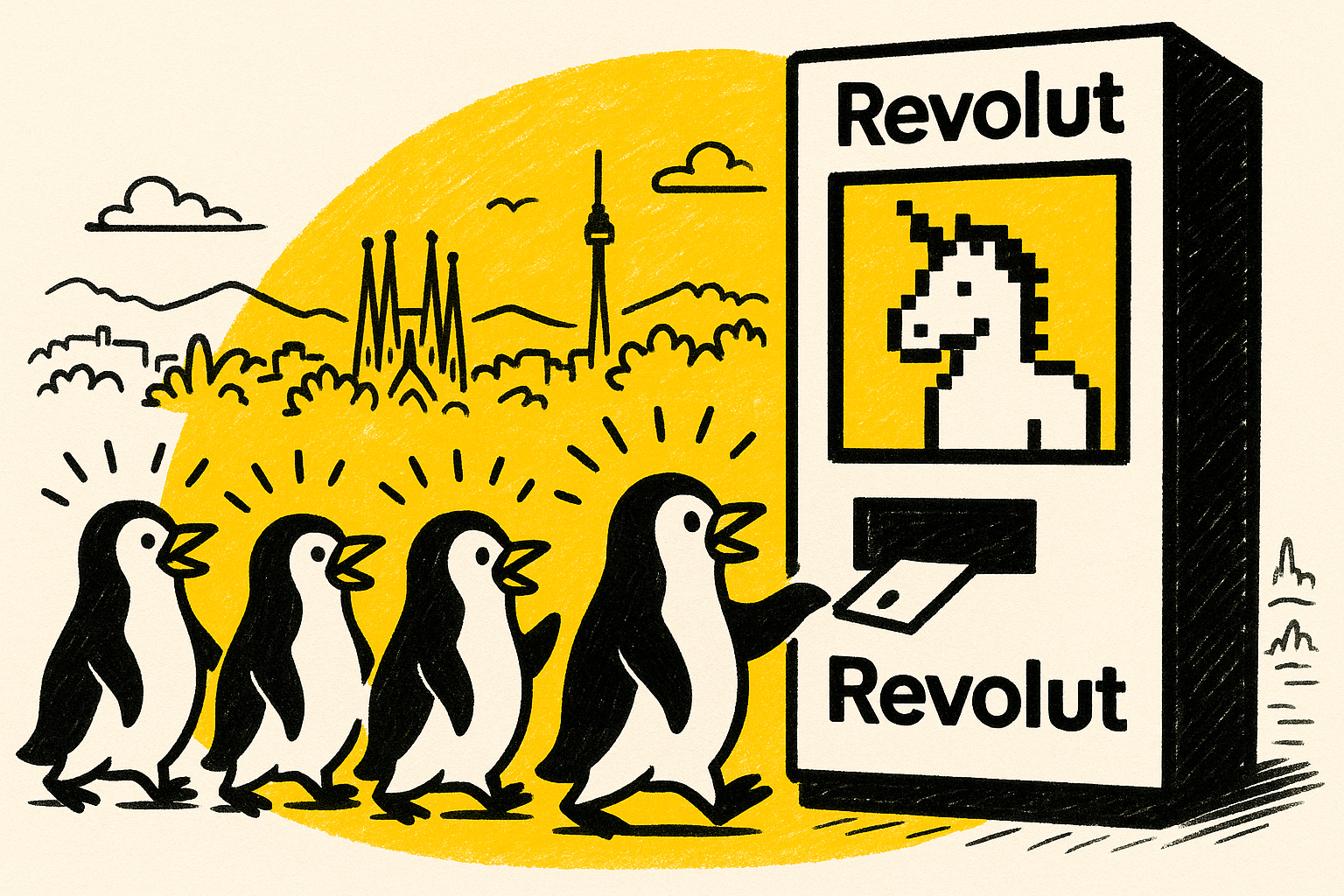
 physical. Revolut has launched its first-ever branded ATMs, starting with 50 machines across Barcelona and Madrid. It’s a major move from a company known for doing everything through screens; now giving users something they can walk up to, tap, and walk away from with cash.

    The launch was timed with Primavera Sound, Barcelona’s biggest music festival, putting the machines directly in front of a global, high-traffic crowd. Revolut plans to scale the network quickly, with 200 ATMs across Spain expected by 2026 in Barcelona, Madrid, Valencia, and Malaga.


    Beyond Cash Withdrawal

    But this isn’t just a cash dispenser. These ATMs:

    • Let non-users instantly get a Revolut debit card

    • Offer fee-free withdrawals for existing customers

    • Support multi-currency withdrawals using Revolut’s own exchange rates

    • Are visible in-app with locations and directions

    For Spain, where almost one in ten people already have a Revolut account, and cash is still a part of daily transactions, it’s a logical rollout. According to Chief Growth & Marketing Officer Antoine Le Nel, the ATMs aim to strengthen customer trust and add a sense of accessibility.

    The ATMs were fully developed by Revolut’s 300-person tech team in Barcelona, marking a new category of product; not just another feature in the app, but actual infrastructure in the street.

    …2025 will be bigger and better. We want to revolutionise banking for the better and we’re on the right path to achieve this.”

    — Nik Storonsky, CEO & Co-Founder of Revolut (2024)

    And yes, this was announced in advance. Revolut flagged ATMs as part of its 2025 roadmap last year. The company said then that Spain would be first, and now it’s delivering on schedule.


    A different path from its fintech peers

    Revolut’s move stands out. Most digital banks still avoid physical infrastructure altogether.

    • N26 relies on third-party ATM networks like Allpoint. No branded ATMs.

    • Wise is fully digital; it hasn’t moved into hardware.

    • Monzo famously set up a short-lived ATM stunt with Greggs in 2024 that dispensed sausage rolls, not cash. Great PR, but not a real product.

    So Revolut launching an actual, operational ATM network, built in-house, scaled nationally, and tied into onboarding, is rare. And deliberate.


    Key takeaways for fintech startups

    For fintech founders watching this space, here’s what this tells us:

    • It’s not about going physical or digital; it’s about showing up where your users need you.

    • Real-world touchpoints can drive both trust and conversion.

    • Feature launches matter more when they fit a long-term strategy; Revolut flagged this in 2024 and delivered it in 2025.

    • Not everything has to be a screen. Infrastructure can be your interface.


    Want to build strategy that makes it off the roadmap? Your Fintech Story helps fintech startups scale with strategy, GTM clarity, and execution that lands. Let’s talk.

  • €1M Later, Husk Shows Us How to Actually Build a Fintech for Startups

    €1M Later, Husk Shows Us How to Actually Build a Fintech for Startups

    Imagine you’re running a startup. You’ve just hired a couple of new developers, your marketing budget just tripled overnight, and your cloud bill looks like a phone number. You ask your bank for a few extra cards, maybe a higher limit. They give you… a polite smile and a brochure.

    That’s the moment Husk steps into the frame.

    In May 2025, Husk (former Lipefi), a Belgian fintech based in Brussels, announced it raised €1 million in pre-seed funding. That’s a solid chunk of change, and it came from folks like Techstars, Birdhouse Ventures, NewSchool.vc, and some angels who clearly saw something promising. What Husk promises is pretty simple: financial tools for startups that actually work like startups; fast, flexible, and not stuck in 1997.

    But before we get all starry-eyed, let’s rewind a bit.


    Two Founders, One Frustration

    Husk started back in 2023, when Christophe Sion and Georgy Taranov realized that running a startup with traditional banking tools felt like racing Formula 1 with a tricycle. They’d been there, tried that, and hit every wall.

    So they did what founders do: built the thing they wished existed. First called “Lipefi” (a name that thankfully didn’t stick), Husk was their answer to a very personal pain point: how to manage money when you’re growing like mad but the bank still treats you like a college student with a lemonade stand.

    “In a flourishing startup, you have two employees on day one and twenty the next day. And as a company, you need to keep up with that pace.”

    — Christophe Sion, Co-founder and CEO of Husk

    They got accepted into the Techstars Future of Finance accelerator, learned a ton, made some friends in high places, and by February 2025, Husk was out in the wild.


    Banks and Startups: A Love Story Gone Wrong

    Let’s be honest. Most banks aren’t built for speed. Or flexibility. Or startups. Founders open a business account, get one card, maybe two, and then the friction starts. Low limits. No credit. Approvals that take longer than your product roadmap.

    That cloud bill? Might max out your one corporate card. Your designer wants a card for Adobe? Get in line. And forget real-time control or insights. You’re lucky if you get a PDF statement emailed to you a week later.

    Startups run fast. Banks move slow. Husk saw the mismatch and decided to fix it.


    How Husk Tackled It (Without Pitching Like a Brochure)

    Instead of building Yet Another Banking App, Husk built something leaner, meaner, and more startup-friendly. Here’s what they focused on; not to sell you, but to show what happens when you really understand your user:

    • Cards for Everyone: Physical and virtual cards you can issue like coffee vouchers.

    • Credit That Breathes: Charge cards with 30-day repayment. Enough breathing room so your cash flow doesn’t feel like a chokehold.

    • Live Expense Control: See spending as it happens. Kill a card with one click. No drama.

    • Insights that Make Sense: Dashboards that actually help you run a business (not just impress investors).

    And instead of selling all this with high-pressure tactics, Husk just made it easy to try. The platform is free to start. They make money when you do.


    The Real Magic: Trusting Startups (Even When Banks Don’t)

    Most early-stage startups don’t have balance sheets that make lenders drool. Husk knew that. So instead of demanding three years of tax returns and a personal guarantee from your cat, they built a risk model that uses live business data. Raised a round? Got paying customers? Spending predictably? That’s enough to get started.

    It’s smart underwriting without the paternalism. And it works: within a few months of launch, 16 startups got onboarded and started using Husk. The goal? 100 by the end of 2025, and 1,000 by 2027. Ambitious, but grounded.


    The Competition’s Heating Up

    Let’s not pretend Husk is alone. Spend management and startup cards are hot. Pleo, Payhawk, Moss, Jeeves – you name it. They’ve raised millions (some billions) and are all racing to own the CFO’s dashboard.

    But Husk is playing a slightly different game. Most of those players started with larger SMEs. Husk is laser-focused on early-stage, venture-backed startups. The chaotic, messy, 5-to-25 person teams that need financial tools yesterday.

    That’s where Husk might win. Not by outspending the competition, but by out-understanding them.


    What’s Next?

    The fresh funding is fueling hiring, product improvements, and market expansion; first in Benelux, then across Europe and the UK. Thanks to Stripe and Mastercard, they don’t need to get bogged down in licensing battles. They can scale.

    They’re not trying to be everything to everyone. They’re trying to be the thing startups actually use and love. The goal isn’t a flashy exit (though, hey, who knows). It’s solving the real, recurring pain of running a startup without a decent financial toolkit.


    What Other Fintechs Can Learn from Husk

    • Nail the Niche: Husk didn’t try to reinvent banking. They just picked a very specific user and made something actually useful.

    • Partnerships > Paperwork: Leveraging Stripe and Mastercard let them launch faster and smarter.

    • Data Is the Moat: Their real power isn’t cards; it’s the underwriting engine that makes credit decisions in startup time.

    • Revenue That Makes Sense: Startups grow, Husk earns more. No predatory pricing, no nonsense.

    • Be Useful, Not Loud: A good product will beat a flashy pitch any day.

    Husk is early in its story. But they’re writing it with the right pen: solving an actual problem in a way that makes startups feel seen. If they keep going at this pace, there might be a Husk card in the hands of every founder who’s ever screamed at their bank.

    Want to write your own fintech story? Your Fintech Story helps founders build smarter, scale faster, and avoid all the financial facepalms. Let us know.

  • Adyen Expands iPhone Checkout to 7 More European Countries

    Adyen Expands iPhone Checkout to 7 More European Countries

    Adyen just made it even easier to accept in person payments. No terminals. No extra devices. No cables. Just an iPhone.

    As of May 27, Tap to Pay on iPhone is now available also in Belgium, Croatia, Cyprus, Denmark, Iceland, Luxembourg, and Malta. Businesses in these countries can now accept contactless cards, Apple Pay, and digital wallets directly on an iPhone with nothing else required.

    This brings Tap to Pay on iPhone to over 30 countries, making it one of the most widely available mobile first payment solutions in the world.


    No hardware no friction

    Tap to Pay by Adyen is built to remove some of the typical friction from in person payments by replacing a conventional terminal with an iPhone.

    There’s no need for traditional payment hardware, which simplifies the setup; especially for businesses that want to stay mobile or reduce operational overhead.

    Staff can take payments anywhere on the shop floor, without forcing customers into fixed queues. That makes it useful for pop ups, events, or stores focused on personal service.

    As for security, transactions are encrypted and processed using the same technology behind Apple Pay. Card numbers and PINs aren’t stored on the device or on Apple servers.

    “We’re enabling a secure, scalable and smooth payment process that enhances the shopping experience rather than interrupting it.”

    -Alexa von Bismarck, President EMEA at Adyen


    Suitsupply is already on board

    Global fashion brand Suitsupply rolled out Tap to Pay on iPhone in every market where it’s live. More than 2000 style advisors are already using their iPhones to take payments directly on the shop floor.

    “It’s helped us deliver a best in class checkout experience,” said Valentijn Bolle, IT Product Owner at Suitsupply.

    This is not a pilot or test. It’s already live at scale and it works.


    Who is Adyen

    Adyen is a financial technology platform working with companies like Meta, Uber, H&M, eBay, and Microsoft. Founded in Amsterdam in 2006, the company built its infrastructure entirely in house with no legacy systems to patch together.

    In 2023, Adyen processed €970.1 billion in payments.


    Key takeaways for fintech startups

    • Adyen focuses on removing friction, not just adding features. Their expansion of Tap to Pay shows a clear pattern: simplify the experience for both merchants and customers, without adding hardware or operational complexity.

    • Geographic expansion is tied to real merchant use cases. Adyen doesn’t launch everywhere at once. It expands based on demand from global clients and readiness in local markets. Smart growth beats fast growth.

    • Partnerships are part of distribution. Working closely with Apple enables Adyen to move faster and offer integrated tech others can’t easily replicate. Fintech startups should think beyond APIs and consider ecosystem plays.

    • Consumer experience still matters, even in B2B fintech. Suitsupply isn’t just using Tap to Pay because it’s convenient. It improves in-store experience. Adyen understands that great merchant tools still have to impress end users.

    • Build once, scale globally. Adyen’s ability to roll out the same solution across regions shows the value of unified infrastructure. Many startups burn resources localizing too early; Adyen proves the value of building a single, scalable core.
  • Could CrĂ©dit CoopĂ©ratif Be Anytime’s Next Home? Talks Are on the Table

    Could CrĂ©dit CoopĂ©ratif Be Anytime’s Next Home? Talks Are on the Table

    CrĂ©dit CoopĂ©ratif and Orange Bank are officially “seeing each other.” At least on paper. The two have entered exclusive talks about a potential deal that could see CrĂ©dit CoopĂ©ratif snap up the fintech Anytime.

    The news came via a press release from Orange on 23 May 2025, confirming that a memorandum of understanding has been signed. Translation: they’re not picking out curtains just yet, but things are getting serious.

    Anytime, the fintech that’s carved out a niche helping associations and non-profits handle their finances, might soon be calling CrĂ©dit CoopĂ©ratif home. And it fits. The bank’s big 2030 strategy, titled “100% committed,” is all about going digital and showing some extra love to small and newly launched associations.


    Why Anytime?

    Founded in 2014 and acquired by Orange Bank in 2020, Anytime has evolved from a general-purpose business account provider to a niche player offering financial tools for associations; including advanced expense management and card fleet systems.

    “To achieve its growth ambitions by 2030, CrĂ©dit CoopĂ©ratif aims to strengthen its digital offering, particularly for its small and medium-sized association clients. Anytime offers simple and innovative services that perfectly meet the new needs of this clientele.”

    — Pascal Pouyet, CEO of CrĂ©dit CoopĂ©ratif Group

    This specialization positions it as a natural fit for Crédit Coopératif, which has a legacy of banking for SSE actors. With 68 business centers across France, a remote banking infrastructure, and an impact investing arm, the bank is looking to amplify its reach in the association segment via digital channels.


    A Complementary Match

    CrĂ©dit CoopĂ©ratif’s CEO, Pascal Pouyet, emphasized that Anytime’s offerings are “simple and innovative,” making them particularly suitable for SME-style associations. The fintech’s tools are expected to boost the bank’s ambition to capture over 6% market share among newly created associations by 2030.

    From Orange Bank’s side, CEO FrĂ©dĂ©ric Niel stated that after helping Anytime scale, the time is right for it to grow further with a cooperative banking partner whose services “complement” its own.


    What’s Next?

    The deal is subject to consultation with employee representative bodies from both parties. If all goes according to plan, the acquisition could be finalized by the end of 2025.


    Key takeaways for fintech startups:

    • Vertical specialization pays off: Anytime’s focus on associations helped it stand out and become acquisition-ready.

    • Strategic exits can come from aligned players: Cooperative banks like CrĂ©dit CoopĂ©ratif may offer fertile ground for partnerships or buyouts, especially in niche markets.

    • Digital distribution models are no longer optional; even traditional banks are prioritizing them to reach underserved segments.

    • Growth isn’t just scale; it’s focus: Anytime’s move from general SMBs to association-specific services highlights how narrow positioning can lead to real traction.

    Want to identify your niche, craft your growth strategy, or prepare for acquisition? We help startups grow. Get in touch.

  • Top 5 Fintechs That Went From “No Thanks” to “Next Big Thing”

    Top 5 Fintechs That Went From “No Thanks” to “Next Big Thing”

    If you’re building a fintech startup, chances are you’ve heard some polite version of “Not sure there’s a market for this” or “Sounds risky.” Most fintech founders hear it at some point. But history is on your side; some of today’s biggest fintech players were told no before they became unmissable.

    Here are five fintechs that were doubted, dismissed, or misunderstood; and then went on to reshape the market. Each story offers sharp lessons for founders looking to turn hesitation into momentum.


    1. Revolut

    When Revolut launched in 2015, it started with a fairly focused mission: make travel money simpler. But within a couple of years, it was handling everything from crypto to stock trading, savings, and insurance. Critics called it unfocused. Regulators raised concerns about compliance. And even within fintech circles, some asked: “Isn’t this five different companies rolled into one?”

    “Starting anything new is extremely hard. It’s breaking the walls all the time, so you really need to have character to break the walls and you need to have brains to more efficiently break the walls.”

    — Nikolay Storonsky, Co-founder and CEO of Revolut

    How they took off: Instead of narrowing down, Revolut leaned in. They executed fast, added features weekly, and built a fiercely loyal user base; particularly among young, mobile-first travellers. As of 2025, with 55+ million users and a new European HQ in Paris, it’s one of the most powerful fintech brands in the world.

    What founders can learn: Being “too much” isn’t a problem if you’re the one who can pull it off. Bold vision plus shipping speed is hard to beat.


    2. Wise (formerly TransferWise)

    When Wise launched in 2011, banks didn’t worry. The founders were building a money transfer tool with almost no margin, openly attacking hidden fees, and promising full price transparency. Investors passed. Users hesitated.

    How they took off: Wise’s “we hate bank fees too” brand hit a nerve. They kept it lean, internationalised early, and let product quality do the talking. By 2025, they move ~5% of global cross-border personal transfers; and posted over £240 million in annual profit.

    What founders can learn: Disrupting a slow-moving giant works when your values align with real user pain. Trust plus simplicity scales.


    3. Klarna

    When Klarna launched in Sweden in 2005, the idea of letting people delay payments online – with no interest or fees – felt counterintuitive. Credit cards already did that (with strings attached), and European consumers were generally cautious about debt. Investors were unsure how scalable the model was. Critics questioned whether retailers would buy into it. And unlike most fintechs, Klarna chose not to operate like a traditional lender or bank at the start, which only added to the uncertainty.

    “I remember one investor calling me early on, fretting about the end of the world and insisting that I start downsizing. I’m always glad I didn’t take that advice, because COVID ended up being a major acceleration.”

    — Sebastian Siemiatkowski, Co-founder and CEO of Klarna

    How they took off: Klarna built merchant trust first, then expanded into consumers. It refined the BNPL experience and moved into lifestyle fintech territory. In 2025, it reported $701 million in quarterly revenue and is once again profitable.

    What founders can learn: If your model challenges norms, start by making it useful; then make it loved.


    4. Monzo

    Monzo began in 2015 as a digital-only bank in the UK, back when the term “neobank” wasn’t yet mainstream. It quickly attracted attention with its hot coral debit cards, slick app, and unusually transparent communication style – including live updates on outages and product roadmaps. But behind the excitement, there were structural challenges. For years, Monzo operated at a loss, struggled with monetisation, and faced growing pressure to prove its model could survive beyond the hype, especially during the turbulence of the COVID-19 years.

    “The idea that I could launch a startup instead of getting a ‘real’ job seemed totally implausible.”

    — Tom Blomfield, Co-founder and first CEO of Monzo

    How they took off: Monzo focused on sustainability, introduced lending and paid accounts, and rebuilt investor confidence. In 2024, it posted its first annual profit (£15.4M) and secured £340M in new funding. Monzo isn’t just back; it’s stable.

    What founders can learn: Great branding and user love are powerful, but don’t ignore the fundamentals. Profitability gives you real momentum.


    5. N26

    N26 quickly became one of Europe’s most talked-about neobanks; and also one of the most questioned. Early on, it wowed users with clean design and mobile-first convenience. But when it expanded beyond Germany, especially into the U.S., growth felt shaky. Critics said the product lacked depth, customer support was lagging, and the company was chasing scale too soon.

    How they took off: N26 exited the U.S. and doubled down on its European core. That focus paid off: it raised a $900M Series E and remains one of the highest-valued fintechs in Europe. Not every expansion works, but knowing when to cut losses is a strength.

    What founders can learn: You don’t have to win everywhere. Growth is about precision, not geography.


    Key Takeaways for Fintech Startups

    Here’s what today’s breakout fintechs can teach early-stage founders facing doubt, pushback, or early-stage hurdles:

    • Doubt isn’t death. It’s often a sign you’re doing something original.

    • Make the product speak. Shipping quality and transparency win trust.

    • Don’t scale pain. Fix your model before expanding into new markets.

    • Profit unlocks independence. Even the best brands need a business case.

    • Focus wins. Especially when the world’s watching.


    Want to build a fintech story that stands out, even when no one believes in it yet? We help founders craft strategy, narrative, and GTM plans that turn “No thanks” into traction. Let’s talk.

  • Monarch Just Turned the Fintech Freeze Into a $75M Warm-Up

    Monarch Just Turned the Fintech Freeze Into a $75M Warm-Up

    Monarch has raised $75 million in Series B funding, one of the largest consumer fintech rounds in the U.S. this year so far. The company announced the raise as investor appetite for B2C fintech remains cautious, with much of the sector still in a deep freeze.

    The San Francisco-based startup is now valued at $850 million, with the round co-led by Forerunner Ventures and FPV Ventures, and participation from Menlo Ventures, Accel, SignalFire, and Clocktower Ventures. Monarch’s subscriber base surged 20x after Intuit shut down Mint in early 2024, as consumers searched for alternatives.

    Co-founder Val Agostino, previously an early product manager at Mint, built Monarch as a subscription-only app to track spending, manage investments, and plan financial goals; without relying on ad revenue or selling user data.


    Why Monarch Stands Out

    Founded in 2018 by Ozzie Osman, Jon Sutherland, and Val Agostino, Monarch set out to address some of the biggest frustrations with traditional personal finance tools: faster onboarding, cleaner budgeting, and a trust-based business model that puts the user first.

    While many fintechs are struggling to grow, Monarch’s user-focused approach helped it absorb a wave of Mint users and maintain high engagement levels. Investor Wesley Chan of FPV Ventures said Monarch reminded him of other successful bets in complex markets; pointing to the app’s simplicity, shareability, and steady user growth.


    A Rare Success in a Tough Market

    According to PitchBook, U.S. fintech funding dropped 38% in Q1 2025 compared to the previous quarter, with nearly 75% of capital flowing to enterprise startups. Consumer-facing fintechs have faced steep investor skepticism.

    “This financing will dramatically accelerate our mission of building the most comprehensive financial wellness platform for consumers.”

    — Val Agostino, Co-founder & CEO, Monarch Money

    In that context, Monarch’s raise signals that high-quality B2C models can still win over investors; if they solve real problems and retain users. Chan noted that down markets often highlight which founders are building for the long term.


    Key takeaways for fintech startups

    Here’s what fintech startups can learn from Monarch’s approach and momentum.

    • Capture momentum when markets shift: Monarch grew rapidly after Mint’s closure by being in the right place with the right product

    • Trust-based monetization matters: A subscription model aligned incentives with users; and appealed to investors

    • User experience is a differentiator: Clear design and ease-of-use still set winners apart in crowded categories

    • Investors are selective, not absent: Funding is available for standout consumer fintechs, even in a down cycle

    Want to turn market shakeups into growth like Monarch? Contact us. We help fintech startups grow through smart strategy, bold positioning, and crisp execution.

  • Startup Affiniti Thinks Your Next CFO Might Be a Bot

    Startup Affiniti Thinks Your Next CFO Might Be a Bot

    Most fintech tools weren’t built for your local auto shop. Affiniti is changing that. Founded in 2021 by Aaron Bai and Sahil Phadnis while they were students at UC Berkeley, the startup aims to become the financial brain for small and medium-sized businesses.


    From Expenses to Intelligent Finance

    Affiniti began by launching an expense management tool and a small business credit card in late 2024. These products weren’t designed for startups or tech companies, but for everyday businesses like HVAC companies, independent pharmacies, and auto dealerships. The goal was to help business owners manage spending, track expenses, and streamline reimbursements without relying on tools built for a different type of user.

    The team has since expanded its ambition. Affiniti is building “AI CFO” agents; industry-specific financial tools that automate and manage banking, bill payments, sales analytics, cash flow insights, and more. Instead of being a generic assistant, each AI agent is tailored for a particular vertical, making financial intelligence more useful and accessible for busy operators.


    Rapid Growth and Strong Investor Backing

    In May 2025, Affiniti raised $17 million in a Series A round. This came only six months after an $11 million seed round, bringing its total funding to $28 million. Investors included SignalFire, Contrarian Thinking Capital, Sequel, Indicator Ventures, and several notable angels.

    This new capital is being used to expand the platform’s features; building in banking services, deeper analytics, and integrations with systems like ERPs and point-of-sale tools. The speed of the company’s fundraising reflects both strong investor belief and a clear product-market fit in an underserved segment.


    Going Deep with Industry Trust

    Affiniti’s growth strategy isn’t just about tech. The founders have placed heavy emphasis on building credibility within the industries they serve. That includes partnering with trade groups for verticals like independent pharmacies. These partnerships help validate Affiniti’s offering and allow for bundled benefits, such as group purchasing discounts, which make the financial platform even more attractive.

    “We want to be their full financial operating system over time, because we have the advantage of being the first fintech they’ve ever used.”

    — Aaron Bai, Co-founder of Affiniti 

    In just over a year, Affiniti has grown to 1,800 business customers and is processing $20 million in monthly transaction volume. It expects to cross $1 billion in total volume by the end of 2025.


    Key takeaways for fintech startups

    Here’s what fintech startups should take away from this:

    • Focus on real-world business needs. Affiniti built tools for businesses often overlooked by fintechs

    • Customize your product for the user, not just the sector. AI CFOs tailored to specific verticals offer more value than one-size-fits-all tools

    • Strategic partnerships can unlock access and trust faster than broad marketing

    • Fast, focused execution helped Affiniti raise two rounds in six months


    Conclusion

    Affiniti shows that there’s massive potential in building for the backbone of the economy. By combining tailored AI with deep industry insight, it is redefining what financial management looks like for small business.

    If your fintech startup is looking to do the same, we can help you craft the strategy to get there. Let’s talk.

  • Story of Chime: Not a Bank, But Better (Except When It Wasn’t)

    Story of Chime: Not a Bank, But Better (Except When It Wasn’t)

    Chime launched in 2012 with a simple premise: what if people actually liked their bank? Founded by Chris Britt and Ryan King, Chime offered a mobile-first experience, no fees, and an unusually friendly tone. A breath of fresh air in a stale industry. But instead of getting a banking license, Chime cleverly partnered with existing chartered banks. It’s now one of the most recognized neobanks in the U.S., with over 7 million monthly active users and $1.67 billion in revenue reported in 2024.

    “The trust levels that mainstream Americans have in banks is extremely low, and that was part of the opportunity that we pursued.”

    -Chris Britt, Co-Founder and CEO of Chime (2023)

    Of course, the road to becoming everyone’s “non-bank bank” wasn’t without its potholes. Let’s rewind through the highs, lows, and strategic pivots that shaped Chime’s journey.


    Dependency on Banking Partners

    In the early years, Chime leaned heavily on partners like The Bancorp Bank and Stride Bank to provide core banking services. This gave them a fast go-to-market route, but also meant they had limited control when things went wrong; which, unfortunately, they sometimes did.

    How they navigated it: Chime strengthened relationships, invested in internal infrastructure, and quietly became more operationally resilient without breaking their “we’re not a bank” message.

    Lesson for fintech startups: If you’re building on someone else’s rails, make sure your seatbelt (and your support agreements) are tight.


    Service Outages and Customer Complaints

    In October 2019, Chime’s customers woke up to locked accounts and frozen funds due to a major service outage. About 5 million users were affected, and the complaints piled up fast on social media.

    How they handled it: Chime stepped up communications and worked to overhaul infrastructure and monitoring. Transparency improved. Trust slowly returned.

    Lesson for fintech startups: Even with the best UX, backend cracks will show. And Twitter (or X, if you want) will absolutely notice.


    Pivot to Financial Health

    By 2020, Chime realized its “millennial banking” image was limiting. So, it leaned into financial health, launching features like early direct deposit, fee-free overdraft, and credit-building tools. This wasn’t just a rebrand; it was a mission shift.

    Why it worked: These features hit real pain points, especially for low-income Americans. Chime moved from being “cool” to being useful.

    Lesson for fintech startups: Branding helps, but solving real-life problems builds loyalty.


    Regulatory Slap

    In May 2024, the CFPB fined Chime $3.25 million and ordered $1.3 million in customer redress. Why? Account closures were delayed, and customers didn’t get their money back fast enough. Not a good look for a company built on trust.

    What went wrong: A third-party vendor error led to the issue, but Chime took the reputational hit. They’ve since improved controls and compliance processes.

    Lesson for fintech startups: Even when it’s “not your fault,” it’s still your problem. Regulation doesn’t care who wrote the code.


    IPO Incoming

    After years of speculation, Chime filed for an IPO in 2025, reporting 31% year-over-year revenue growth and aiming to position itself as the default choice for fee-free digital banking.

    How they’re framing it: Steady user growth, deep engagement, and expanded offerings; including savings, credit, and possibly investments down the line.

    Lesson for fintech startups: You don’t need to be a bank to go public like one, but you do need bank-level numbers.


    Looking Ahead

    Chime is still out to prove that a friendlier, cheaper, mobile-first approach to banking can win over the mainstream. With a successful IPO on the horizon and continued focus on financial health, it’s no longer just a clever idea – it’s a serious challenger to traditional banks.

    Need help telling your fintech startup’s story; the wins and the bruises? Contact us. We help startups grow with clarity, credibility, and smart strategy.