
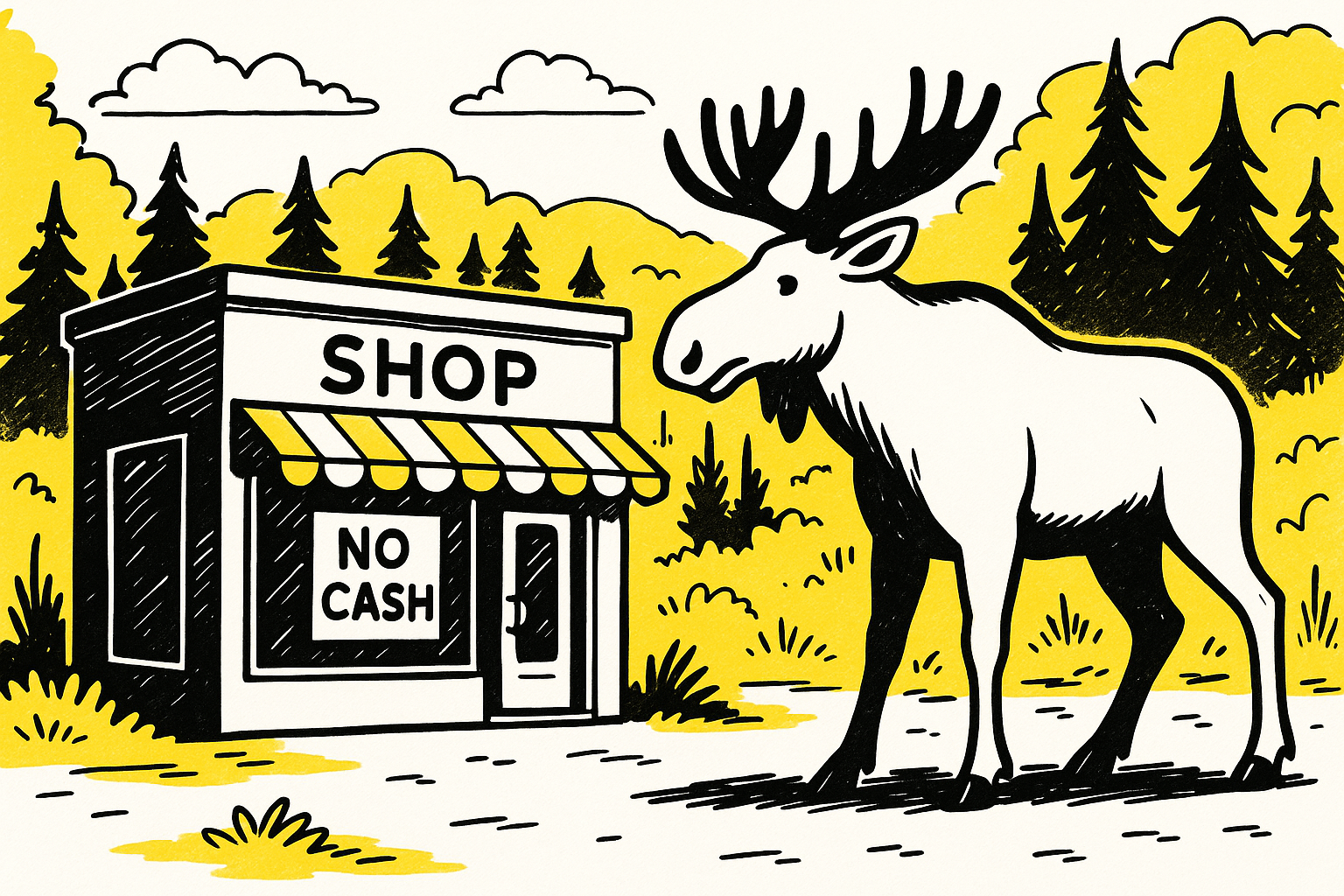

How Sweden quietly became a real-time payments pioneer.
Sweden didn’t hold a flashy press conference announcing the death of cash. It just kind of… stopped using it.
If you walk into a café in Stockholm with a wallet full of banknotes, odds are they’ll politely point to their Swish number instead. Even churches and street vendors prefer QR codes. According to the Riksbank, only 10% of in-store purchases in Sweden are made with cash in 2025; still staggeringly low, even if slightly up from the record lows of 2023.
For context: back in 2010, that number was closer to 40%. The direction of travel hasn’t changed; Sweden’s going cashless, and it’s not looking back.
But this isn’t just a cool factoid for future trivia nights. It’s a window into what can happen when a country leans into digital payments and aligns tech, regulation, and consumer behavior in the right way.
So what’s behind Sweden’s near-cashless economy — and what can fintechs learn from it?
The Rise of Swish (and Trust)
First, meet Swish: Sweden’s real-time mobile payment system. Launched in 2012 as a collaboration between major banks and the central bank, it wasn’t built by a startup. But it feels like one. Clean UX, fast transactions, and massive consumer adoption; over 80% of Swedes use it regularly.
The genius of Swish isn’t the tech itself. It’s the timing and trust:
- It piggybacked on Sweden’s high smartphone penetration.
- It had strong bank backing (aka instant credibility).
- And it solved something annoyingly simple: splitting bills and paying friends.
From there, merchants followed. Not because they were forced, but because customers stopped asking to pay in cash.
This organic, bottom-up shift was only possible in a country with:
- High digital literacy
- Low levels of unbanked individuals
- A strong trust in institutions (public and private)
The Government Didn’t Push. But It Didn’t Block Either.
Interestingly, Sweden didn’t ban cash. It just didn’t protect it.
The central bank, Riksbank, supported innovation but didn’t stand in the way of market-led changes. Retailers are allowed to go cashless. Public transport moved to cards and apps. The government mainly focused on inclusion, making sure elderly citizens and rural communities weren’t left behind.
This “light-touch alignment,” letting tech lead, while stepping in where needed — made the transition smoother and less politicized.
And now? Sweden is now piloting an e-krona with real-world testing in select sectors; still years ahead of most countries in CBDC development.
But It’s Not All Perfect
Not everyone’s thrilled. Some critics worry about:
- Overdependence on a few banks or tech providers
- Vulnerabilities during system outages or cyberattacks
- Exclusion of those who still rely on cash (even if it’s a shrinking group)
Even the Riksbank now encourages people to keep some cash at home; not for daily use, but for emergencies. It’s a reminder that even in ultra-digital societies, resilience still matters.
So while Sweden is the poster child for cashless living, it’s also a live experiment; with all the tradeoffs that come with it.
Key takeaways for fintech startups
Sweden’s story offers more than fun facts. It shows how digital adoption really happens, and how fintechs can play a role if they watch the signals.
- Solve a real-world, daily friction (like Swish did with peer payments)
- Make it seamless, not flashy. Adoption beats innovation
- Trust beats tech: Partnering with credible players can boost usage
- Don’t underestimate cultural alignment; Sweden’s tech success is as much social as it is technical
- Don’t wait for regulators to lead, but be ready to work with them when the moment comes
Want to build a fintech product people actually use, not just download once and forget?
We help startups grow with strategy, marketing, and coaching that actually makes sense. Reach out; we speak both product and people.


