Moment raised 78 million dollars in a Series C led by Index Ventures, less than a year after its Series B.
On the surface, it looks like fast fundraising momentum. The more important signal is where adoption is happening.
Large wealth firms including Edward Jones, LPL Financial, and Hightower Advisors are now building on Moment. Together, these institutions manage more than 10 trillion dollars in client assets on the platform.
That level of concentration is not typical for early AI infrastructure companies. It suggests the product is moving beyond experimentation and into core operational usage inside large financial institutions.
Investment management software was built as a patchwork
Investment management systems have historically evolved as disconnected layers rather than unified platforms.
Portfolio construction tools were built separately from trading systems. Tax optimization was handled in different software. Compliance operated in parallel. Reporting and reconciliation were added on top as additional layers.
None of these systems were designed to operate together in real time. The result was a fragmented architecture where human workflows became the integration layer between tools.
That structure worked when investment processes were slower and more manual. It becomes increasingly fragile when firms try to introduce automation and AI into production workflows that span multiple systems.
Moment is attempting to replace the system boundary itself
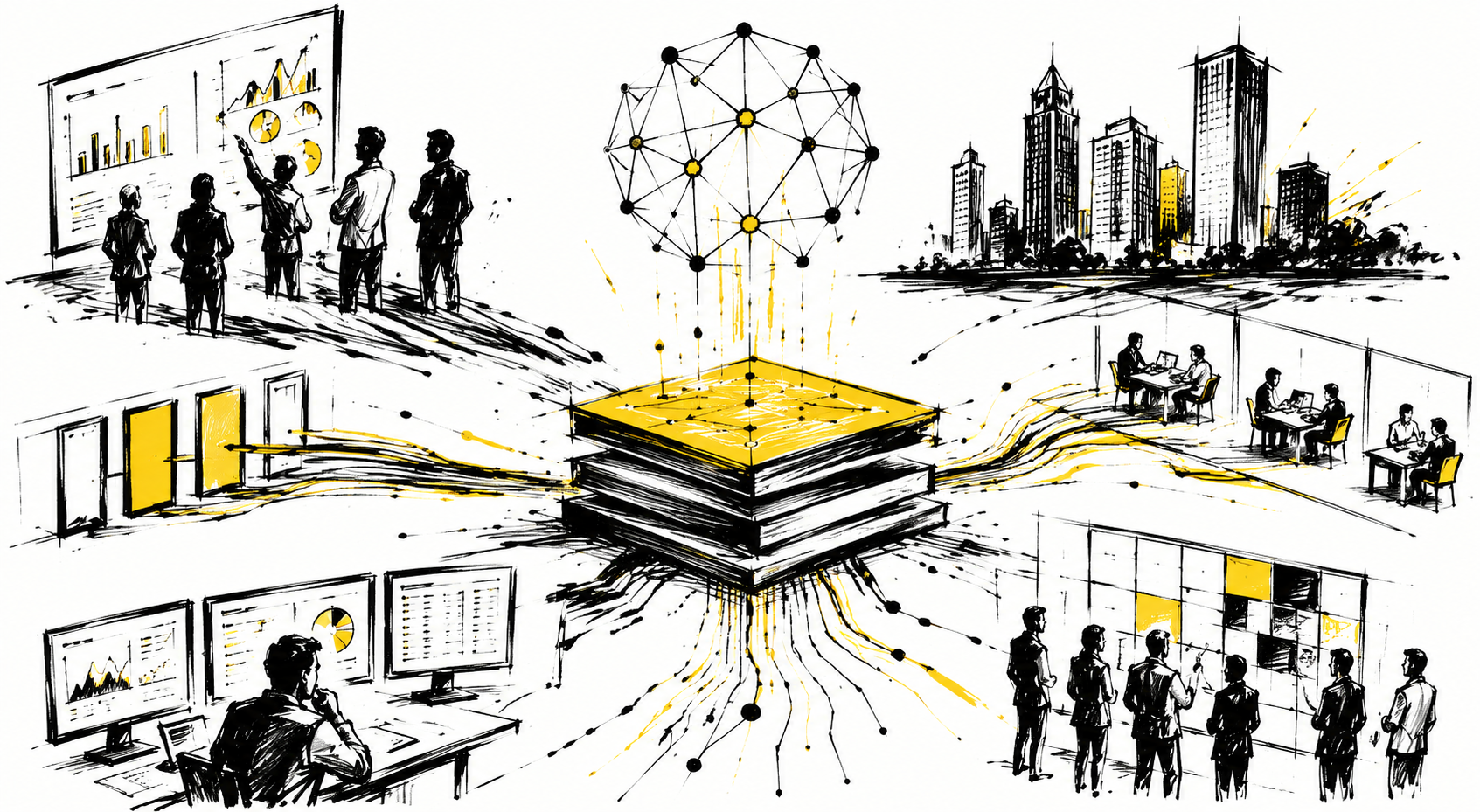
Moment positions itself as an AI operating system for investment management rather than a point solution within it.
The goal is to unify trading, portfolio management, compliance, and execution inside a single environment where AI agents can operate across the full workflow.
Within that system, firms are deploying portfolio construction agents that generate investment proposals from natural language inputs in seconds. They are also using multi asset optimization engines that run portfolios across equities, fixed income, and currencies with tax aware constraints.
Other applications include surveillance systems that scan large account sets for risk, tax, and transition opportunities, compliance agents that evaluate transactions in real time against firm defined rules, and execution systems that coordinate orders across asset classes with routing logic embedded directly into the platform.
The common thread across these capabilities is not the individual features. It is the shared infrastructure layer that allows them to operate in a regulated environment.
The constraint is governance, not intelligence
Large financial institutions already have access to advanced models and AI systems. The limiting factor is not capability, but control.
Investment management requires strict constraints. Every decision must be auditable, explainable, and compliant with firm specific rules. It must also remain consistent across systems that touch trading, portfolio construction, tax logic, and reporting.
Without a unified foundation, AI systems remain isolated in advisory or experimental layers. They cannot safely operate in core workflows where capital is actually deployed.
Moment’s architecture is built around this constraint. It emphasizes a unified data model and regulatory grade controls that allow AI agents to operate inside production environments with governance built in from the start.
This is what separates AI as a feature from AI as infrastructure.
Procurement behavior is changing in large wealth firms
The most important shift is not technical but organizational. Large wealth managers are consolidating vendors instead of expanding fragmented toolchains.
Rather than maintaining multiple overlapping systems, firms are increasingly standardizing on fewer platforms that can support broader end to end workflows.
The growth from 300 billion dollars to more than 10 trillion dollars in assets connected to Moment reflects this consolidation trend. Once trading, compliance, and portfolio construction are centralized in a single system, switching costs increase significantly.
At that point, the relationship between vendor and institution shifts from software usage to infrastructure dependency.
Conclusion
Moment operates in a category that is still forming. It is not competing primarily on features or interfaces. It is competing on system architecture.
If AI becomes embedded in how portfolios are constructed, optimized, and executed at scale, the infrastructure layer becomes the primary control point in investment management software.
Key Takeaways
- Moment raised 78 million dollars shortly after its Series B, driven by rapid adoption inside large institutions
- Major wealth firms including Edward Jones, LPL Financial, and Hightower Advisors are already building on the platform
- Investment management software is shifting from fragmented point solutions to unified infrastructure
- Moment positions itself as an AI operating system for core investment workflows across trading, portfolio management, compliance, and execution
- The main constraint to AI adoption in wealth management is governance and regulatory control, not model capability
- Large institutions are consolidating vendors and standardizing on fewer core systems
- Infrastructure platforms are becoming more central than standalone tools in modern investment management
If you are building or scaling a fintech product, Your Fintech Story can support your strategy, positioning, and growth roadmap. Reach out to explore how to turn market opportunity into execution.