
Day: April 25, 2026

  • Adyen’s €750M Bet on the Moment Before Payment

    Adyen’s €750M Bet on the Moment Before Payment

    In payments, the most important decision often happens before the transaction is completed. That is exactly where Adyen is now placing its next big bet. Earlier this month, the Dutch fintech announced it would acquire Talon.One for €750 million, fully in cash. At first glance, this looks like a typical product expansion. It is not. This is Adyen moving upstream into decision-making, into the moment where merchants can still influence the outcome of a purchase rather than simply process it.


    From Payments to Influence

    Adyen built its reputation on simplifying payments for global merchants. But over time, a limitation became clear. Payments are the final step, not the strategic one. Merchants were increasingly facing a deeper challenge: how to connect customer data across channels and act on it in real time, instead of after the transaction is already complete.

    Most companies tried to solve this internally. The problem was never access to data, but timing. Decisions needed to happen in milliseconds, not dashboards.

    This is where Talon.One fits. The company built a system that allows businesses to run promotions, loyalty mechanics, and incentives dynamically based on real-time customer behavior. When combined with Adyen’s transaction infrastructure, it creates a loop where payment data can immediately influence pricing and offers during checkout.

    That changes the role of payments. It stops being the end of the journey and starts becoming part of the decision engine itself.


    The Real Strategy: Owning the Decision Layer

    This acquisition is not about loyalty programs or promotions in isolation. It is about control over the decision layer in commerce.

    Today’s merchant stack is fragmented. Identity lives in one system, promotions in another, payments somewhere else entirely. Every separation introduces delay. In modern commerce, delay is cost.

    Adyen’s long-term strategy has been to unify commerce flows. The Talon.One acquisition extends that ambition into real-time decisioning. In practice, it allows merchants to recognize a customer, evaluate context, and adjust incentives before the payment is finalized.

    That is a subtle shift, but structurally important. It moves value creation upstream, closer to intent rather than transaction.


    Why Now

    The timing reflects how quickly commerce infrastructure is evolving. Talon.One has scaled into a strong enterprise player with hundreds of customers and consistent high growth. At the same time, merchants are under pressure to increase conversion efficiency without adding complexity to their systems.

    The industry is also shifting toward automation in decision-making. Pricing, promotions, and personalization are increasingly algorithmic rather than manual. That makes real-time infrastructure more important than static tools.

    Adyen is positioning itself directly in that transition.


    What This Means for Fintech

    The broader pattern is clear. Payments alone are no longer the competitive edge. They are becoming infrastructure hygiene.

    The real value is shifting toward systems that can influence outcomes: pricing logic, customer engagement, and behavioral triggers that sit just before the transaction happens.

    Adyen is not trying to become a loyalty platform. It is trying to compress loyalty, pricing, identity, and payments into a single real-time system.

    Execution will be the challenge. These are complex systems to merge without slowing down the core payment infrastructure that Adyen is known for.

    But the direction is consistent with where fintech is going.


    Key Takeaways

    • Payments are moving upstream from execution into decision-making, shaping outcomes before transactions happen

    • Real-time decisioning is becoming more valuable than static loyalty or promotion systems

    • Fragmented commerce stacks create delay, and delay is becoming a direct cost in conversion

    • The next competitive layer in fintech is control over pricing and personalization logic, not payment processing itself

    At Your Fintech Story, we break down the strategic moves shaping fintech infrastructure and translate them into clear insight for founders and teams building in the space.

    If you are working on payments, commerce infrastructure, or decisioning systems and want help shaping your story or positioning, we can help you turn complexity into clarity.
  • UK pushes fintech toward the next generation of payments

    UK pushes fintech toward the next generation of payments

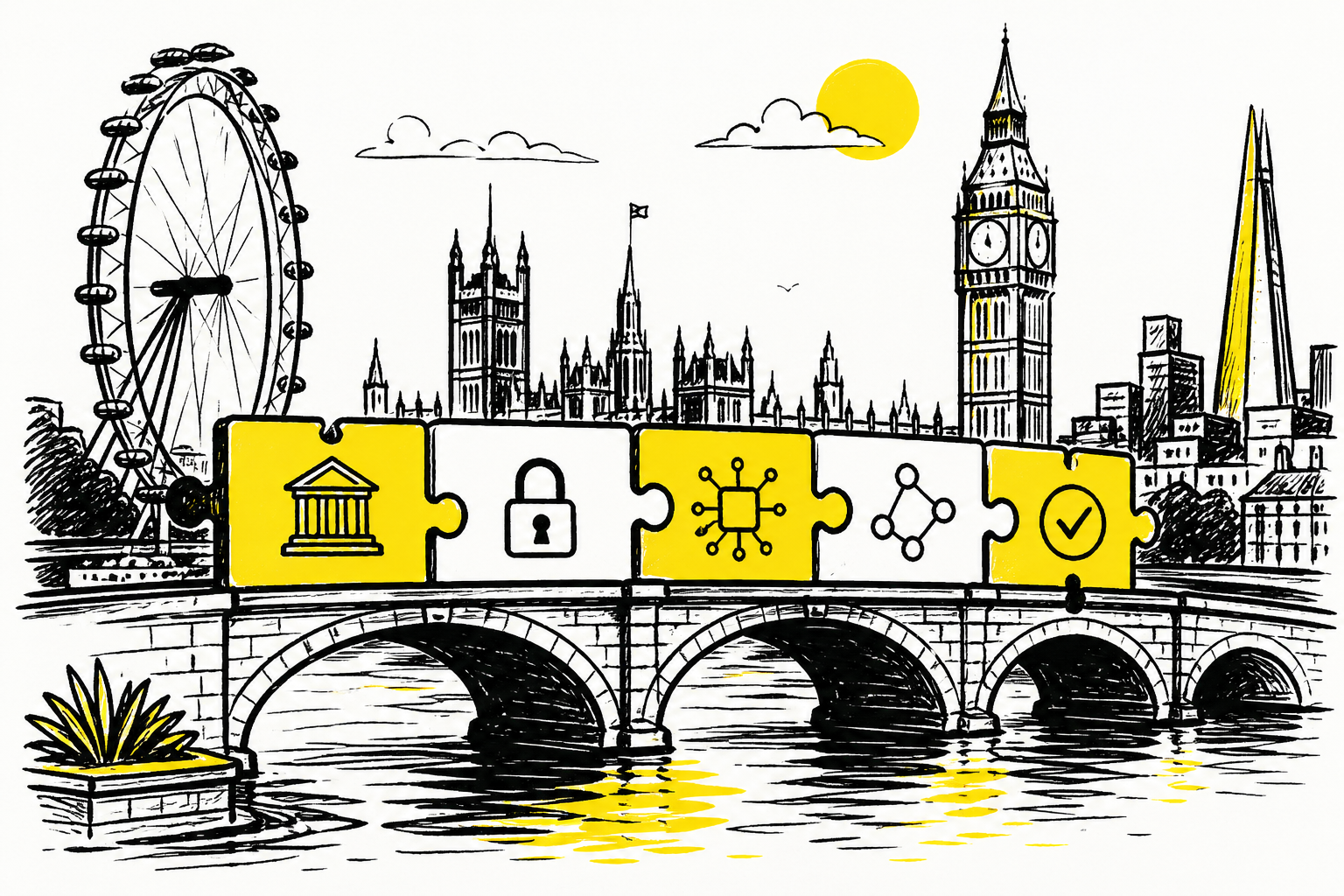
    The UK government is leaning into payments innovation. During FinTech Week, it announced a package aimed at modernising regulation, encouraging new payment models, and keeping the country competitive. The focus is not just on one piece of the system. It touches infrastructure, rules, and market structure at the same time.

    The direction is quite clear. Payments are evolving quickly, and the UK wants to stay in front rather than react later. For fintech founders, this is one of those signals worth paying attention to, even if the details are still taking shape.


    Tokenisation moves from theory to policy

    One of the more interesting elements is the push toward tokenised financial markets. This is no longer treated as a distant idea or something to test in sandboxes. The government is actively supporting adoption and trying to align different parts of the ecosystem.

    The appointment of a Wholesale Digital Markets Champion is part of that effort. The role is meant to connect public and private players and help move tokenised assets closer to real-world use. Tokenisation has been stuck in pilot mode for a while, so this kind of backing could change the pace, especially in institutional settings.

    For founders, it is a reminder that some “future” ideas are quietly becoming present-day priorities.


    Regulation is being reshaped, not just tightened

    There is also a shift in how regulation is being approached. Instead of reacting after innovation happens, the UK is trying to build a framework that can adapt over time. That includes plans to bring payment and e-money rules into a more unified structure while preparing for newer models like stablecoins.

    Another detail stands out. Regulators are already thinking about AI-driven payments. That might sound early, but it shows how expectations are changing. Payments will not always be initiated by people clicking buttons. Systems will start making decisions and moving money on behalf of users.

    This kind of thinking changes how products should be designed from the ground up.


    Open Banking and competition are still central

    Open Banking is still part of the story, but the focus is shifting. The next phase is less about access to data and more about enabling real payment use cases, especially in commercial settings.

    This opens the door for more product-led innovation. Instead of building around compliance requirements, fintechs can start building around actual user needs and payment flows.

    Competition sits underneath all of this. The UK wants more players building on top of these systems, which usually means faster iteration and less room for complacency.


    The real goal: staying competitive globally

    All of these moves point to one objective. The UK wants to stay relevant as payments evolve globally. Other markets are already pushing ahead with digital assets, new rails, and alternative payment models.

    There is a balancing act here. Innovation needs to move forward, but trust still matters. Financial services do not tolerate mistakes well, especially at scale.

    For fintech startups, this creates a mix of opportunity and pressure. The environment is becoming more supportive, but expectations are also rising.


    Key takeaways for fintech startups

    A few practical points stand out from this announcement.

    • Regulation is becoming more forward-looking. Build with future rules in mind, not just current ones.

    • Tokenisation is getting real policy support. Start thinking beyond pilots.

    • Payments will expand beyond humans. AI-driven transactions are already on the radar.

    • Open Banking is evolving into real payment use cases. Look for product opportunities, not just compliance ones.

    • The UK is doubling down on competition. Expect more players and faster iteration cycles.

    If you are building in payments, this is a good moment to reassess your roadmap. The direction is forming, even if not everything is fully defined yet.
    If you want help turning these shifts into a concrete strategy, reach out.