
Day: February 4, 2026

  • Klarna backs Google’s Universal Commerce Protocol

    Klarna backs Google’s Universal Commerce Protocol

    Klarna announced it is backing Google’s Universal Commerce Protocol, known as UCP. The goal of UCP is to create a shared way for AI agents, merchants and payment systems to work together across discovery, checkout and post-purchase interactions inside AI-powered flows.

    Klarna has already supported Google’s Agent Payments Protocol and works with Google Pay, Google Store, Google Play and Google Cloud. Supporting UCP extends this cooperation into a broader standard for how commerce can function when AI agents are part of the transaction path.


    UCP aims to standardize how commerce systems communicate

    Universal Commerce Protocol is an open standard. It defines a common framework for commerce events and data exchange between agents, sellers and payment services.

    Instead of building custom integrations for every platform, merchants and payment systems can connect once and become compatible with any agent or interface that follows the protocol.

    In practice, this allows an AI agent to help a consumer find a product, complete checkout and handle follow-up interactions without the user moving across multiple apps or websites.

    For businesses and payment providers, a shared protocol can reduce integration effort and make it easier to support new environments where transactions take place.


    Why Klarna is interested in this direction

    Klarna stated that its payment and decisioning systems are already used by millions of consumers. Through UCP, the company wants these capabilities to be available inside AI-led commerce journeys.

    Klarna also highlighted interoperability, security and transparency as important requirements if AI-driven commerce is going to scale in a way that works for both merchants and consumers.

    This reflects a view that the interface where customers complete purchases may increasingly be an AI agent rather than a traditional website or app.


    Broader industry involvement

    Google developed UCP with contributions from companies including Shopify, Etsy, Wayfair, Target and Walmart. These companies are participating in shaping the protocol.

    Their involvement shows that large retailers and commerce platforms are preparing for a model where AI agents play a central role in how customers discover products and complete purchases.

    For payment providers, this means preparing for transactions that occur inside agent environments, not only inside standard checkout flows.


    Key takeaways for fintech startups

    Several practical signals emerge from Klarna’s support of UCP:

    • AI agents are being treated as future commerce channels

    • Open protocols may reduce the need for bespoke integrations

    • Payments will need to function inside agent-driven interactions

    • Interoperability, security and transparency are being emphasized

    • Major commerce platforms are aligning around this protocol

    If you are building in payments or commerce, this development is worth close attention.

    If you want help thinking through how changes like this affect your roadmap and product decisions, contact us.

  • Airwallex Begins Official Launch in Germany

    Airwallex Begins Official Launch in Germany

    Airwallex, the global financial platform originally founded in Melbourne in 2015 and now based in Singapore, has launched operations in Germany as of early February 2026. The company announced its entry on February 3 as part of its expanding presence across Europe. Germany is a large market for cross-border trade, and Airwallex sees opportunity because many local businesses still use older systems to move money internationally.

    The platform helps companies send and receive international transfers, hold accounts in multiple currencies, and manage online payments. Airwallex reports a customer base of around 200,000 businesses globally and states that about 68 percent of payments on its network are processed instantly.

    Airwallex enters a market where established competitors such as Wise, Adyen, and Stripe are already active. Tom Sellin, who is leading Airwallex’s growth efforts in Germany, described the competition as intense but noted that many cross-border flows remain insufficiently digitised.


    Why Germany Matters

    Sellin points to the export-oriented nature of many German companies. Payment speed across borders often does not match business needs. Airwallex believes its infrastructure can reduce friction for exporters, marketplaces, and digitally focused firms operating internationally.

    Airwallex operates in Europe under a Dutch e-money licence issued in 2021. This licence allows it to provide services across the European Union and forms the regulatory basis for its German launch.


    Early Adoption and Local Investment

    One of the first customers highlighted in Germany is the Berlin-based fintech Moss, which provides spend management and corporate payment solutions for small and medium-sized enterprises. This early relationship shows interest from within the local fintech ecosystem.

    Airwallex has committed to investing 31 million euros in Germany over the next five years. The investment will focus on building a local team and establishing a presence in Berlin.

    In 2025, Airwallex raised 280 million euros in funding, bringing its valuation to about 6.9 billion euros. The company has previously raised more than 1.2 billion dollars in total funding and reported recurring revenue of roughly 1 billion dollars last year.


    Challenges and Market Context

    Germany’s fintech and payments sector is crowded. Providers such as Wise, Adyen, and Stripe already offer international transfer and multi-currency solutions. For Airwallex, gaining local trust and standing out on product capabilities will be part of the initial task. The company aims to secure several thousand active customers in Germany over time.


    Key takeaways for fintech startups

    These points stand out for founders looking at similar expansion paths:

    • Germany is a large but highly competitive market for cross-border financial services.

    • EU regulatory coverage through an e-money licence enables rapid geographic expansion.

    • Local hiring and physical presence in Berlin are part of the credibility strategy.

    • Early adoption by fintech players such as Moss can accelerate trust.

    • Speed of international payments and multi-currency capabilities are central to the value proposition.

    If you are planning expansion into new markets or reviewing your payments and go-to-market approach, contact us. We can help you think through positioning, competition, and practical next steps.

  • Tapi’s $27 M Series B and What It Means for Payments in Latin America

    Tapi’s $27 M Series B and What It Means for Payments in Latin America

    Tapi, a Latin American paytech founded in 2022, announced a $27 million Series B round led by Kaszek, with participation from Endeavor Catalyst and Latitud. The new capital brings Tapi’s total funding to more than $60 million raised since 2022 and positions the company to deepen its focus on payments and collections infrastructure in Mexico and wider Latin America.

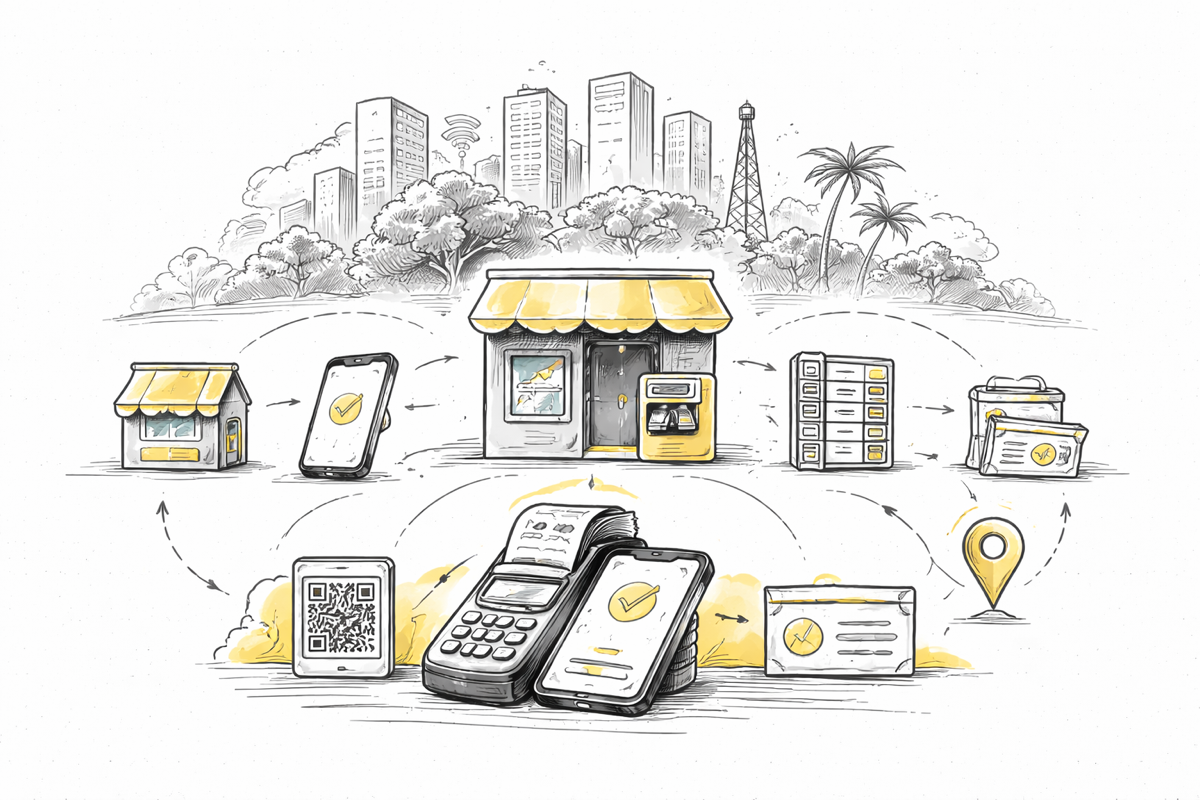
    Tapi builds one of the region’s largest payments networks, connecting both digital and physical payment channels through a single API. Its infrastructure lets banks, fintechs, billers and other businesses process recurring service payments, cash in and cash out, airtime top-ups and gift card transactions. Today the network processes more than 250 million transactions a year with over $6 billion in volume, and connects 20,000 service providers and roughly 70,000 physical points of service across Mexico, Argentina, Chile, Colombia and Peru.


    Growth and Momentum Behind the Round

    2025 was a defining year for the company. Tapi’s revenue grew significantly, it reached profitability, and it completed a strategic acquisition of the assets of Arcus in Mexico. That combination of growth and operational milestone helped attract new capital and reinforced confidence in the company’s strategy.

    A standout part of Tapi’s business is tapipay, a collection and billing platform designed for businesses with recurring payment needs. Organizations such as small and medium enterprises, financial services companies, insurers and utilities can automate their billing and collections through a single integration that connects all major payment methods. This simplifies reconciliation and reduces the operational burden of managing multiple payment channels.

    Mexico remains at the center of Tapi’s expansion plans, accounting for the majority of its business activity. The Series B funds are earmarked to strengthen technology, expand payment and collection capabilities, and grow the company’s technical team, which already represents more than 70 percent of its workforce. Tapi also intends to continue scaling its presence in countries where it already operates, supporting banks, fintechs and service providers with broader ecosystem integrations and growth.


    Key takeaways for fintech startups

    A few observations stand out for founders building in similar spaces:

    • Infrastructure remains critical in markets where digital and physical payments coexist at scale.

    • Profitability and operational execution strengthen the fundraising story.

    • Solutions that support recurring revenue and automated billing resonate with enterprise customers.

    If you are building or scaling a payments-focused fintech and want to clarify your positioning or fundraising narrative, feel free to contact us to discuss how Your Fintech Story can help.