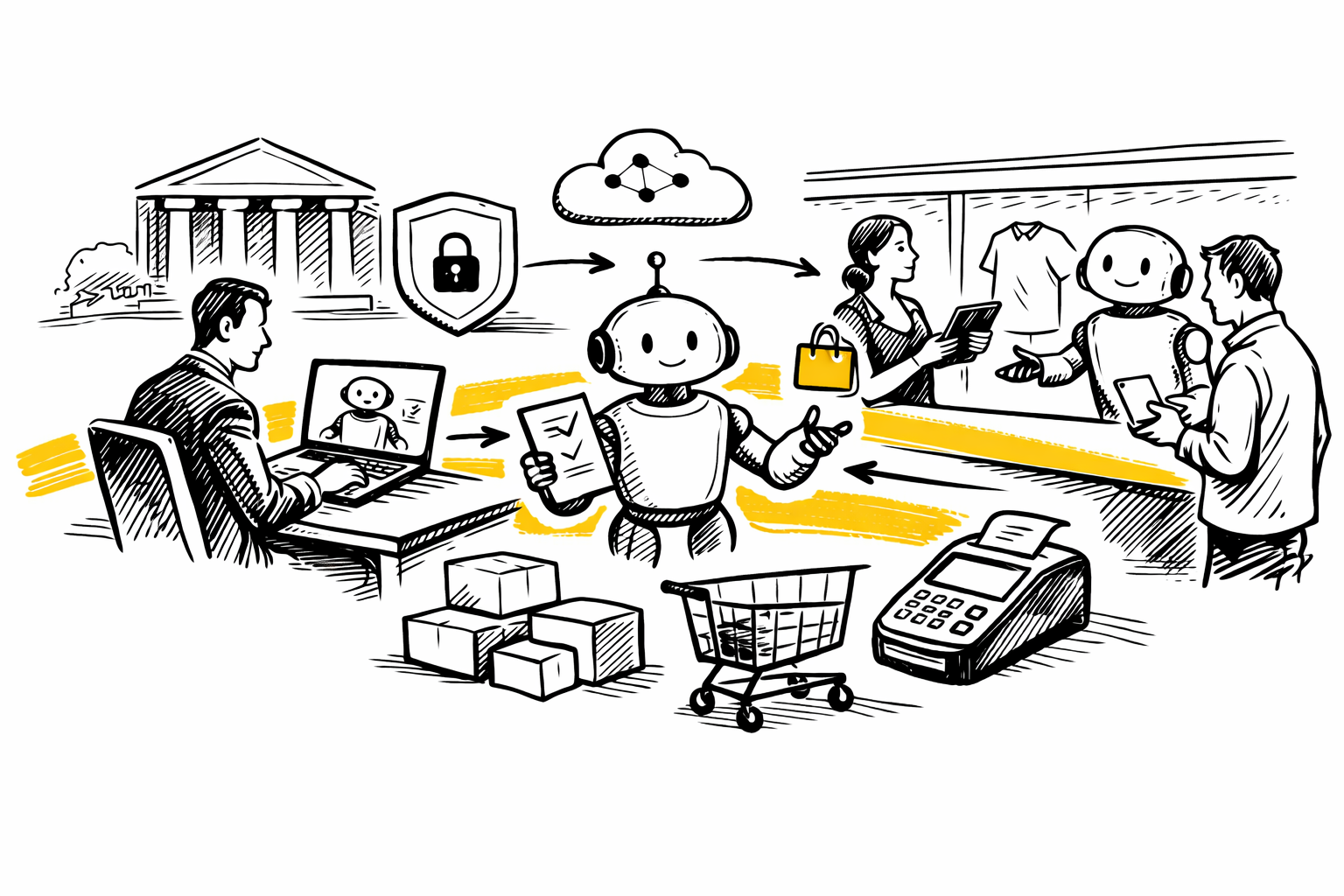
Earlier this week, Mastercard announced Mastercard Agent Suite, a new offering designed to help enterprises prepare for and deploy agentic artificial intelligence. The focus is pragmatic. Mastercard is not presenting a vision piece about the future. It is introducing a concrete way for large organizations to start working with AI agents inside real business processes.
Agentic AI refers to systems that can act autonomously on behalf of a business or customer. Mastercard frames this as a structural shift in how software will work. According to the announcement, a large share of enterprise applications is expected to include agentic capabilities in the coming years, and by 2030 a significant portion of customer interactions and operational tasks may involve AI agents.
The challenge, as Mastercard describes it, is not awareness. Most enterprises already understand that agentic AI is coming. The challenge is execution.
What the Suite Actually Offers
Mastercard Agent Suite combines customizable AI agents with technical and advisory support. It draws on Mastercard’s payments expertise, proprietary platforms, data capabilities, and a global advisory team of 4,000 professionals.
The intent is to help customers move from concept to deployment. Enterprises will be able to build, test, and roll out agents that are tailored to specific use cases, rather than relying on generic tools that sit outside core systems.
Mastercard positions this as an extension of its broader agentic AI ecosystem. The suite is expected to become available in the second quarter of 2026 and will complement existing Mastercard AI capabilities.
Concrete Use Cases in Commerce
The press release is unusually specific about how these agents might be used.
For banks, an AI agent could recommend products such as travel cards or fee-saving accounts, explain why those options fit a customer’s needs, and support the analysis of campaign performance.
For merchants, an agent could be configured with rules around inventory, promotions, margins, and brand voice. It could then guide shoppers through a personalized, conversational experience while respecting those constraints.
These examples anchor the announcement in operational reality. The agents are not abstract assistants. They are embedded into existing commercial flows.
Trust as Infrastructure
Mastercard emphasizes that these agents will be built in line with its privacy, security, and responsible AI principles. The company also references tools that support trusted, agent-initiated transactions and developer toolkits designed to expand access for software creators.
In payments and commerce, autonomy without trust is unusable. Mastercard is positioning itself as the layer that makes agentic behavior viable inside regulated, high-risk environments.
Key takeaways for fintech startups
Before you read the next AI headline, keep this in mind:
- Mastercard Agent Suite is about deployment, not experimentation.
- The offering combines AI agents with advisory and technical support.
- Initial use cases focus on banking product recommendations and merchant commerce flows.
- Privacy, security, and responsible AI are treated as core infrastructure.
- The suite is scheduled for release in Q2 2026.
If your fintech product sits anywhere near enterprise workflows, commerce, or payments, this shift matters. Your customers will soon ask how agentic systems fit into their stack.
Your Fintech Story helps fintech teams make sense of these shifts, shape credible strategies, and communicate them clearly. If you are navigating AI decisions right now, we can help you turn uncertainty into a plan.