Day: October 30, 2025

  • PayNearMe Is Using AI to Simplify Bill Payments

    PayNearMe Is Using AI to Simplify Bill Payments

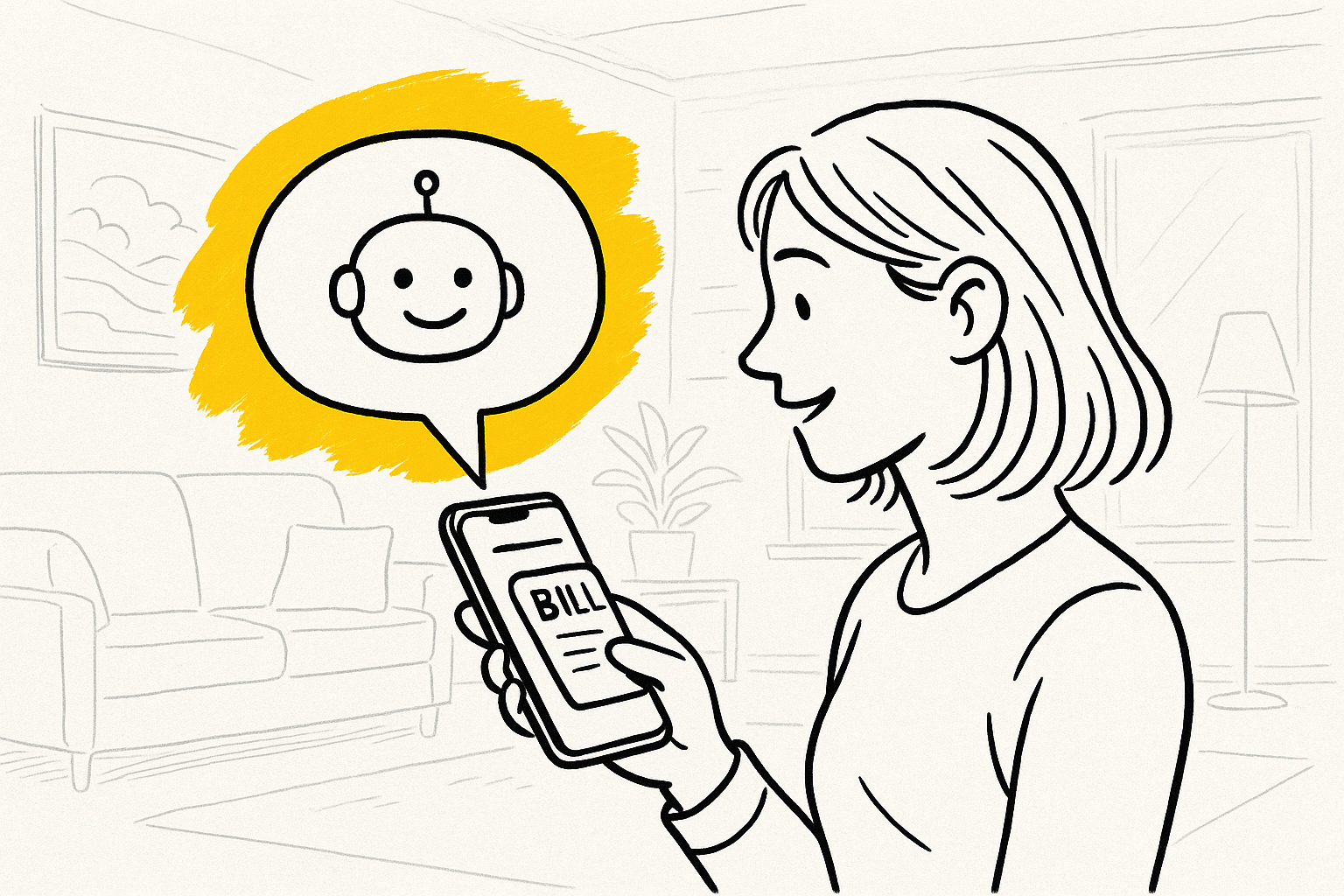
    PayNearMe’s new AI-powered Intelligent Virtual Agent (IVA) may sound like just another chatbot, but it’s a major step toward making bill payments easier and more intuitive.

    The company, known for simplifying payments across sectors like utilities, lending, and iGaming, has introduced an intelligent assistant that answers payment-related questions through voice or chat. Customers can ask about due dates, fees, or payment status, and receive instant, accurate responses without waiting on hold or navigating complex menus.


    The move toward real conversations

    Early chatbots worked off scripts. Today, natural language processing and adaptive learning allow fintechs to build systems that actually understand questions and context. PayNearMe’s new assistant can interpret intent, respond naturally, and even adapt in real time. That marks a shift from customer support to conversation.

    Instead of pressing buttons to find an answer, a user might type or say, “Did my last payment go through?” and get a clear response immediately. It’s faster, more natural, and accessible to a wider range of users, especially those who prefer text-based interactions or need quick assistance outside business hours.


    Why accessibility is central

    PayNearMe has long focused on inclusivity, supporting cash, card, and digital wallet payments for people who may not use traditional banking. The new AI assistant builds on that mission. For someone juggling bills or using prepaid methods, being able to confirm a payment by message rather than by phone can reduce stress and confusion.

    Accessibility often comes down to design. Small choices, such as offering natural language interaction, can turn a routine payment check into a more user-friendly and reliable experience.


    The bigger pattern

    PayNearMe’s launch fits into a broader movement in fintech. Companies such as Kasisto and Mastercard are also using conversational AI to handle complex service interactions. But PayNearMe’s strength is focus: instead of promising a fully AI-powered ecosystem, it tackles a single, repetitive pain point and makes it nearly frictionless.

    For startups, that’s a reminder that impactful AI is not about scale or hype. It’s about solving real user problems elegantly.


    Key takeaways for fintech startups

    • Use AI to automate specific, high-friction support tasks first.

    • Design for natural language, not rigid chat trees.

    • Treat accessibility as a product feature from the start.

    • Improve continuously through analytics and feedback.

    • Build AI into existing workflows instead of creating standalone tools.

    Your Fintech Story helps startups turn smart ideas like this into strategy. If you want to transform small user frustrations into standout product value, reach out. We can help your fintech grow.

  • Smarter Together: Humans and AI Powering the Future of Fintech

    Smarter Together: Humans and AI Powering the Future of Fintech

    In 2025, fintech companies across the world are proving that the best automation strategies still rely on people. The winning model isn’t full automation. It’s collaboration. AI handles the repetition and pattern recognition, while humans bring empathy, judgment, and trust. Together, they deliver faster, fairer, and more personal financial services.


    Customer support: AI for speed, humans for empathy

    AI chat assistants have become the first line of contact for many fintechs. Klarna’s chatbot now resolves most customer requests in minutes, across more than 35 languages. bunq’s “Finn” answers thousands of questions daily, freeing up human agents for complex or sensitive cases. Revolut’s “Rita” works in a similar way, handling standard questions and passing the rest to people.

    This approach hasn’t reduced service quality. It has made it better. Customers get instant responses, while agents spend their time solving problems that actually require human understanding. The result is a service experience that’s fast, reliable, and still personal.


    Fraud and risk: instant detection, expert review

    AI-driven fraud detection tools now scan transactions in real time. Revolut’s machine-learning models can block a suspicious transfer before it goes through. Human fraud specialists then review flagged cases to confirm or clear them.

    At Wise, hundreds of millions of payments are screened automatically every day. The models identify anomalies, while human analysts focus on the edge cases. It’s a combination that improves both accuracy and speed, reducing losses and compliance costs at the same time.


    Compliance and KYC: speed with supervision

    Identity verification has become one of the most visible examples of human–AI collaboration. Companies like Onfido and Veriff use AI to scan IDs, match faces, and detect fake documents. When the system isn’t fully confident, the case goes to a human reviewer.

    This balance helps fintechs onboard customers faster while staying compliant. Simple cases are approved in seconds. Only the complex or risky ones require manual attention.


    Decision support: humans as final gatekeepers

    Lenders such as Upstart have built strong hybrid models in credit decisioning. AI approves straightforward applications automatically. Human underwriters handle exceptions, such as irregular income or disputed data.

    The same pattern now appears in insurance and investment platforms. Algorithms do the number-crunching. People make the final calls. That combination helps fintechs move quickly without losing the human accountability regulators and customers expect.


    Why it works

    The fintechs succeeding with AI aren’t chasing full automation. They’re designing systems that balance efficiency with empathy. Machines take over repetitive tasks, and humans focus on what actually builds trust.

    For many teams, the shift has had an unexpected benefit. When AI handles the grunt work, employees feel more engaged. They spend less time on admin and more time on meaningful customer interactions or strategic work.


    Key takeaways for fintech startups

    Here are the lessons from the leaders:

    • Automate repetitive tasks, but keep humans in charge of judgment and empathy.

    • Make the handoff between AI and people smooth and visible to the customer.

    • Use AI to strengthen trust, not weaken it.

    • Build transparency and audit trails into every AI system.

    • Keep human oversight central to compliance and fraud prevention.

    • Track both efficiency and morale. The best automation improves both.

    If you want to design a balanced human plus AI model that scales without losing your company’s personality, contact Your Fintech Story. We help fintech startups grow with strategies that make technology and people work in harmony.

  • How Fintech Unicorns Are Using AI to Redefine Money

    How Fintech Unicorns Are Using AI to Redefine Money

    AI has moved from the back office to the front stage of fintech. It is now part of how people pay, borrow, invest, and even talk to financial apps. Some big players have built solid use cases, while others have learned hard lessons about over-automation and user trust. These five examples show where AI in fintech is working well, and where it still needs balance.


    Stripe: Smarter Fraud Detection That Actually Pays Off

    Stripe’s Adaptive Acceptance system uses machine learning to rescue legitimate payments that would normally be declined. It constantly retrains on live transaction data to better predict which purchases are safe.

    In 2024, Stripe reported it had recovered about six billion dollars in legitimate sales using this model. Merchants saw fewer false declines and smoother checkout rates. For startups, this shows that practical AI that quietly boosts revenue can have more impact than flashy experiments.


    Klarna: When Over-Automation Meets Reality

    Klarna’s AI assistant became one of the most talked-about customer service experiments in fintech. The chatbot handled millions of conversations and claimed to replace hundreds of human agents.

    But by mid-2025, Klarna admitted the results were mixed. Service quality dropped, and the company began rehiring humans to restore balance. The lesson is clear: AI should enhance human service, not erase it. Startups can learn from this by designing automation that supports staff rather than replaces them.


    Revolut: A Personal Finance Coach in the Making

    Revolut has been developing an AI-powered assistant that studies spending patterns and gives users budgeting suggestions inside the app. The feature is still rolling out, but the goal is to use behavioral data to make financial guidance instant and personal.

    It is a reminder that not every AI feature has to launch fully formed. Starting small with simple, contextual insights can still deliver real value and help build user trust.


    PayPal: Building Payments Inside AI Chats

    PayPal’s 2025 partnership with OpenAI introduced Agentic Commerce, allowing users to shop and pay directly through ChatGPT. Instead of switching between browser tabs or payment forms, users can now complete transactions from within a chat interface.

    The concept is still new but represents a major shift: meeting users inside the tools they already use. For startups, it is a signal to think beyond apps and websites. Payment flows may soon live inside AI ecosystems, and being ready for that environment could be a competitive advantage.


    Square: Making Small Businesses Feel Bigger

    Square has rolled out AI tools for merchants, including voice ordering for restaurants and data-driven suggestions on staffing and stock levels. The system analyses sales trends, weather, and local events to give business owners timely prompts.

    It is an example of AI done quietly but effectively. By focusing on everyday operational pain points, Square turned intelligence into utility. Startups serving business clients can do the same by automating tasks that save time rather than replacing human interaction.


    Key takeaways for fintech startups

    AI in fintech works best when it is practical, transparent, and grounded in user needs rather than hype.

    • Start with a single, measurable friction point such as fraud, churn, or support load.

    • Use AI to enhance human work, not replace it.

    • Keep humans in the loop for judgment and empathy.

    • Test small, learn fast, and scale what genuinely helps users.

    • Look ahead to where users already spend attention: AI chats and embedded experiences are becoming the next frontier.

    If your fintech wants to explore AI strategically, Your Fintech Story can help define the roadmap and turn intelligent ideas into real growth. Get in touch.