Day: September 16, 2025

  • Claude’s New File Creation Powers: A Glimpse Into Fintech’s Future?

    Claude’s New File Creation Powers: A Glimpse Into Fintech’s Future?

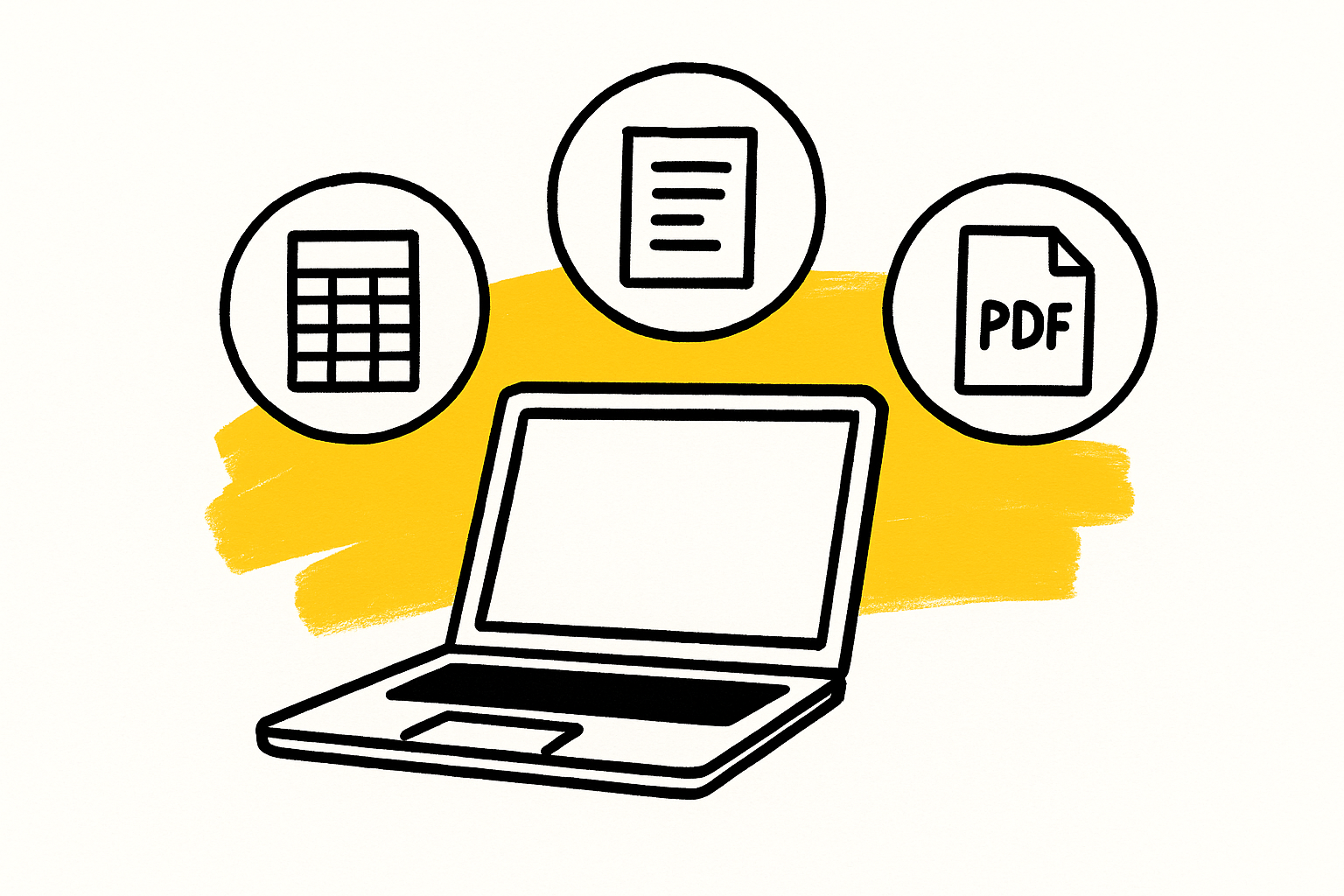
    Anthropic’s latest update to its AI assistant, Claude, allows users to generate and edit Excel files, Word documents, PowerPoint decks, and PDFs directly from chat. Instead of simply responding with answers, Claude can now produce actual outputs: structured spreadsheets, formatted reports, and polished presentations in minutes.

    This might not sound radical at first glance. But for anyone building, managing, or streamlining fintech operations, it signals a subtle but important shift in how AI tools could reshape core workflows.


    Claude Moves From Chat to Creation

    Until now, Claude (like most general-purpose AIs) mostly generated text-based responses or in-chat summaries. With this update, Claude steps into file creation — producing multi-sheet Excel models with formulas, turning PDFs into slide decks, or organizing notes into formatted documents.

    The update is currently in preview for Max, Team, and Enterprise users. Pro users are expected to get access soon.

    Under the hood, Claude runs in a sandboxed compute environment where it can write and execute code — which enables it to transform requests into usable, downloadable files. Think financial forecasts, compliance trackers, budget dashboards — all created through simple instructions.


    What This Could Mean in a Fintech Context

    Fintech teams already rely on specialized tools to handle many of the tasks Claude now promises to simplify:

    • FP&A teams might use Pigment, Anaplan, or Causal to build collaborative financial models.

    • Compliance officers often turn to platforms like ComplyAdvantage or Fenergo to manage AML, KYC, and reporting workflows.

    • Wealth managers lean on Addepar for generating client-ready investment reports.

    • Finance operations teams automate Excel workflows with tools like DataRails or Alteryx.

    Claude doesn’t replace these — at least not today. But it does point toward convergence: instead of using ten different tools for spreadsheet generation, forecasting, and document formatting, some teams might start using a single AI assistant to handle “good enough” versions of those tasks.


    Who Gets to Do the Work

    The obvious appeal here is speed. Instead of spending hours cleaning data or building a presentation from scratch, teams can delegate the groundwork to Claude.

    But there’s something else brewing beneath the surface: accessibility. Someone who isn’t an analyst can now request a revenue model. A founder without a finance hire can generate a forecast. That’s not a replacement for expertise — but it could compress the early-stage startup toolchain.

    This also raises questions for fintech vendors: if foundational AIs like Claude start doing 80% of what narrow tools offer, how do standalone products stay competitive? More importantly — should they double down on domain depth, or partner with these AI layers instead?


    Caution Still Required

    Anthropic has flagged the obvious: giving an AI coding and file-access powers comes with risk. The feature gives Claude a limited form of internet access to fetch tools or packages, which means teams handling sensitive financial data will need to test carefully and keep it sandboxed. For fintechs working in regulated environments, this isn’t a plug-and-play solution just yet.

    Still, the direction is clear: tools that generate and format files from context-rich conversation are becoming more capable. And for fintech, that could lower the barrier to experimentation — or raise the pressure on specialized vendors.


    Key takeaways for fintech startups

    Here’s what this means for fintech operators and founders:

    • Fintech workflows could evolve into more fluid, AI-assisted systems that span departments and functions.

    • The lesson isn’t to drop best-in-class tools, but to ask: what’s the minimum stack that gets the job done well?

    • Strategy may shift from “which tool?” to “which interface enables the best execution for this task?”

    Want help future-proofing your fintech startup? Contact Your Fintech Story. We help founders adapt, grow, and stand out in a rapidly evolving market.

  • Revolut Adds ‘Pay by Bank’ to Payments Gateway: A New Milestone in Open Banking

    Revolut Adds ‘Pay by Bank’ to Payments Gateway: A New Milestone in Open Banking

    Global fintech company Revolut (with over 60 million customers) has introduced a “Pay by Bank” option in its online payment gateway as of 10 September 2025 . This new feature allows businesses to accept payments directly from a customer’s bank account via open banking, instead of through card networks. The addition is designed to give merchants and shoppers an easier, more secure way to transact, reflecting a broader industry shift toward account-to-account payments.


    Open Banking Payments on the Rise

    Revolut’s adoption of Pay by Bank comes amid surging popularity of open banking payments, especially in the UK. Over the past year, monthly Pay by Bank transactions in the UK climbed from 15 million to 27 million, and roughly 14 million people now use this method each month . In other words, nearly a quarter of UK residents are making bank-to-bank payments regularly, marking a mainstream alternative to card payments . This trend isn’t confined to Britain – analysts project global open banking users will exceed 600 million by 2029, up from around 180 million in 2025 . The rapid growth underscores how consumers worldwide are embracing new fintech solutions that connect directly to their bank accounts for payments.

    What is “Pay by Bank”? Also known as open banking payments or account-to-account (A2A) payments, Pay by Bank enables customers to pay merchants straight from their bank account via their banking app, without entering card details. It leverages secure APIs that banks provide, letting a third-party (like Revolut’s gateway) initiate a payment on the customer’s behalf once the customer authorizes it through their bank. In practice, a mobile shopper is handed off to their bank’s app to approve the transaction (often using biometrics or a PIN), and then returned to the merchant site. Desktop users can scan a QR code to authorize the payment on their phone. Funds move instantly from the buyer’s account to the seller, enabled by faster payment rails. This technology has been championed by fintech providers and regulators in recent years as a way to increase competition and reduce reliance on card monopolies.


    Benefits for Merchants and Customers

    By integrating Pay by Bank, Revolut is giving businesses and shoppers a number of tangible benefits:

    • Enhanced security & fewer fraud losses: Payments require the customer’s bank to authenticate each transaction, which drastically reduces fraud and chargeback risks . Every Pay by Bank transaction is confirmed through the user’s own banking login, meeting strong customer authentication standards. This level of verification means merchants are far less likely to face unauthorized purchases or disputed charges. Industry analyses back this up: account-to-account payments can significantly cut fraud and charge-backs, since every transaction is approved via secure bank credentials .

    • Real-time settlement & no intermediaries: Funds are transferred in real time directly between accounts, improving cash flow for merchants . Businesses receive money immediately instead of waiting days for card settlements. With no card networks in between, merchants also avoid certain fees – interchange fees charged by card issuers are eliminated when payments go bank-to-bank . Fewer middlemen can mean lower overall transaction costs for the business.

    • Faster, frictionless checkout for users: For customers, Pay by Bank offers a convenient, streamlined checkout. There’s no need to manually type out long card numbers, expiry dates, or CVV codes. A mobile user can simply tap their banking app to approve a purchase, and a desktop user can scan a QR code – a process taking only seconds . This frictionless flow not only saves time but also may lead to higher conversion rates for merchants (fewer customers abandoning their cart), since the payment step is quick and trusted. In an era where shoppers value speed and simplicity, skipping the data entry makes for a smoother experience.

    • Reduced chargebacks & disputes: Because each transaction is authorized by the customer’s bank, chargebacks are largely avoided. Traditional card payments allow buyers to dispute charges and sometimes get refunds via chargebacks, which can be costly for merchants and often stem from fraud. With Pay by Bank, unauthorized transactions are far less likely in the first place, and any necessary refunds can be handled directly by merchant support rather than through card network chargeback processes. This means less operational overhead and uncertainty for businesses, as disputes are minimized at the source .

    Overall, the feature brings a win-win: businesses get a secure, instant payment method with lower fees and risks, while customers get a fast, one-step checkout experience. It’s a natural evolution as digital payments mature beyond cards.


    Not Replacing Cards, But Expanding Options

    Importantly, Revolut’s Pay by Bank addition is about offering more choice to consumers and merchants, rather than rendering card payments obsolete. Card payments still dominate many markets and carry benefits like global acceptance and rewards, so open banking payments will co-exist alongside cards. Even Revolut positions the new feature as expanding the toolkit for businesses to meet customer preferences .

    This aligns with a broader industry view: “Pay by Bank isn’t about creating a world without cards, it’s about creating a world with more choice,” as one open banking executive explained . In other words, adding bank-to-bank payments makes checkouts more resilient. If one payment method has an outage or issue, another is available as backup . Recent data shows that nearly 7 in 10 e-commerce brands have encountered card payment outages in the past year . Having alternative options like Pay by Bank can safeguard sales during such disruptions.

    For now, Pay by Bank serves as a complementary alternative – a “next generation” option for those who prefer using their bank app or who might not have credit cards. It gives fintech platforms like Revolut a way to cater to changing user habits without forcing a single payment method. Traditional cards aren’t disappearing any time soon, but the rise of open banking payments is expanding the payments landscape to be more diverse and customer-driven.

    Key takeaways for fintech startups

    Here’s what founders and product teams should take from this:

    • Adopt before you’re forced to – by the time a method is “mainstream,” your customers already expect it
    • Track usage trends, not just hype – Revolut added Pay by Bank as the data showed real mainstream traction
    • Secure, low-friction UX wins – removing checkout pain points boosts both trust and conversion
    • Diversify payments early – relying solely on cards is riskier than ever

    Want help making your fintech more scalable, secure, and conversion-friendly? Let’s talk. Your Fintech Story helps startups grow with smart strategy and execution.