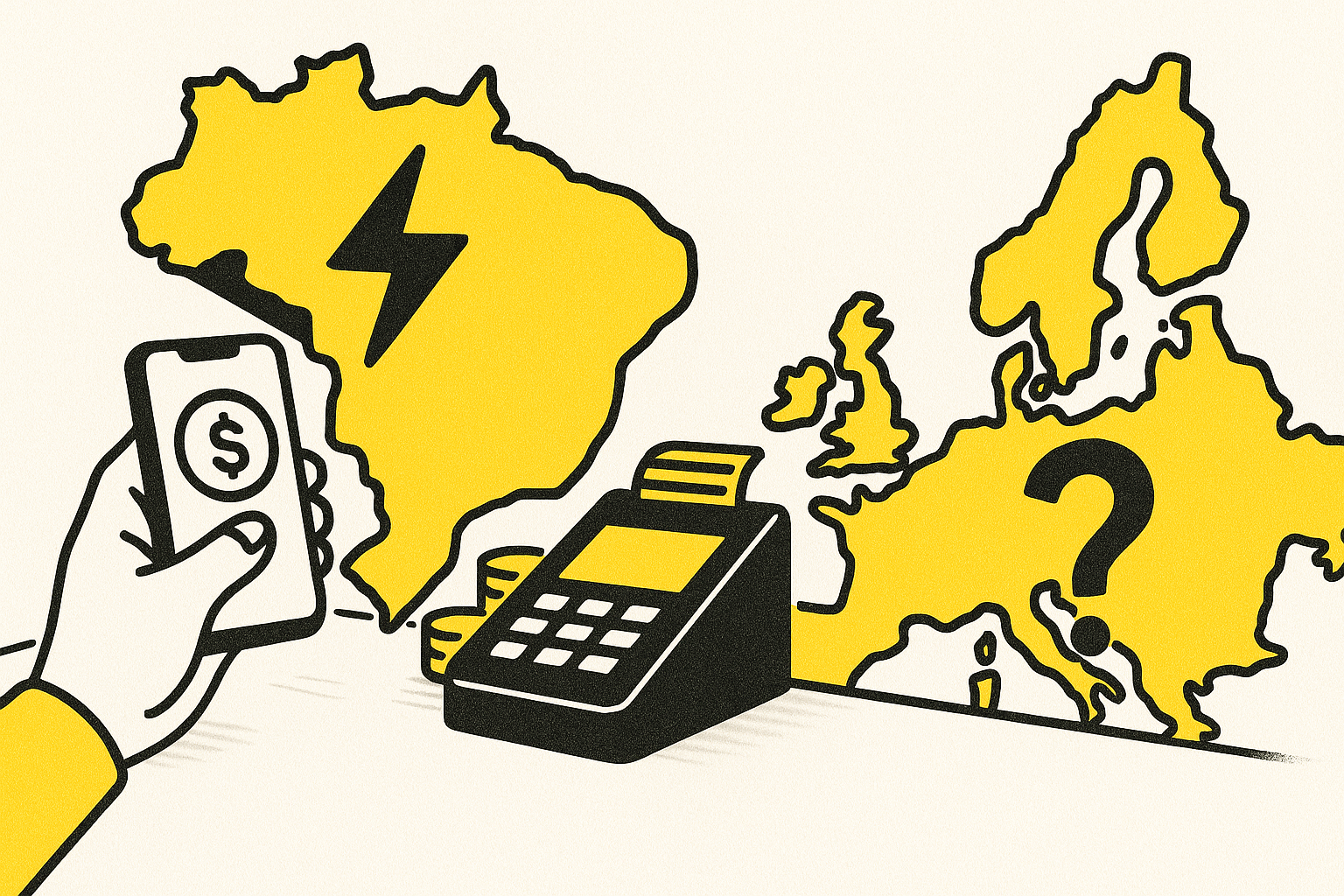
Brazil’s Pix has quietly become one of the most successful fintech stories on the planet.
And no, it’s not a startup. It’s a public instant payments system built by Brazil’s central bank, and it’s eating traditional payments for breakfast.
Since launching in late 2020, Pix has grown to over 160 million users. It now accounts for more than 30% of all payments in Brazil, overtaking debit and credit cards. Everyone from large e-commerce platforms to street vendors uses it. It’s fast. It’s free. It just works.
So why should fintech startups in Europe care? Because this might be what the future looks like.
The infrastructure revolution nobody’s talking about
Pix isn’t flashy. It doesn’t have sleek branding or clever ads. But it solves real problems like clunky bank transfers and card fees using real-time, 24/7 infrastructure.
What makes it work?
- Free for consumers
- Instant (seconds, not hours or days)
- Simple identifiers (phone number, email, or national ID)
- 24/7 availability
- QR-code ready for in-person payments
In most of Europe, “instant” payments are still optional and often come with fees. In Brazil, Pix is the default.
Revolut meets Pix: A glimpse of the future?
Revolut entered Brazil in 2023 and had no choice but to support Pix. Everyone uses it.
This creates a fascinating dynamic. What happens when a neobank known for fast, low-cost transfers enters a market where fast and free is already standard?
Revolut’s edge in Brazil isn’t speed or pricing. It’s UX, global accounts, and international features. The infrastructure layer is no longer the differentiator. The value-added layer is.
Sound familiar?
Europe is currently pushing legislation to make instant SEPA payments mandatory and free across the eurozone. If that happens, we may be headed for a Pix-style world whether we’re ready or not.
What fintech startups should take from this
You don’t need to build your own Pix. But you do need to think about what happens when infrastructure improves and the low-hanging fruit disappears.
Here’s the key lesson:
In markets where payments are free and instant, the winners are the ones who build the best experience around them.
Think:
- Bundled services (FX, savings, credit)
- Superior UX (design, support, onboarding)
- Trust and transparency
- Niche focus (SMBs, freelancers, Gen Z, etc.)
Key takeaways for fintech startups
If you’re building in or for Europe, here’s what Pix can teach you:
- Infrastructure doesn’t need to be sexy to be powerful if it solves real friction
- Don’t count on speed or pricing to be a long-term differentiator
- The value layer (what you build on top of payments) will matter more than ever
- If you’re entering new markets, understand the local rails and integrate early
- Regulatory-led innovation can be a growth opportunity, not just a constraint
Looking to position your fintech for the next wave of infrastructure changes in Europe?
Let’s talk. We help startups grow with strategy, positioning, and go-to-market support.