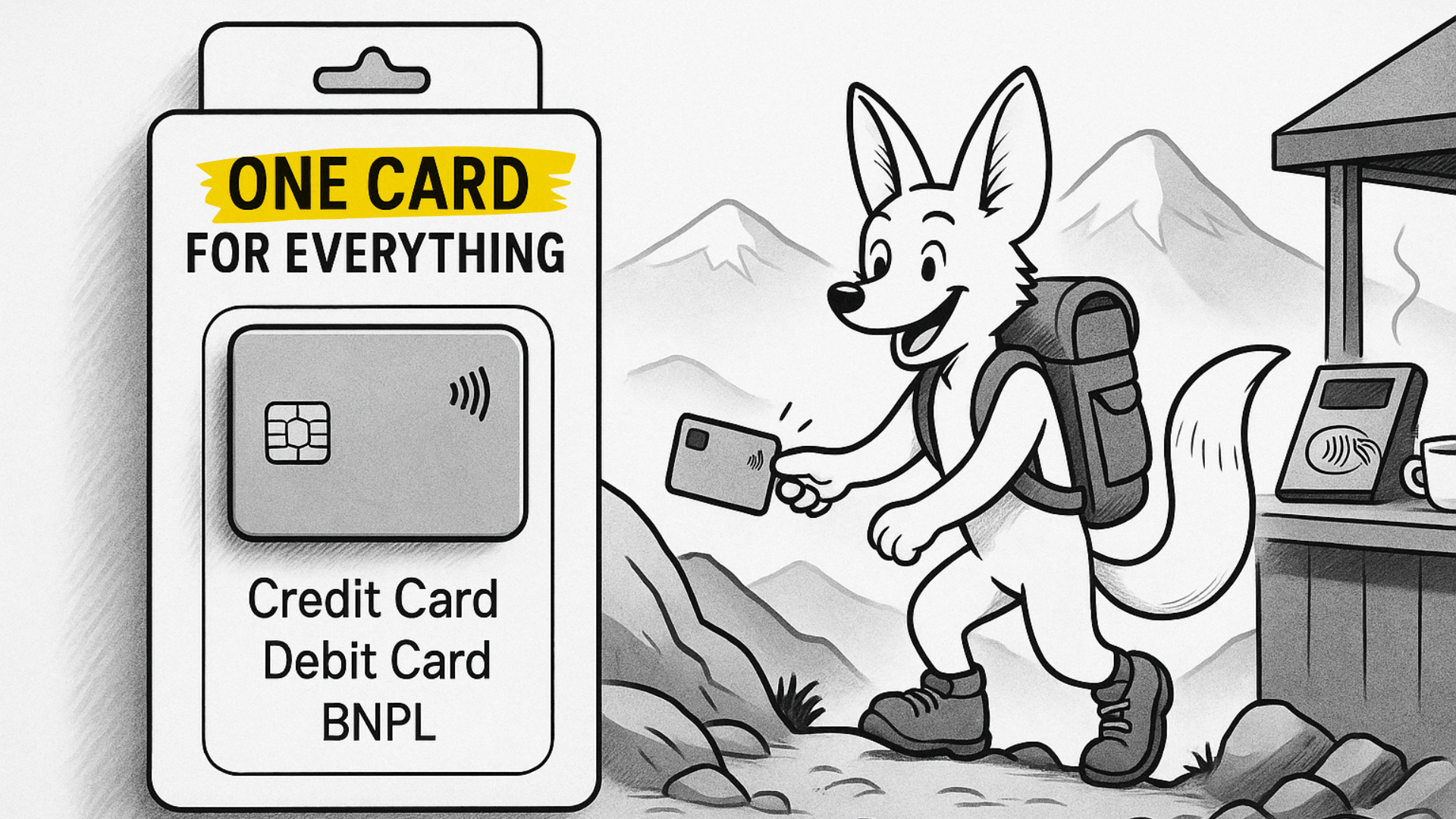
As consumer payment behaviour evolves toward personalization, convenience, and control, major networks and fintechs are reshaping the way people pay. Visa’s Flexible Credential, Mastercard’s One Credential, and the Curve Card are three examples of how fintechs and payment schemes consolidate multiple payment methods into a single, streamlined experience. Each solution, while similar in ambition, offers unique features and benefits, reflecting different approaches to meet the growing demand for seamless, flexible, and user-centric financial tools.
Curve Card
The Curve Card takes a fintech-driven approach, aggregating multiple existing debit and credit cards into one smart card and companion app. Rather than offering new accounts, Curve allows users to link their existing Visa and Mastercard products and manage all spending through a single platform.
Key Benefits:
- All-in-One Aggregation: Connects all user cards into one Curve card, with real-time selection via the app.
- Post-Transaction Flexibility: Features like “Go Back in Time” allow users to switch the funding card even after a purchase.
- International Reach: Available across the UK and most of Europe, simplifying spending at home and abroad.
🔗 Learn more on the Curve website
Visa Flexible Credential
Visa Flexible Credential (VFC) enables issuers to consolidate multiple funding sources—such as debit accounts, credit lines, loyalty points, and buy-now-pay-later options—under a single Visa card or digital credential. Users can set payment preferences through their issuer’s app, enabling automatic selection of the funding source based on transaction type, amount, or other criteria.
Key Benefits:
- Unified Payment Methods: Debit, credit, loyalty points, installments, and even multi-currency balances linked to a single card.
- Dynamic User Control: Consumers define funding rules through issuer apps, minimizing the need to carry multiple cards.
- Global Rollout: Already live in Japan (Olive card), U.S. (Affirm Card), and UAE (Liv), with further expansion planned.
🔗 Learn more on the Visa website
Mastercard One Credential
Mastercard One Credential delivers a similarly powerful solution by allowing users to access debit, credit, prepaid, and installment options through a single, digitally connected Mastercard credential. Consumers set up personalized payment preferences, enabling seamless selection of the right funding method for each transaction.
Key Benefits:
- Personalized Spending: Users can configure which account funds different types of purchases.
- Wide Integration: Works with debit, credit, prepaid, and installment options.
- Global Ambition: Launched with partners like Bendigo Bank (Australia) and Wio Bank (UAE), with expansion into North America and Europe anticipated.
🔗 Learn more on the Mastercard website
Comparison
| Feature | Visa Flexible Credential | Mastercard One Credential | Curve Card |
|---|---|---|---|
| Availability | Japan, U.S., UAE (expanding globally) | Australia, UAE (expanding globally) | UK, Europe |
| Payment Methods | Debit, credit, loyalty points, installments, multi-currency | Debit, credit, prepaid, installments | Any linked debit or credit cards |
| Unique Features | Multi-source payment and loyalty integration via issuer app | Personalized multi-account selection through issuer app | “Go Back in Time” and backup card for declined payments |
Summary
Visa Flexible Credential, Mastercard One Credential, and Curve each represent a significant step toward the future of flexible, consumer-centric payment experiences.
Visa and Mastercard focus on enhancing traditional bank offerings by consolidating payment methods into a single credential, tightly integrated with issuers’ systems.
Curve approaches the market independently, offering aggregation of multiple existing cards into one easy-to-use platform with greater real-time and retroactive flexibility.
Together, they signal a clear industry shift: empowering consumers with the freedom to choose how and when they pay, without being constrained by traditional card silos.